The Molecular Symphony of Photosynthesis
The biosphere operates as a massive, solar-powered engine, fueled by the conversion of electromagnetic radiation into stable chemical bonds. At the heart of this planetary mechanism is the...
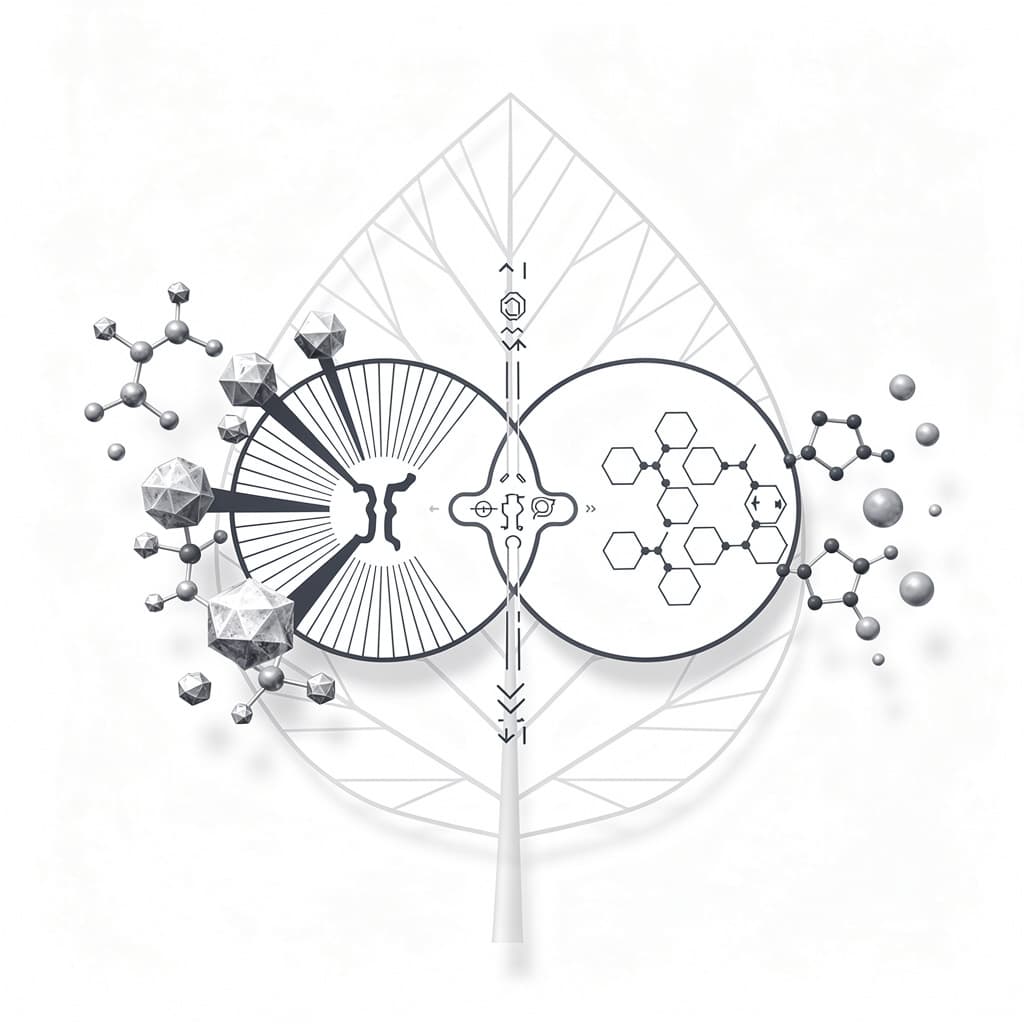
The biosphere operates as a massive, solar-powered engine, fueled by the conversion of electromagnetic radiation into stable chemical bonds. At the heart of this planetary mechanism is the photosynthesis process, a complex sequence of biophysical and biochemical events that sustains almost all life on Earth. Through this process, plants, algae, and certain bacteria capture photons and use their energy to assemble high-energy carbohydrate molecules from low-energy inorganic precursors like carbon dioxide and water. This conversion does not merely provide food for the organism; it fundamentally alters the atmosphere by releasing oxygen as a byproduct, creating the aerobic environment necessary for complex animal life. Understanding photosynthesis requires an exploration of both the macroscopic biological structures and the subatomic electron transfers that occur within the specialized organelles known as chloroplasts.
The Foundation of Solar Energy Capture
Defining Autotrophic Nutrition
Living organisms are broadly categorized by how they acquire carbon and energy, with autotrophs standing as the primary producers of the natural world. Autotrophic nutrition refers to the ability of an organism to synthesize its own organic compounds from simple inorganic substances, effectively making them the foundation of every food web. Most autotrophs are photoautotrophs, meaning they utilize sunlight as their primary energy source to drive the synthesis of glucose and other sugars. This process is distinct from chemoautotrophy, where organisms derive energy from the oxidation of inorganic chemicals, often in extreme environments like deep-sea hydrothermal vents. By harnessing the sun, photoautotrophs convert kinetic radiant energy into potential chemical energy, providing a bridge between the celestial and the biological.
The significance of autotrophic nutrition extends beyond individual survival to the stabilization of global carbon cycles. Plants act as massive carbon sinks, sequestering atmospheric carbon dioxide into their biomass through the photosynthesis process. Without this constant removal and storage of carbon, the Earth’s greenhouse effect would intensify rapidly, leading to uninhabitable temperatures. Furthermore, the energy captured by autotrophs is eventually transferred to heterotrophs—organisms that must consume others for energy—through predation and decomposition. Consequently, every calorie burned by a human or animal can be traced back to a specific photochemical event that occurred in the tissues of a primary producer.
The Photosynthesis Formula and Energy Exchange
The overall chemistry of this process is often summarized in a simplified linear equation that belies the underlying complexity of the reactions involved. The standard photosynthesis formula represents the transformation of six molecules of carbon dioxide and six molecules of water into one molecule of glucose and six molecules of oxygen. This summary highlights the transition from oxidized carbon in $CO_2$ to reduced carbon in $C_6H_{12}O_6$. The photosynthesis equation is formally expressed as:
$$6CO_2 + 6H_2O + \text{light energy} \rightarrow C_6H_{12}O_6 + 6O_2$$
While this equation suggests a straightforward replacement of atoms, the reality involves dozens of intermediate steps and the mediation of specialized enzymes and cofactors. The water molecules serve as the primary electron donors, while carbon dioxide serves as the ultimate electron acceptor. The energy required to move electrons from water to carbon dioxide is substantial, as water holds onto its electrons with high affinity. Thus, the "light energy" component of the formula is not just a catalyst but a required reactant that provides the thermodynamic "uphill" push needed to create high-energy organic bonds. The oxygen released is derived entirely from the water molecules, a discovery that fundamentally changed our understanding of plant metabolism in the mid-twentieth century.
Thermodynamic Constraints in Biological Systems
In the language of thermodynamics, photosynthesis is an endergonic process, meaning it requires a net input of energy to proceed. The Gibbs free energy ($\Delta G$) for the synthesis of one mole of glucose is approximately $+2870$ kJ/mol, indicating that the products contain significantly more energy than the reactants. This energy must be harvested from the sun with high precision, as disorganized heat would simply denature the plant's proteins. Plants have evolved to capture specific wavelengths of light—primarily in the blue and red spectrums—to minimize energy loss and maximize the efficiency of electron excitation. The second law of thermodynamics still applies, however, as a significant portion of the incoming solar energy is lost as heat during the various transduction steps.
Entropy also plays a critical role in how the photosynthesis process is structured within the cell. The creation of complex, ordered glucose molecules from disordered gases like carbon dioxide represents a local decrease in entropy. To achieve this, the plant must increase the entropy of its surroundings by dissipating heat and processing solar radiation. This delicate balance of energy and order is maintained through a series of coupled reactions where the energy-releasing (exergonic) breakdown of ATP and NADPH provides the "power" to drive the energy-absorbing (endergonic) synthesis of sugars. This coupling ensures that the overall biological system remains viable within the strict laws of physics that govern the universe.
The Architecture of the Chloroplast
Thylakoid Membranes and the Lumen
The internal organization of the chloroplast is a masterpiece of biological engineering, designed to maximize the surface area available for light absorption. Within the double-membraned organelle, a third system of internal membranes forms flattened, sac-like structures called thylakoids. These thylakoids are often arranged in dense stacks known as grana, which are interconnected by stroma lamellae. The primary chloroplast function in this context is to provide a compartmentalized environment where distinct chemical gradients can be maintained. The space inside the thylakoid is called the lumen, while the fluid-filled region surrounding the thylakoids is the stroma, and the separation of these two spaces is essential for energy production.
The thylakoid membrane itself is the site of the light-dependent reactions, housing the protein complexes that capture photons. Because these membranes are lipid bilayers, they are impermeable to ions, allowing the plant to pump protons ($H^+$) from the stroma into the lumen. This creates a significant electrochemical gradient, effectively turning the thylakoid into a biological battery. The energy stored in this gradient is later harvested to synthesize ATP, much like water behind a dam is used to turn a turbine. Without this precise spatial arrangement, the energy captured from light would dissipate instantly rather than being converted into a stable chemical form.
Pigment Systems and Chlorophyll Absorption
To capture the energy of the sun, plants utilize specialized pigments that are embedded within the thylakoid membranes. The most prominent of these is chlorophyll a, the primary pigment that participates directly in the light reactions by donating electrons to the transport chain. Complementing this are accessory pigments like chlorophyll b and carotenoids, which absorb light in different parts of the spectrum and pass the energy to the reaction center. This arrangement, known as an antenna complex, allows the plant to harvest a broader range of solar energy than would be possible with a single pigment type. Carotenoids also serve a protective role, absorbing excess energy that might otherwise damage the delicate molecular machinery of the cell.
The absorption spectrum of these pigments explains why most plants appear green to the human eye. Chlorophyll absorbs blue and red wavelengths with high efficiency but reflects green wavelengths, which are then perceived by our retinas. When a photon hits a pigment molecule, it excites an electron to a higher energy state; this excitation energy is then transferred from molecule to molecule via resonance energy transfer until it reaches the reaction center. This process is incredibly fast and efficient, ensuring that very few photons are "wasted." The architecture of the pigment system ensures that the photosynthesis process begins with a concentrated burst of energy directed precisely where it is needed most.
Structural Efficiency and Chloroplast Function
The overall chloroplast function is optimized for the diffusion of gases and the rapid transport of metabolic products. The stroma, which fills the space between the thylakoid stacks and the outer membrane, contains the enzymes necessary for the Calvin cycle, including the vital enzyme Rubisco. By keeping the light-harvesting machinery (thylakoids) in close proximity to the carbon-fixing machinery (stroma), the chloroplast ensures a steady supply of ATP and NADPH to the site of sugar synthesis. This proximity reduces the time and energy required for molecular diffusion, allowing for a high rate of metabolic throughput during periods of intense sunlight.
Furthermore, chloroplasts are dynamic organelles that can move within the plant cell in response to light intensity. In low-light conditions, they may spread out to maximize surface area, while in extremely bright light, they can retreat to the sides of the cell to avoid photo-oxidative damage. This movement is facilitated by the cell's cytoskeleton and represents a sophisticated regulatory mechanism. The structural integrity of the chloroplast, from its double membrane to its intricate thylakoid network, is a testament to the evolutionary pressures that have refined the photosynthesis process over billions of years. Each component is specifically situated to contribute to the ultimate goal: the efficient conversion of light into life.
The Chemistry of Light-Dependent Reactions
Photon Absorption and Water Photolysis
The steps of photosynthesis begin in earnest when a photon of light strikes Photosystem II (PSII), a large protein-pigment complex in the thylakoid membrane. This impact triggers the excitation of a special pair of chlorophyll molecules known as P680, which then loses an electron to a primary electron acceptor. This leaves the P680 molecule with a powerful positive charge, making it one of the strongest biological oxidizing agents known. To regain its lost electron and return to its ground state, PSII strips electrons from water molecules through a process called photolysis. This reaction splits $H_2O$ into oxygen atoms, protons ($H^+$), and electrons ($e^-$), essentially mining the water for its subatomic components.
Photolysis is the critical step that generates the oxygen we breathe, but for the plant, oxygen is merely a waste product. The true value lies in the electrons, which are channeled into the electron transport chain, and the protons, which contribute to the lumen's acidity. The oxygen atoms from two water molecules combine to form $O_2$ gas, which diffuses out of the chloroplast and eventually out of the leaf through the stomata. This initial burst of chemistry sets the entire photosynthesis process in motion, providing the raw electrical current needed to drive subsequent reactions. Without the ability to split water, the plant would have no sustainable source of electrons to keep the cycle running.
Electron Transport Chains and ATP Synthesis
Once the electron is released from PSII, it travels through a series of membrane proteins collectively known as the electron transport chain (ETC). As the electron moves from one carrier to the next—passing through plastoquinone, the cytochrome $b_6f$ complex, and plastocyanin—it loses a small amount of energy at each step. This released energy is not wasted; instead, it is used by the cytochrome complex to pump protons from the stroma into the thylakoid lumen. This active transport increases the proton concentration gradient across the membrane, creating a high-pressure reservoir of potential energy. The flow of electrons here is often visualized as a "downhill" journey that performs the work of "uphill" proton pumping.
The final destination for these protons is a specialized enzyme called ATP synthase, which acts as a molecular motor embedded in the thylakoid membrane. Driven by the "proton-motive force," protons flow back from the lumen into the stroma through a channel in the ATP synthase, causing the enzyme to rotate. This rotational energy is used to catalyze the phosphorylation of ADP into ATP, a process known as photophosphorylation. This mechanism, first proposed by Peter Mitchell in his chemiosmotic hypothesis, is remarkably similar to the way mitochondria generate energy during cellular respiration. Thus, the light-dependent reactions successfully transform the kinetic energy of light into the chemical energy of ATP.
Generating Reducing Power via NADPH
While ATP provides the energy for the next stage of photosynthesis, the plant also needs "reducing power" in the form of high-energy electrons to build sugar molecules. This is achieved through Photosystem I (PSI), which operates in tandem with PSII. When a photon strikes PSI, it excites the P700 chlorophyll pair, sending another electron down a second, shorter transport chain. This electron is eventually passed to a protein called ferredoxin and then to the enzyme NADP+ reductase. This enzyme facilitates the transfer of two electrons and a proton to NADP+, reducing it to NADPH, a stable carrier of high-energy electrons.
The relationship between PSII and PSI is often referred to as the "Z-scheme" because of the way the energy levels of the electrons rise and fall during the process. For every two electrons that travel the full length of the chain, one molecule of NADPH is formed. Together, ATP and NADPH constitute the primary products of the light-dependent reactions, representing the captured solar energy in a portable chemical format. These molecules are released into the stroma, where they are immediately available for the Calvin cycle. This coordination ensures that the energy-harvesting and carbon-fixing phases of the photosynthesis process are seamlessly linked, despite occurring in different compartments of the chloroplast.
Carbon Fixation and the Calvin Cycle
The Role of Rubisco in Carbon Carboxylation
The second major phase of the photosynthesis process is the Calvin cycle, which takes place in the stroma and does not directly require light. The cycle begins with carbon fixation, where atmospheric $CO_2$ is "fixed" into an organic form. This is catalyzed by the enzyme Ribulose-1,5-bisphosphate carboxylase/oxygenase, commonly known as Rubisco. Rubisco attaches a single molecule of $CO_2$ to a five-carbon sugar called Ribulose bisphosphate (RuBP). The resulting six-carbon intermediate is highly unstable and immediately splits into two molecules of 3-phosphoglycerate (3-PGA), which each contain three carbon atoms. This is why plants that use this direct method are referred to as C3 plants.
Despite its critical importance, Rubisco is notoriously slow and inefficient; it can only process a few molecules of $CO_2$ per second, whereas most enzymes process thousands. Furthermore, it occasionally mistakes $O_2$ for $CO_2$ in a wasteful process called photorespiration. To compensate for these flaws, plants produce massive quantities of the enzyme; Rubisco is widely considered the most abundant protein on Earth, making up to 50% of the soluble protein in a typical leaf. This massive investment of nitrogen and energy highlights the biological priority of carbon fixation. Without this initial carboxylation step, there would be no way to incorporate the carbon from the air into the physical structure of the living organism.
Reduction Phases and Sugar Production
After carbon is fixed into 3-PGA, the cycle enters the reduction phase, where the chemical energy stored in ATP and NADPH is utilized. Each molecule of 3-PGA receives a phosphate group from ATP (becoming 1,3-bisphosphoglycerate) and is then reduced by electrons from NADPH. This transformation results in a three-carbon sugar called glyceraldehyde-3-phosphate (G3P). G3P is a high-energy molecule that serves as the literal "building block" of the plant's metabolism. It is important to note that while we often talk about the photosynthesis formula producing glucose, the immediate product of the Calvin cycle is actually G3P.
For every three molecules of $CO_2$ that enter the cycle, six molecules of G3P are produced. However, only one of these G3P molecules is considered a "net gain" that the plant can use to build larger carbohydrates like glucose, sucrose, or starch. The other five G3P molecules must remain in the cycle to ensure its continuation. This phase is called "reduction" because the carbon atoms gain electrons, increasing their potential energy. This is the moment where the solar energy captured in the thylakoids is finally "locked" into the covalent bonds of a sugar molecule, completing the transition from radiant energy to food.
Regeneration of the RuBP Acceptor
The final stage of the Calvin cycle is the regeneration of the carbon acceptor, RuBP. This is a complex series of rearrangements that use the remaining five G3P molecules to reconstruct three molecules of the five-carbon RuBP. This process requires additional energy, which is provided by the consumption of three more ATP molecules. By regenerating the starting material, the chloroplast ensures that the cycle can continue as long as $CO_2$, ATP, and NADPH are available. This cyclical nature is a hallmark of metabolic efficiency, allowing the plant to reuse its molecular machinery indefinitely without needing to synthesize new acceptor molecules from scratch.
The regeneration phase is highly regulated to respond to the plant's internal energy status. If ATP levels are low, the regeneration of RuBP slows down, which in turn slows the rate of carbon fixation. This prevents the plant from exhausting its energy reserves during times of stress or darkness. The balance between fixation, reduction, and regeneration must be perfectly maintained to keep the photosynthesis process stable. Once the "extra" G3P molecule leaves the cycle, it can be exported to the cytoplasm to be converted into sucrose for transport throughout the plant or stored as starch within the chloroplast for later use. This versatility makes G3P the ultimate currency of the plant's economy.
Mapping the Complete Photosynthesis Process
Tracking the Flow of Mass and Energy
To fully grasp the photosynthesis process, one must track the distinct paths taken by energy and matter. Energy enters the system as photons, is briefly held as excited electrons, is converted into a proton gradient, and is then stored in the phosphate bonds of ATP and the electron-carrying bonds of NADPH. Finally, this energy resides in the carbon-hydrogen bonds of glucose. Matter, on the other hand, enters as $CO_2$ and $H_2O$. The carbon from $CO_2$ ends up in the sugar, while the oxygen from $H_2O$ is released as a gas. The hydrogen atoms from water are split into protons and electrons; the electrons eventually reduce the carbon, and the protons help build the ATP that powers the whole assembly.
This flow is summarized by the stoichiometry of the reaction. To produce one molecule of glucose ($C_6H_{12}O_6$), the plant must fix six molecules of $CO_2$. This requires two full turns of the metabolic "crank" if we consider glucose the end goal. In total, the synthesis of one glucose molecule requires 18 molecules of ATP and 12 molecules of NADPH, all of which must be generated by the light-dependent reactions. This high energy cost explains why plants require significant sunlight to grow quickly. The mapping of these paths reveals a highly integrated system where not a single atom or photon is misplaced, demonstrating a level of efficiency that human engineers still struggle to replicate in solar cell technology.
Temporal Coordination of Reactions
Although we categorize the stages of photosynthesis into "light" and "dark" reactions, they are temporally and chemically interdependent. The Calvin cycle cannot run for long in total darkness because it quickly exhausts the supply of ATP and NADPH produced by the light reactions. Conversely, the light reactions are inhibited if the Calvin cycle slows down, as the pool of available NADP+ and ADP would dry up, leaving no "empty" carriers to accept new electrons or phosphates. In most plants, these two stages occur simultaneously during the day, creating a continuous flow of energy from the sun into the plant's chemical reserves.
However, some plants have evolved temporal or spatial separations to survive in harsh climates. CAM (Crassulacean Acid Metabolism) plants, such as cacti, open their stomata at night to take in $CO_2$ and store it as an organic acid, then close their stomata during the day to prevent water loss while they perform the light reactions and the Calvin cycle. C4 plants, like corn and sugarcane, separate the initial carbon fixation and the Calvin cycle into different cell types to minimize photorespiration. These variations on the photosynthesis process show how the fundamental chemical pathway can be adapted to meet different environmental challenges, while the core mechanism of energy transduction remains the same.
Balancing the Stoichiometric Photosynthesis Equation
The balancing of the photosynthesis equation is a mathematical representation of the Law of Conservation of Mass. Every carbon, oxygen, and hydrogen atom that enters the chloroplast must be accounted for in the products. While the basic formula is $6CO_2 + 6H_2O \rightarrow C_6H_{12}O_6 + 6O_2$, a more precise version often includes the twelve water molecules that are actually consumed and the six water molecules that are produced as a byproduct of the cycle's various steps:
$$6CO_2 + 12H_2O + \text{light} \rightarrow C_6H_{12}O_6 + 6O_2 + 6H_2O$$
This "expanded" equation is more reflective of the molecular reality within the stroma. It also emphasizes the massive turnover of water required for plant life. While only a small fraction of the water absorbed by a plant's roots is used in photosynthesis—the rest is lost through transpiration—that small fraction is the source of all the hydrogen used to build the plant's body. By viewing the photosynthesis process through this stoichiometric lens, we see it as a balanced budget of atoms, where the "income" of solar energy allows for the "expenditure" of creating complex life from the simplest of raw materials. This balance is what allows life to persist in a universe that otherwise tends toward decay and disorder.
Sequential Steps of Photosynthesis
Initial Light Harvesting Mechanisms
The first steps of photosynthesis involve the physical interaction between light and matter. When a leaf is exposed to sunlight, millions of photons penetrate the epidermis and strike the mesophyll cells, where the chloroplasts are concentrated. Within each chloroplast, the antenna complexes of Photosystem II serve as a wide net, capturing photons and funneling their energy toward the reaction center chlorophyll (P680). This stage is entirely physical, occurring in femtoseconds (quadrillionths of a second). The efficiency of this harvesting is nearly 100%, meaning almost every photon that hits a pigment molecule contributes its energy to the system, a feat achieved through the precise quantum-mechanical arrangement of the pigment molecules.
Once the energy reaches the reaction center, the process shifts from physical to chemical. The excitation of an electron in P680 leads to its ejection, creating a charge separation that is the "spark" for all subsequent biology. This is the moment where light becomes electricity. The immediate replenishment of this electron from water (photolysis) ensures that the system is reset and ready for the next photon. This rapid-fire sequence of harvesting and excitation is the heartbeat of the plant, occurring billions of times per second in every green leaf on the planet. It is the most critical event in the photosynthesis process, as it provides the initial energy surge that powers the entire organic world.
Intermediate Energy Transduction Pathways
The second sequence of steps involves the conversion of that electrical "spark" into a more stable chemical potential. As electrons travel down the ETC from PSII to PSI, the energy they release is used to pump protons, creating the $pH$ gradient. This is an intermediate form of energy storage—neither light nor a sugar, but a concentration difference across a membrane. The subsequent flow of these protons through ATP synthase is a mechanical step, where the physical rotation of a protein complex facilitates the chemical bond formation in ATP. Simultaneously, the second boost of light at PSI ensures that the electrons have enough remaining energy to reduce NADP+ to NADPH.
These intermediate steps act as a buffer and a transformer. They take the volatile, high-energy electrons produced by light and "step down" their energy into the usable, standard currency of the cell (ATP and NADPH). This transduction is essential because the enzymes of the Calvin cycle cannot use light directly; they require the specific chemical environment provided by these carriers. This phase of the photosynthesis process is also where the plant can exercise control, adjusting the ratio of ATP to NADPH produced through "cyclic electron flow" to meet its specific metabolic needs. It is a highly regulated, fluid system that maintains the energy supply regardless of fluctuations in light quality or intensity.
Final Synthesis of Complex Carbohydrates
The final stage of the photosynthesis process is the assembly of the actual sugar molecules. This begins with the fixation of $CO_2$ by Rubisco and follows the path through the Calvin cycle until G3P is produced. Once G3P is exported from the chloroplast, the plant uses various enzymatic pathways to combine two G3P molecules (each with 3 carbons) into one glucose-6-phosphate molecule (with 6 carbons). From there, the glucose can be linked into long chains of cellulose to build cell walls, or starch to store energy for the night. Alternatively, it can be combined with fructose to make sucrose, the form in which sugar is transported through the phloem to the roots, fruits, and flowers.
This synthesis is the "payoff" for the entire operation. The plant has taken the fleeting energy of a sunbeam and turned it into a solid, tangible substance that can be used to grow a trunk, produce a seed, or sustain an animal. The complexity of these final steps ensures that the energy is stored in a highly stable form, allowing the plant to survive through winters or droughts when photosynthesis is not possible. By the end of this sequence, the photosynthesis formula has been fully realized, and the inorganic has become organic. This transformation is the foundational miracle of biology, a molecular symphony that has played without interruption for over three billion years.
References
- Berg, J. M., Tymoczko, J. L., & Stryer, L., "Biochemistry (5th ed.): The Light Reactions of Photosynthesis", W. H. Freeman and Company, 2002.
- Taiz, L., & Zeiger, E., "Plant Physiology (5th ed.)", Sinauer Associates, 2010.
- Blankenship, R. E., "Molecular Mechanisms of Photosynthesis", Blackwell Science, 2002.
- Nelson, D. L., & Cox, M. M., "Lehninger Principles of Biochemistry", W. H. Freeman, 2017.
- Hohmann-Marriott, M. F., & Blankenship, R. E., "Evolution of Photosynthesis", Annual Review of Plant Biology, 2011.
Recommended Readings
- The Emerald Planet: How Plants Changed Earth's History by David Beerling — An insightful look at how the evolution of photosynthesis and plant structures fundamentally reshaped our planet's atmosphere and climate over millions of years.
- Life Ascending: The Ten Great Inventions of Evolution by Nick Lane — Includes a brilliant chapter on photosynthesis that explains the complex chemistry and "Z-scheme" with the narrative drive of a detective novel.
- Eating the Sun: How Plants Power the Planet by Oliver Morton — A beautifully written exploration of the history of photosynthesis research and the profound ways that solar energy capture drives the modern world.
- Molecular Biology of the Cell by Alberts et al. — The definitive textbook for those who want to dive deeper into the specific protein structures and membrane dynamics that make the light reactions possible.