The Architecture of Cellular Complexity
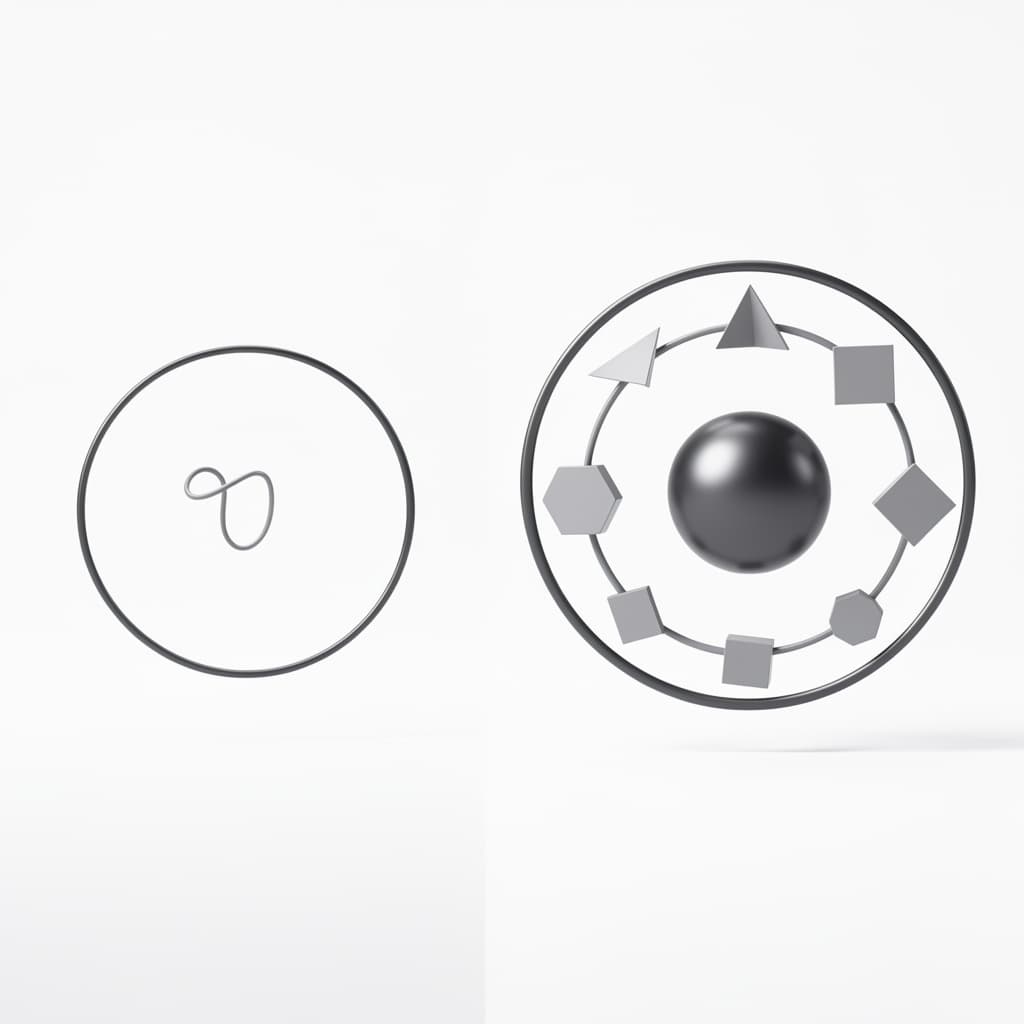
The history of life on Earth is essentially a tale of two architectures: the streamlined efficiency of the prokaryote and the elaborate, compartmentalized complexity of the eukaryote. While all...
Defining the Fundamental Cellular Blueprint
The story of cellular life began approximately 3.5 to 4 billion years ago with the emergence of prokaryotes, a term derived from the Greek "pro" (before) and "karyon" (kernel or nucleus). These organisms, comprising the domains Bacteria and Archaea, represent the simplest and most resilient forms of life, flourishing in environments ranging from deep-sea hydrothermal vents to the human gut. Prokaryotes are characterized by their lack of a membrane-bound nucleus; instead, their genetic material floats freely within the cell in a region called the nucleoid. This "open-concept" floor plan allows for rapid growth and adaptation, making them the most numerous organisms on the planet.
In contrast, eukaryotes appeared much later in the fossil record, roughly 1.5 to 2 billion years ago, and introduced a radically different organizational strategy. The eukaryotic cell is defined by its compartmentalization, where specialized structures called organelles perform distinct tasks within protected environments. By sequestering metabolic processes—such as DNA replication in the nucleus and ATP production in the mitochondria—eukaryotes were able to overcome the surface-area-to-volume constraints that limit prokaryotic size. This architectural revolution paved the way for the development of multicellularity, allowing for the specialized tissues and organs found in plants, animals, and fungi.
The primary difference between prokaryotic and eukaryotic cells lies in this internal division of labor. While a prokaryotic cell can be likened to a studio apartment where all activities happen in one open space, a eukaryotic cell is a sprawling mansion with dedicated rooms for cooking, sleeping, and storage. This structural complexity is not just an aesthetic choice by nature; it is a functional necessity that enables eukaryotes to manage much larger genomes and more intricate regulatory networks. As we delve deeper into their similarities and differences, we see that while they share the same basic chemistry, their lifestyles and capabilities are dictated by their internal blueprints.
Core Similarities Between Prokaryotic and Eukaryotic Cells
Despite their vast differences in complexity, prokaryotic and eukaryotic cells share a common molecular foundation that points toward a single Last Universal Common Ancestor (LUCA). Both cell types are enclosed by a plasma membrane, a selective barrier composed of a phospholipid bilayer that regulates the passage of ions, nutrients, and waste products. This membrane is essential for maintaining homeostasis, ensuring that the internal chemical environment remains distinct from the external world. Embedded within this bilayer are proteins that facilitate communication and transport, illustrating that both cell types face the same basic challenge of interacting with their surroundings.
At the heart of every cell, regardless of its domain, lies the cytoplasm, a jelly-like substance called cytosol that houses the cell's machinery. Within this medium, both prokaryotes and eukaryotes carry out the essential "Central Dogma" of molecular biology: the flow of information from DNA to RNA to protein. They utilize the same genetic code, meaning a sequence of DNA in a bacterium often codes for the same amino acid as it would in a human cell. This universality allows modern biotechnology to use bacteria as "factories" to produce human proteins like insulin, proving that at the most fundamental level, the machinery of life is remarkably consistent.
Furthermore, both cell types rely on ribosomes to synthesize proteins. Although their sizes and specific protein compositions differ, the core mechanism of translation—reading messenger RNA (mRNA) and assembling amino acids into polypeptide chains—is identical. Energy metabolism also shares striking commonalities; both utilize adenosine triphosphate (ATP) as the primary energy currency and employ glycolysis, a metabolic pathway that breaks down glucose to release energy. These shared traits serve as a reminder that the eukaryotic cell did not reinvent the wheel but rather built upon the robust, tried-and-tested mechanisms established by its prokaryotic ancestors.
Analyzing Prokaryotic Cell Structure
Prokaryotic cells are masters of minimalism, packing everything necessary for life into a space usually measured in micrometers. The most distinctive feature of the prokaryotic cell structure is the nucleoid, an irregularly shaped region containing the cell's primary genetic material. Unlike the eukaryotic nucleus, the nucleoid is not wrapped in a membrane, meaning transcription and translation can occur simultaneously. Most prokaryotes possess a single, circular chromosome, though many also carry plasmids—small, independent loops of extrachromosomal DNA. Plasmids often contain "bonus" genes, such as those for antibiotic resistance, which can be shared between bacteria via a process called horizontal gene transfer.
Protecting the delicate interior is a rigid cell wall, which in bacteria is composed of a unique polymer called peptidoglycan. This structure provides mechanical strength and prevents the cell from bursting due to osmotic pressure. The composition of this wall is a key diagnostic tool in microbiology; "Gram-positive" bacteria have a thick layer of peptidoglycan, while "Gram-negative" bacteria have a thinner layer sandwiched between two membranes. Many prokaryotes also produce a sticky outer layer called a capsule, which helps them adhere to surfaces and evade the immune systems of host organisms, making it a critical factor in the pathogenicity of certain bacteria.
Movement and interaction in the prokaryotic world are facilitated by specialized appendages. Flagella in prokaryotes are long, whip-like structures that act like rotary motors, spinning to propel the cell through liquid environments. Unlike eukaryotic flagella, which wave back and forth, prokaryotic flagella are powered by a proton gradient and function much like a boat's propeller. Additionally, prokaryotes may have pili or fimbriae—hair-like projections used for attachment to surfaces or for "bacterial sex" (conjugation), where genetic material is exchanged. These structures demonstrate that even without internal organelles, prokaryotes possess sophisticated machinery for survival and reproduction.
Organelles of Prokaryotic and Eukaryotic Cells
The organelles of prokaryotic and eukaryotic cells represent the most visible divide in cellular biology. In eukaryotes, the endomembrane system creates a series of interconnected compartments that facilitate the synthesis, folding, and transport of proteins and lipids. The Endoplasmic Reticulum (ER) and the Golgi Apparatus work in tandem like a cellular post office, modifying molecules and "addressing" them to their final destinations. Prokaryotes lack these structures entirely; instead, they utilize their plasma membrane for many of these functions, including the anchoring of metabolic enzymes and the secretion of proteins.
Energy production is another area where the two cell types diverge significantly. Eukaryotes contain mitochondria, often described as the "powerhouses" of the cell, where oxidative phosphorylation occurs to generate ATP. In plants and algae, chloroplasts perform photosynthesis, converting light energy into chemical energy. Prokaryotes do not have these specialized organelles; instead, they perform these complex energy conversions directly across their plasma membrane or within specialized folds of the membrane. This means that for a bacterium, the entire cell effectively functions as a single mitochondrion or chloroplast.
Ribosomes, the sites of protein synthesis, exist in both cell types but are distinct in their sedimentation coefficients, measured in Svedberg units ($S$). Prokaryotic ribosomes are smaller, classified as $70S$ (composed of $30S$ and $50S$ subunits), while eukaryotic ribosomes are larger, classified as $80S$ (composed of $40S$ and $60S$ subunits). This structural difference is of immense medical importance; many antibiotics, such as tetracycline and erythromycin, are designed to specifically target $70S$ ribosomes. By inhibiting the bacterial ribosome without affecting the human $80S$ ribosome, these drugs can kill pathogens without harming the patient's own cells.
| Feature | Prokaryotic Cells | Eukaryotic Cells |
|---|---|---|
| Nucleus | Absent (Nucleoid region) | Present (Membrane-bound) |
| DNA Structure | Circular, usually one chromosome | Linear, multiple chromosomes |
| Organelles | Absent | Present (Mitochondria, ER, etc.) |
| Ribosomes | Small ($70S$) | Large ($80S$) |
| Cell Size | Typically $0.1–5.0 \mu m$ | Typically $10–100 \mu m$ |
| Cell Wall | Peptidoglycan (in Bacteria) | Cellulose (Plants) or Chitin (Fungi) |
| Reproduction | Asexual (Binary Fission) | Asexual (Mitosis) and Sexual (Meiosis) |
Contrasting Genetic Regulation and Replication
The management of genetic information highlights a massive difference between prokaryotic and eukaryotic cells. In prokaryotes, the DNA is relatively "naked" and highly accessible, allowing for rapid response to environmental changes. Genes are often organized into operons, which are clusters of related genes controlled by a single promoter. This allows a bacterium to turn on an entire metabolic pathway—such as the enzymes needed to digest lactose—with a single switch. Because there is no nuclear membrane, ribosomes can begin translating an mRNA molecule while it is still being transcribed from the DNA, a process known as coupled transcription and translation.
Eukaryotic genetic regulation is far more layered and complex. Eukaryotic DNA is wrapped around proteins called histones to form chromatin, which is then further condensed into linear chromosomes. This packaging is not just for storage; it plays a critical role in gene expression. Eukaryotes must also deal with introns—non-coding sequences within genes that must be spliced out before the mRNA can be translated. The separation of the genome within the nucleus means that transcription occurs in one "room" and translation in another, providing multiple checkpoints for regulation that prokaryotes simply do not have.
Cell division also reflects these organizational differences. Prokaryotes reproduce via binary fission, a relatively simple process where the circular DNA replicates and the cell pinches in two. This process is incredibly fast; under ideal conditions, some bacteria can double their population every 20 minutes, as described by the exponential growth formula: $$N_t = N_0 \times 2^n$$ where $N_t$ is the final population, $N_0$ is the initial population, and $n$ is the number of generations. Eukaryotes, by contrast, must undergo mitosis to ensure that each daughter cell receives an exact copy of the multiple linear chromosomes, a process involving complex spindle fibers and checkpoints that ensure genomic stability.
Eukaryotic Cell Examples and Specializations
The versatility of the eukaryotic blueprint is best seen in the incredible diversity of eukaryotic cell examples across different kingdoms. In the animal kingdom, cells are highly specialized for specific functions; for instance, neurons possess long axons for transmitting electrical signals, while myocytes (muscle cells) are packed with actin and myosin filaments for contraction. Unlike plant cells, animal cells lack a cell wall, allowing them to form the varied and flexible shapes necessary for complex movement and the development of intricate organ systems.
Plant cells present a different set of specializations geared toward autotrophy and structural rigidity. They possess a thick cell wall made of cellulose, which provides the support needed for plants to grow tall against gravity. Within these cells are large central vacuoles that maintain turgor pressure, keeping the plant from wilting. Most importantly, plant cells contain chloroplasts, the sites of photosynthesis. These organelles allow plants to act as the primary producers of almost all ecosystems, converting solar energy into the chemical bonds of glucose, which then fuels the rest of the food web.
Beyond plants and animals, the world of eukaryotes includes fungi and protists. Fungal cells are unique in that their cell walls are composed of chitin, and they often form long, thread-like structures called hyphae. Protists, a polyphyletic group of mostly unicellular eukaryotes, exhibit perhaps the greatest diversity. Some, like the Amoeba, move using pseudopodia, while others, like the Paramecium, are covered in thousands of tiny cilia. These organisms prove that even a single eukaryotic cell can be as complex and capable as a multicellular organism, functioning as a complete, self-contained unit of life.
Evolutionary Transitions and Endosymbiosis
The transition from prokaryotic simplicity to eukaryotic complexity is best explained by the Endosymbiotic Theory, championed by biologist Lynn Margulis in the 1960s. This theory proposes that key eukaryotic organelles, specifically mitochondria and chloroplasts, originated as free-living bacteria that were engulfed by a larger host cell. Instead of being digested, these bacteria entered into a symbiotic relationship—an "endosymbiosis"—where they provided the host with energy (ATP or sugars) in exchange for protection and nutrients. Over millions of years, this partnership became permanent, and the internal guests evolved into the organelles we recognize today.
Substantial evidence supports this "cell within a cell" origin story. Mitochondria and chloroplasts contain their own circular DNA, which is much more similar to bacterial DNA than it is to the linear DNA in the eukaryotic nucleus. They also possess their own $70S$ ribosomes, and they reproduce independently of the rest of the cell through a process that closely resembles binary fission. Furthermore, these organelles are surrounded by double membranes; the inner membrane is thought to be the original bacterial membrane, while the outer membrane is a remnant of the host cell's engulfing vesicle.
This evolutionary leap was a turning point in history, as it provided the massive energy boost required to support a larger genome and complex cellular processes. The integration of these endosymbionts allowed the eukaryotic cell to expand its "metabolic budget," leading to the rise of multicellularity and the eventual diversification of life into the forms we see today. By studying the difference between prokaryotic and eukaryotic cells, we are not just looking at a biological checklist; we are looking at the history of how life learned to cooperate, compartmentalize, and conquer the challenges of a changing planet.
References
- Alberts, B., Johnson, A., Lewis, J., et al., "Molecular Biology of the Cell", Garland Science, 2002.
- Margulis, L., "Origin of Eukaryotic Cells", Yale University Press, 1970.
- Campbell, N. A., & Reece, J. B., "Biology", Pearson Benjamin Cummings, 2005.
- Lane, N., "The energetics of genome complexity", Nature, 2010.
Recommended Readings
- The Vital Question by Nick Lane — A deep dive into why life is the way it is, focusing on the energetic constraints that shaped the evolution of complex cells.
- Power, Sex, Suicide: Mitochondria and the Meaning of Life by Nick Lane — An accessible yet scholarly exploration of the organelle that changed the course of evolutionary history.
- Microcosmos: Four Billion Years of Evolution from Our Microbial Ancestors by Lynn Margulis and Dorion Sagan — A fascinating look at the microbial world and the cooperative ventures that led to the eukaryotic cell.
- Molecular Biology of the Gene by James D. Watson et al. — A foundational text that provides the technical details of how genetic information is managed differently across the domains of life.