13 min read
The Systematic Path of Engineering Innovation
Master the engineering design process steps with our in-depth guide to the iterative design process, from problem definition to final realization.
In this articleDefining the Engineering Design Cycle
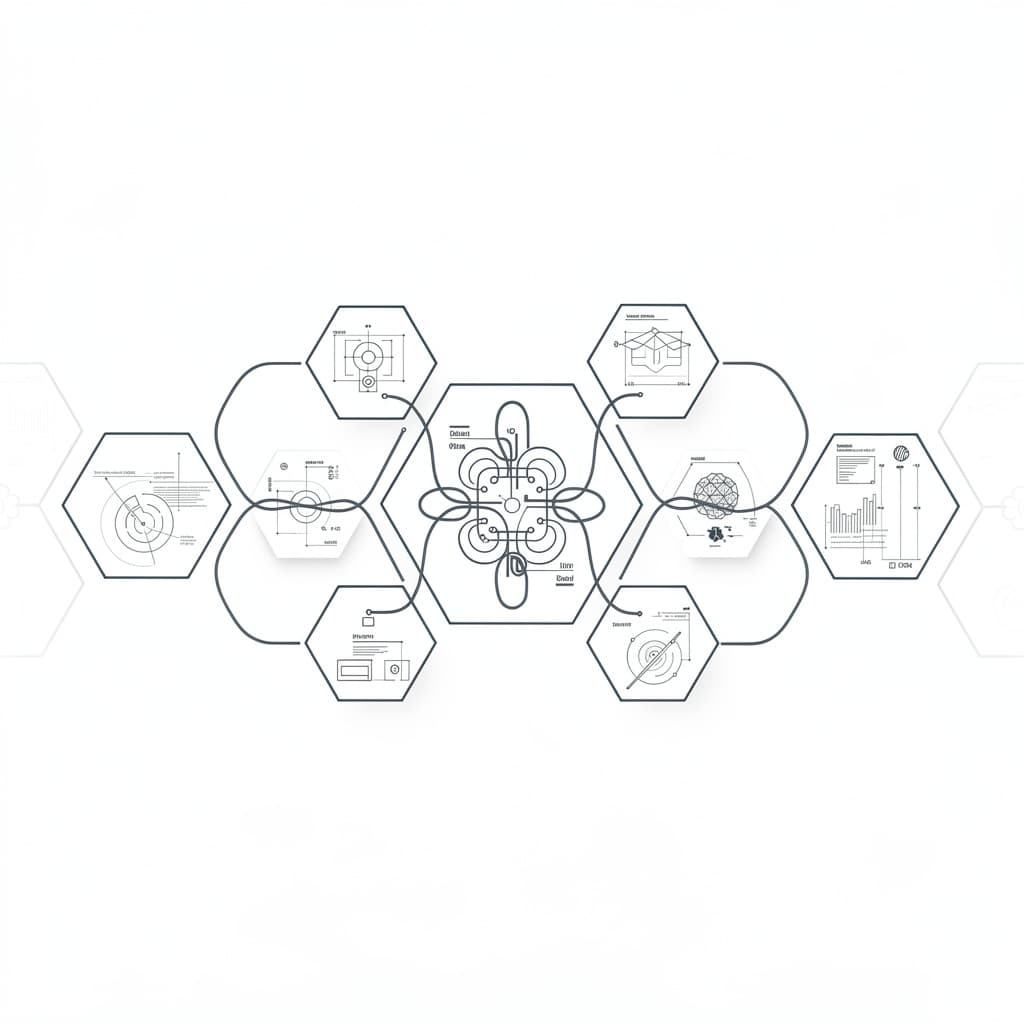

The engineering design process is not merely a checklist for building gadgets; it is a sophisticated, non-linear methodology used by professionals to solve complex, often ill-defined problems. Unlike simple trial-and-error, this systematic approach utilizes a feedback-driven framework to ensure that every decision is backed by empirical data and technical logic. By navigating through specific engineering design process steps, practitioners can transform a nebulous human desire into a high-functioning, safe, and economically viable reality. This article explores the nuanced layers of the engineering design cycle, from the initial spark of a problem to the rigors of mass production and technical documentation.
Defining the Engineering Design Cycle
The roots of systematic problem solving can be traced back to the Renaissance, where figures like Leonardo da Vinci began blending artistic visualization with mechanical principles. However, the formalization of the engineering design cycle as a professional standard emerged alongside the Industrial Revolution, as the complexity of machinery required more than just intuition. Early engineers realized that as systems grew in scale—such as the steam engine or the bridge-building projects of Isambard Kingdom Brunel—a repeatable, documented process was necessary to manage risk and ensure structural integrity. This evolution shifted engineering from a craft-based apprenticeship model to a rigorous academic and professional discipline governed by mathematical proofs and standardized protocols. A vital cognitive distinction must be made between the scientific method and the engineering design process to understand their unique contributions to human knowledge. While the pure scientist asks "Why does this phenomenon occur?" to seek a fundamental understanding of the universe, the engineer asks "How can I apply this phenomenon to solve a specific problem?" Science is primarily analytical and descriptive, focusing on the discovery of natural laws, whereas engineering is synthetic and prescriptive, focusing on the creation of artifacts. The scientist’s goal is reached when a hypothesis is validated; the engineer’s goal is only reached when a functional, reliable solution is delivered within the constraints of the real world. The modern design cycle functions as a closed-loop system, meaning that the outputs of one phase frequently loop back to inform and refine the inputs of an earlier stage. This is not a linear march from start to finish, but rather a spiraling progression that gains resolution with every revolution. Each cycle through the process reduces uncertainty, mitigates "design debt," and brings the final product closer to its ideal performance metrics. It acknowledges that human requirements are often fluid, and as the engineer learns more about the technical challenges during the journey, the solution must adapt accordingly to remain relevant and effective.The Critical Phase to Define the Problem Engineering
The most common cause of project failure in the technical world is not a lack of talent, but a failure to accurately define the problem engineering teams are tasked with. This initial phase involves zooming out from the immediate technical challenge to identify every potential stakeholder, from the end-user who operates the device to the technician who must maintain it. By mapping out the "ecosystem" of the problem, engineers can identify competing constraints, such as the tension between a high-performance engine and the strict emissions regulations of a specific government. Without this bird's-eye view, an engineer might solve a symptom of the problem while leaving the underlying cause untouched, leading to a product that works perfectly for a situation that does not exist. Once stakeholders are identified, the engineer must translate subjective human needs into objective technical specifications. If a client says they want a "lightweight laptop," the engineer must quantify this as "a mass not exceeding 1.2 kilograms." This conversion process is known as Requirement Engineering, and it involves establishing measurable criteria against which the success of the project will be judged. For instance, the safety of a structure is often defined by a "Factor of Safety" (), a dimensionless ratio that compares the absolute strength of a component to the actual load it is expected to carry. A common formula used in early structural definition is:where represents the stress at which the material fails and is the maximum working stress permitted in the design. In addition to performance metrics, this phase must explicitly list the absolute constraints, which are the non-negotiable boundaries of the project. Constraints typically include a fixed budget (e.g., the project must cost under 50,000 dollars), a strict timeline for delivery, or environmental regulations governing material toxicity. By defining these boundaries early, the engineering team creates a "solution space" that prevents wasted effort on ideas that are physically possible but economically or legally forbidden. Effectively defining the problem acts as the project’s compass, ensuring that even as the design grows in complexity, the team remains aligned with the original mission.
Studying this for an exam?
Noesis builds the syllabus, notes and tests for you, and you study them with a tutor that knows your material.
Conceptualization and Knowledge Acquisition
After the problem is defined, the design process enters a state of information gathering and "prior art" research. No engineer works in a vacuum; every innovation is built upon the discoveries and mistakes of predecessors. This phase involves a deep dive into existing patents, scholarly journals, and competitive products to understand how similar problems have been tackled in the past. By conducting a thorough literature review, the team avoids "reinventing the wheel" and can identify gaps in current technology that their new design might fill. It is during this stage that the engineer gains the necessary context to determine whether the proposed solution requires a radical new invention or a more efficient arrangement of existing components. With a firm grasp of the existing knowledge, the team transitions into divergent thinking, a period of unconstrained idea generation. Techniques such as morphological analysis are used to break down the main problem into smaller sub-problems, allowing engineers to brainstorm multiple solutions for each individual function. For example, if designing a new electric vehicle, one sub-problem might be "energy storage" while another is "drive-train configuration." By exploring a wide variety of combinations—some of which may seem absurd at first—the team ensures that they do not prematurely settle on the most obvious solution. This phase is characterized by sketches, mind maps, and rough conceptual models that prioritize breadth over depth. The conceptualization phase concludes with the selection of a leading design, often utilizing a "Pugh Matrix" or a similar weighted decision-making tool. Each concept is graded against the technical specifications and constraints established in the definition phase, allowing for an objective comparison between vastly different ideas. It is not uncommon for the final concept to be a "hybrid" that combines the best features of several different brainstormed ideas. This transition from divergent thinking (expanding options) to convergent thinking (narrowing down to the best) is a hallmark of a mature engineering culture. It ensures that the chosen path is the one with the highest probability of success relative to the resources available.The 7 Steps of Engineering Design Process
While different industries may use slightly different terminology, the 7 steps of engineering design process provide a universal roadmap for navigating innovation. These steps function as a logical sequence that moves the project from abstract thought to concrete reality.- Define the Problem: This involves identifying the target audience, the core function of the design, and the constraints that will limit the solution.
- Research and Brainstorm: Teams gather data on existing solutions and use divergent thinking to generate a wide array of potential concepts.
- Specify Requirements: Translating the general problem into specific, measurable performance goals and technical benchmarks.
- Develop the Solution: Choosing the best concept and creating detailed plans, including materials selection and preliminary CAD models.
- Build a Prototype: Creating a physical or digital representation of the design to test specific functions or aesthetics.
- Test and Evaluate: Putting the prototype through rigorous trials to see if it meets the specifications defined in step three.
- Refine and Communicate: Using test data to iterate on the design and then documenting the final results for manufacturing.
Prototyping and Mathematical Modeling
Prototyping is the bridge between the theoretical world of mathematics and the physical world of matter. In the early stages, engineers often use low-fidelity prototypes—crude models made of cardboard, wood, or simple 3D-printed plastic—to test "form and fit." These models are not intended to be functional; rather, they allow the team to visualize the physical proportions and ergonomics of the design. By holding a physical object, an engineer might realize that a handle is too small or a button is poorly placed, insights that are often missed when looking at a two-dimensional computer screen. This "fail-early" approach saves significant time and money by catching obvious design flaws before expensive materials are ordered. As the design matures, the focus shifts to mathematical modeling and high-fidelity simulations. Modern engineering relies heavily on Computer-Aided Engineering (CAE) tools to predict how a design will behave under stress, heat, or fluid flow. For example, Finite Element Analysis (FEA) allows engineers to divide a complex part into millions of tiny "elements" and solve equations for each to see where the part is most likely to break. A common calculation in these simulations involves Hooke's Law for elastic deformation:where is the applied stress, is Young's Modulus (a measure of material stiffness), and is the strain. By calculating these values digitally, engineers can optimize the design—removing material where it is not needed to save weight while reinforcing areas of high stress. One of the most advanced iterations of modeling is the Digital Twin, a virtual counterpart of a physical system that updates in real-time based on sensor data. This is particularly prevalent in the aerospace and automotive industries, where a digital twin of an engine can predict when a part might fail based on actual flight conditions. Stress testing in this virtual environment allows for "what-if" scenarios that would be too dangerous or expensive to perform in real life, such as simulating a bird strike on a jet turbine. This synergy between physical prototypes and digital simulations ensures that the final product is not just a best guess, but a highly engineered system with a predictable lifespan.
Mastery of the Iterative Design Process
The iterative design process is the heartbeat of engineering; it is the acknowledgment that "perfection" is a moving target that is approached but never fully reached in a single attempt. After a prototype is tested, the resulting data often reveals unexpected behaviors—vibrations at specific frequencies, overheating in certain components, or software glitches under load. Instead of viewing these as failures, the systematic engineer treats them as critical feedback loops. Each failure is a data point that informs the next version of the design, leading to a process of incremental optimization. This cycle of "build-test-learn" is what allowed companies like SpaceX to develop reusable rockets, iterating through dozens of explosive tests until the landing sequence was perfected. To master this iteration, engineers employ Root Cause Analysis (RCA) when a failure occurs. This involves peeling back the layers of a problem—often using the "5 Whys" technique—to find the underlying reason for a malfunction. For instance, if a motor burns out, the "why" might be because it drew too much current, which was because the load was too high, which was because a bearing was misaligned. By fixing the alignment rather than just replacing the motor, the engineer ensures the problem does not recur. This rigorous approach to failure analysis transforms setbacks into the very fuel that drives innovation forward. The ultimate goal of iteration is the incremental optimization of system performance. Engineers often look for "Pareto improvements," where one aspect of the design can be improved without making any other aspect worse. However, as the design nears its limit, trade-offs become inevitable. This is where the concept of diminishing returns applies; the effort required to make a system 1% more efficient might be double the effort required for the first 50%. A master engineer knows when the design is "good enough" to meet the requirements and when further iteration is simply an exercise in over-engineering that adds cost without adding value to the stakeholder.Engineering Design Process Examples in Industry
In the aerospace industry, engineering design process examples are often centered around safety redundancy and extreme environmental resistance. When designing a modern commercial aircraft, engineers must assume that every single component will eventually fail. This leads to the "Fail-Safe" design philosophy, where critical systems like flight controls or hydraulics are duplicated or triplicated. If the primary flight computer fails, a secondary and often a tertiary system (sometimes using different hardware and software to avoid common-mode failures) takes over instantly. This level of rigor is a direct result of the iterative design process applied to the history of aviation accidents, where each tragedy led to new steps in the design cycle to prevent a recurrence. Another compelling example can be found in the rise of sustainable infrastructure and the move toward material cycles. Civil engineers are no longer just designing for strength; they are designing for the entire lifecycle of a structure, including its eventual deconstruction. This involves selecting materials with low embodied carbon and designing modular components that can be reused in other projects. In this context, the "problem definition" phase includes the 100-year environmental impact of the building. This shift shows how the engineering design process steps can adapt to incorporate global ethical concerns, transforming the way we build cities from a linear "extract-use-discard" model to a circular one. In the consumer electronics sector, the process is driven by miniaturization and thermal management. Designing a modern smartphone requires fitting billions of transistors into a pocket-sized device that must not burn the user's hand. Here, the iterative process is visible in the yearly release cycles of hardware. Engineers use the data from millions of units in the field to refine the thermal dissipation paths and battery chemistry for the next generation. This rapid-fire application of the design cycle demonstrates how systematic thinking can drive exponential growth in computing power while maintaining high levels of consumer safety and reliability.Communication and Technical Standardization
The final, and perhaps most overlooked, stage of the engineering path is the communication of the design through technical standardization. An engineer’s job is not finished when the prototype works; it is finished when the design can be successfully replicated by others. This requires the creation of Technical Documentation, including detailed CAD drawings, wiring diagrams, software source code, and assembly instructions. These documents serve as the "source of truth" for the manufacturing team. If the documentation is ambiguous, the final product will vary from unit to unit, leading to quality control nightmares and potential safety hazards in the field. Standardization also involves adhering to international benchmarks, such as those set by ISO (International Organization for Standardization) or ASTM (American Society for Testing and Materials). By designing to these standards, engineers ensure that their components are compatible with the global supply chain. For example, using a standard thread size for a bolt means that a technician in another country can easily find a replacement part. This interoperability is the invisible glue that holds modern global industry together, allowing complex systems like the International Space Station—built by dozens of different nations—to fit together perfectly in the vacuum of space. Transitioning from a prototype to mass production is the final hurdle in the systematic path. This phase, often called "Design for Manufacturing" (DFM), involves modifying the design to make it easier and cheaper to produce at scale. A part that was 3D-printed during the prototyping phase might be redesigned for injection molding to reduce the cost per unit from 50 dollars to 50 cents. This requires a final trip back through the iterative design process to ensure that these changes for production do not compromise the original performance requirements. When the first unit rolls off the assembly line and meets every technical specification, the systematic journey from a vague idea to a tangible innovation is complete.References
- Pahl, G., Beitz, W., Feldhusen, J., and Grote, K. H., "Engineering Design: A Systematic Approach", Springer, 2007.
- Dieter, G. E., and Schmidt, L. C., "Engineering Design", McGraw-Hill Education, 2012.
- Ulrich, K. T., and Eppinger, S. D., "Product Design and Development", McGraw-Hill, 2016.
- Voland, G., "Engineering by Design", Pearson Prentice Hall, 2004.
Recommended Readings
- Shigley’s Mechanical Engineering Design by Budynas & Nisbett — The definitive text for understanding how to apply mathematical modeling and material science to real-world mechanical components.
- The Design of Everyday Things by Don Norman — An essential read for understanding the human-centric side of the problem definition phase and why usability is as important as technical function.
- Skunk Works: A Personal Memoir of My Years at Lockheed by Ben Rich — A fascinating look at the iterative design process behind some of the most advanced aerospace projects in history, from the U-2 to the F-117 Nighthawk.
Turn this topic into a full course
Noesis builds the syllabus, notes and tests for you, and you study them with a tutor that knows your material.