The Systematic Logic of Maslow's Hierarchy
Explore the systematic logic of Maslow's hierarchy of needs. From physiological needs to self-actualization, discover how Abraham Maslow's theory works.
In this articleThe Foundations of Humanistic Motivation

The study of human motivation has long sought to identify the fundamental drivers that compel individuals to act, grow, and seek fulfillment. In 1943, a psychologist named Abraham Maslow published a seminal paper titled "A Theory of Human Motivation" in the journal Psychological Review, which fundamentally altered the landscape of modern psychology. Maslow proposed that human needs are not a disorganized collection of desires but are instead organized into a systematic, tiered structure. This framework, now famously known as Maslow's hierarchy of needs, posits that lower-level survival requirements must be largely satisfied before an individual can effectively pursue higher-level psychological and self-fulfillment needs. By moving away from the deterministic views of behaviorism and the clinical focus of psychoanalysis, Maslow laid the groundwork for humanistic psychology, emphasizing the inherent potential and agency of the human spirit.
The Foundations of Humanistic Motivation
The Origins of the Abraham Maslow Theory
The Abraham Maslow theory emerged during a period when psychology was dominated by two primary schools of thought: behaviorism, which viewed humans as reactive subjects to environmental stimuli, and Freudian psychoanalysis, which focused heavily on unconscious drives and pathology. Maslow found these perspectives limiting, as they often ignored the qualities that make humans unique, such as creativity, altruism, and the pursuit of meaning. He sought to create a "Third Force" in psychology—Humanism—which would focus on the healthy human personality rather than just the dysfunctional one. By studying "exemplary" individuals such as Albert Einstein and Eleanor Roosevelt, Maslow shifted the focus from what goes wrong with the human mind to what it can achieve at its peak. This revolutionary shift allowed for a more optimistic view of human nature, suggesting that everyone possesses an internal drive toward self-improvement and wholeness.
The logic of the hierarchy is rooted in the concept of "functional autonomy," suggesting that as we mature and satisfy our basic requirements, our motivations evolve from biological imperatives to psychological aspirations. Maslow’s work was influenced by his observations of the Blackfoot (Siksika) Nation, where he noted a community structure that prioritized social cohesion and self-actualization as intertwined goals. This cross-cultural exposure helped him refine the idea that while the needs themselves are universal, the methods by which they are satisfied can vary across different societies. His theory suggests that human life is a process of "becoming," where the individual is never static but is always striving toward a higher state of being. Consequently, the hierarchy serves as a map of human development, charting the path from the most basic animalistic instincts to the most sophisticated expressions of human consciousness.
The Concept of the Prepotency Principle
Central to the systematic logic of the hierarchy is the prepotency principle, which dictates the order in which needs are prioritized by the human psyche. Prepotency implies that a need "lower" in the hierarchy has a greater influence on behavior until it is satisfied, at which point the next "higher" need emerges as the primary motivator. For instance, an individual who is severely dehydrated will not be concerned with their social status or creative legacy; the physiological need for water is prepotent and consumes all cognitive and physical resources. Maslow did not suggest that a need must be 100 percent satisfied before the next one appears, but rather that it must be "sufficiently" met. He conceptualized this as a shifting percentage of satisfaction, where a person might be 85 percent satisfied in physiological needs, 70 percent in safety, and perhaps only 10 percent in self-actualization at any given time.
This principle provides a structured way to understand why people prioritize certain actions over others in moments of crisis versus moments of stability. When a person’s foundational needs are threatened, they experience a "regression" down the hierarchy, where their primary focus returns to survival and security. This explains the psychological impact of poverty or chronic instability; when the mind is constantly occupied by the logistics of survival, it lacks the "bandwidth" to engage in long-term planning or creative endeavors. The prepotency principle also highlights the "deficit-driven" nature of the lower levels, where the motivation to act is born from a lack of something essential. As the individual climbs the hierarchy, the nature of motivation shifts from filling a void to pursuing an internal calling, marking the transition from survival to flourishing.
The Five Levels of Maslow's Hierarchy
Architecting the Hierarchy of Needs Pyramid
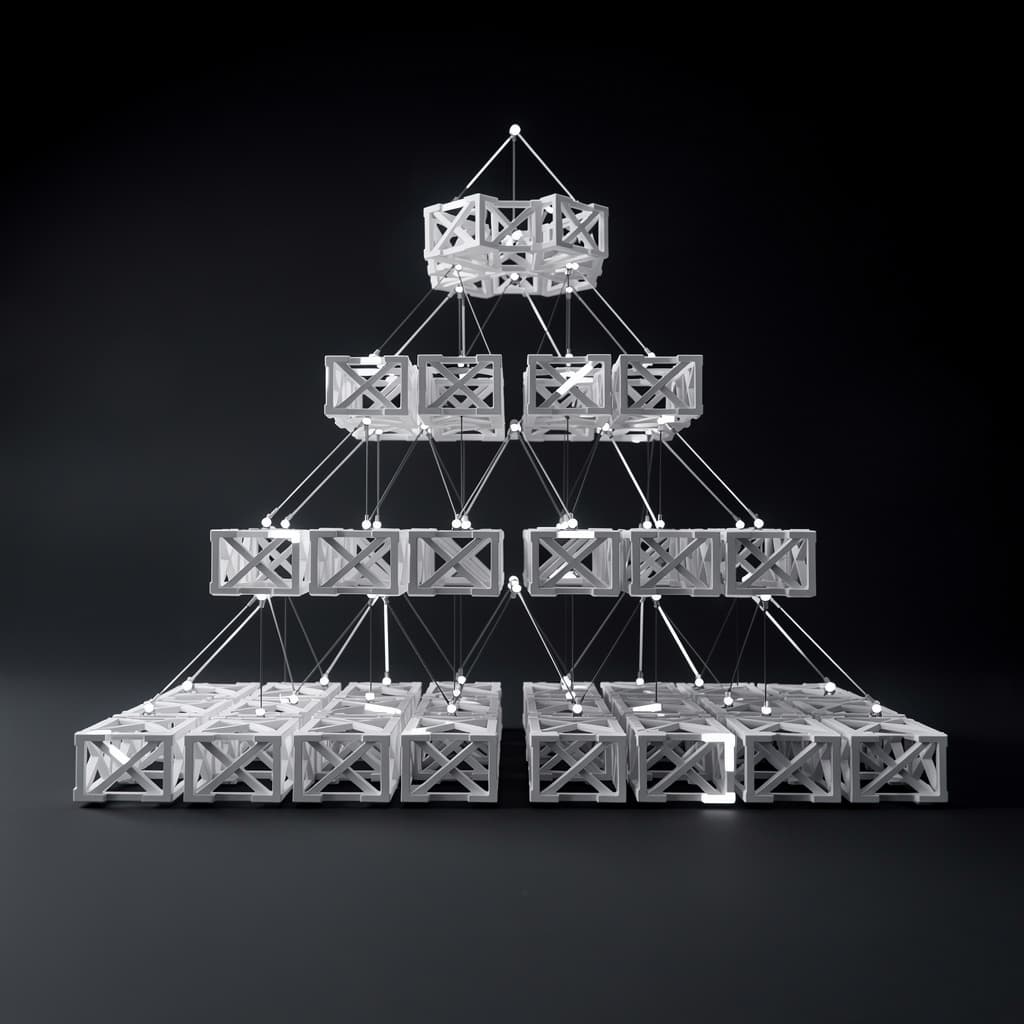
While Maslow himself never actually used a pyramid to illustrate his theory, the hierarchy of needs pyramid has become the universal visual representation of his ideas. The pyramid shape effectively conveys the relationship between the levels: the broad base represents the fundamental needs shared by all humans, while the narrowing top represents the increasingly rare and individualized pursuit of self-actualization. This structure implies a solid foundation is required for the upper tiers to remain stable; if the base is compromised, the entire structure of the individual's well-being is at risk. Each level serves as a distinct stage of psychological development, providing a framework for analyzing both individual behavior and the health of larger social systems. By visualizing these needs as a tiered system, we can better understand the complexity of human motivation as an integrated whole rather than a series of disconnected desires.
The pyramid is typically divided into five distinct stages, though later versions of the theory expanded these to include cognitive, aesthetic, and transcendence needs. In the standard five-level model, the tiers are categorized into physiological, safety, love and belonging, esteem, and self-actualization. The first four levels are often grouped together as "deficiency needs," meaning that their absence causes tension and anxiety, whereas their presence brings about a state of equilibrium or relief. The final level, self-actualization, stands alone as a "growth need," driven by the desire to expand one's capabilities rather than to satisfy a lack. This architectural distinction is crucial for understanding that the goal of human life, in Maslow’s view, is not merely the absence of suffering but the active pursuit of excellence and the realization of one's unique potential.
Distinguishing Deficiency Needs from Growth Needs
To fully grasp the systematic logic of the hierarchy, one must distinguish between deficiency needs (D-needs) and growth needs (B-needs, or "being" needs). Deficiency needs arise due to deprivation and are said to motivate people when they are unmet. The motivation to fulfill such needs will become stronger the longer the duration they are denied; for example, the longer a person goes without food, the more hungry they will become. When these needs are met, the individual experiences a sense of "satiation," and the motivation to seek that specific resource diminishes. In this sense, D-needs operate on a homeostatic principle, much like a thermostat regulating the temperature of a room. Once the "optimal" level of safety or belonging is reached, the drive is neutralized, allowing the individual to focus on the next level of the hierarchy.
In contrast, growth needs do not stem from a lack of something, but rather from a desire to grow as a person. Once these growth needs have been reasonably satisfied, one may be able to reach the highest level called self-actualization. Unlike D-needs, B-needs are not satiated once they are engaged; instead, they often become stronger as they are pursued. The more one learns about a subject or practices a craft, the more one's passion for that activity grows. This creates a positive feedback loop of continuous development. While deficiency needs are necessary for survival and stability, growth needs are necessary for psychological health and the feeling of a life well-lived. Maslow argued that even if all lower-level needs are met, an individual will eventually feel a new discontent and restlessness unless they are doing what they, individually, are fitted for.
Studying this for an exam?
Noesis builds the syllabus, notes and tests for you, and you study them with a tutor that knows your material.
Biological and Safety Imperatives
Essential Physiological Needs Examples
The most basic level of the hierarchy consists of physiological needs, which are the biological requirements for human survival. If these requirements are not met, the human body cannot function properly and will ultimately fail. Common physiological needs examples include air, water, food, shelter, sleep, clothing, and reproduction. These are the most prepotent of all needs; if a person is deprived of all needs, the physiological ones will be the first and most intense drivers of behavior. Maslow noted that for a person who is extremely hungry, no other interests exist but food. He dreams of food, remembers food, and perceives only food. In such a state, higher-level pursuits like philosophy, art, or social standing are viewed as "luxuries" that the individual cannot afford to contemplate.
Modern neuroscience supports this prioritization, as the brain's "survival center"—the hypothalamus and the brainstem—takes precedence over the prefrontal cortex during periods of acute deprivation. This biological urgency ensures that the organism acts immediately to restore homeostasis, the stable internal environment required for life. For example, if the body’s internal temperature deviates significantly from 98.6 degrees Fahrenheit (37 degrees Celsius), the individual will be overcome by the need to find warmth or cooling, ignoring all other social or professional obligations. Once these biological pressures are relieved, the "emergency" state of the nervous system subsides, and the individual gains the cognitive capacity to look toward the future. Thus, the physiological level provides the biological "hardware" upon which the rest of the psychological "software" of the hierarchy must run.
Establishing the Foundation of Personal Security
Once an individual's physiological needs are relatively satisfied, their needs for safety and security become salient. In a stable, modern society, these needs are often less visible than in a state of war or natural disaster, but they remain a powerful force in human behavior. Safety needs encompass more than just physical protection from harm; they include emotional security, financial stability, health and well-being, and protection against accidents or illness. People manifest the desire for safety through the preference for the familiar, the pursuit of insurance policies, the creation of savings accounts, and the desire for a predictable, organized world. This level is about reducing uncertainty and ensuring that the survival achieved in the first level can be maintained over the long term.
The systematic logic of this stage is rooted in the avoidance of anxiety and the need for "order." When the environment is chaotic or unpredictable, the individual remains in a state of hyper-vigilance, which prevents them from investing energy into higher-level psychological growth. For children, the need for safety is especially pronounced, as they require consistent routines and boundaries to feel secure in their environment. In adulthood, this need often translates into job security and a stable legal system. Without a sense of safety, the world feels threatening, and the individual's energy is consumed by defensive maneuvers. Only when a person feels they are "safe from harm" can they begin to open up to the vulnerability required for social connection and emotional intimacy.
The Social and Psychological Strata
Belongingness and the Mechanics of Connection
As the foundational needs for survival and safety are met, the third level of human needs emerges: the need for love and belongingness. This level involves the desire for interpersonal relationships, affiliations, and being part of a group. Humans are inherently social creatures, and the systematic logic of this level suggests that isolation and loneliness can be as detrimental to health as hunger or physical danger. These needs include friendships, intimacy, trust, and acceptance, as well as the feeling of being part of a family, a workspace, or a community. Maslow emphasized that "love" in this context is not just romantic; it is the broader experience of giving and receiving affection and feeling "at home" with others.
The absence of belongingness can lead to significant psychological issues, such as social anxiety, clinical depression, and a sense of alienation. In our modern digital age, the mechanics of connection have shifted, but the underlying need remains the same. People seek validation and membership in "tribes," whether they are based on religion, professional interests, or shared hobbies. This level marks the transition from the individual’s focus on themselves to their focus on their place within a larger social fabric. When an individual feels they belong, they gain a "social safety net" that further stabilizes their identity and prepares them for the next stage of development: the pursuit of esteem and recognition within that social group.
Self-Esteem as a Cognitive Requirement
The fourth level of the hierarchy is the need for esteem, which Maslow classified into two distinct categories: esteem for oneself and the desire for reputation or respect from others. The lower version of esteem involves the need for status, recognition, fame, prestige, and attention. This is essentially the "external" component of esteem, where the individual seeks validation from the external world to confirm their value. The higher version, however, is the need for self-respect, strength, competence, mastery, self-confidence, independence, and freedom. Maslow argued that the "higher" form of esteem is more stable and vital for psychological health because it is based on internal competence rather than the fickle opinions of others.
When esteem needs are satisfied, a person feels confident and valuable as a member of society. They feel that their skills are being utilized and that they are making a meaningful contribution. Conversely, if these needs are thwarted, the individual experiences feelings of inferiority, helplessness, and discouragement. The systematic logic here is that self-esteem serves as a psychological "fuel" that empowers the individual to take the risks necessary for self-actualization. Without a firm sense of self-worth, the prospect of pursuing one's unique path can feel terrifying. Therefore, esteem acts as the final gatekeeper in the deficiency levels, ensuring the individual has the internal "ego strength" to move beyond social expectations and toward their own internal calling.
The Pinnacle of Personal Development
An Integrated Self-Actualization Definition
At the top of the hierarchy lies self-actualization, a concept that is often misunderstood as simple happiness or success. A comprehensive self-actualization definition describes it as the full realization of one's potential and the desire to become everything that one is capable of becoming. It is the point where an individual's "being" needs take center stage. Maslow famously stated, "What a man can be, he must be." This level of motivation is highly individualistic; for one person, it may be expressed through the creation of art, for another through parenting, and for another through scientific discovery. Unlike the lower levels, self-actualization is not a destination but a continuous process of growth and discovery.
Self-actualization represents the peak of human psychological evolution, where the individual is no longer driven by the pressures of society or the fears of the ego. It is a state of "meta-motivation," where the person is motivated by "B-values" such as truth, goodness, beauty, unity, and justice. Reaching this stage requires a high degree of self-awareness and the courage to be "authentic" even when it conflicts with social norms. Because this stage is dependent on the satisfaction of all four lower levels, Maslow estimated that only a small percentage of the population (perhaps less than 2 percent) reaches a state of true self-actualization. However, he believed that everyone experiences "peak experiences"—moments of intense joy and transcendence—that provide a glimpse into this state of being.
Cognitive Traits of the Self-Actualized Mind
Maslow identified several key characteristics that distinguish self-actualized individuals from the general population. These individuals tend to have an "efficient perception of reality," meaning they can judge situations and people accurately without being clouded by their own fears or prejudices. They exhibit a high degree of "acceptance of self, others, and nature," viewing the world as it is rather than how they wish it to be. Another hallmark trait is "spontaneity and simplicity"; they are not bound by rigid social conventions and are comfortable being themselves. They are "problem-centered" rather than "ego-centered," often dedicating their lives to a cause or mission outside of themselves, which provides them with a deep sense of purpose and direction.
Furthermore, self-actualized people possess a "continued freshness of appreciation," finding wonder in the everyday experiences of life that others might take for granted. They often have "deep interpersonal relations" with a few close friends rather than many superficial ones, and they value "privacy and autonomy." Most importantly, they are characterized by "creativity"—not necessarily in the sense of being an artist, but in the way they approach life with a fresh and inventive perspective. These traits together form a picture of a human being who is fully "functioning," possessing a level of psychological health that allows them to navigate the complexities of life with resilience, wisdom, and a sense of profound inner peace.
Dynamic Interplay Within the System
Fluidity and Multi-Level Satisfaction
It is a common misconception that Maslow's hierarchy operates like a ladder where one must completely finish one level before stepping onto the next. In reality, the system is highly fluid and dynamic. Maslow clarified that most people are partially satisfied and partially unsatisfied in all their basic needs at the same time. The hierarchy describes a "statistical probability" rather than a rigid sequence. For example, a person might be working on their self-esteem while still feeling a degree of social insecurity. The logic is more akin to a series of overlapping waves, where the "peak" of one motivation subsides as the "peak" of the next begins to rise. This fluidity allows for the complexity of human experience, where individuals can pursue multiple goals simultaneously.
Furthermore, the satisfaction of needs can be influenced by the individual's "aspiration level" and their past experiences. A person who has experienced extreme poverty may always feel a lingering need for safety, even after they have become wealthy. Conversely, some individuals may "sacrifice" lower-level needs for the sake of higher-level ones, such as the "starving artist" who neglects physiological comfort to pursue creative self-actualization. Maslow recognized these exceptions and suggested that for some people, the hierarchy is rearranged due to their unique personality or life history. This nuance is vital for applying the theory to real-world scenarios, as it acknowledges that while the structural logic remains constant, the individual application of that logic is highly variable.
Contemporary Critiques of the Linear Model
Since its inception, Maslow's hierarchy has faced various critiques, particularly regarding its linear structure and its Western-centric focus. Modern psychologists argue that the needs for social connection and belongingness might be more foundational than Maslow suggested, perhaps even occurring simultaneously with physiological needs. In many collectivist cultures, the "self" is defined through relationships, making the distinction between belongingness and self-actualization less clear. Critics also point out that the hierarchy does not easily account for "altruistic" behaviors where individuals risk their own safety for the benefit of others, suggesting that the drive for "meaning" might be as fundamental as the drive for "security."
Another critique focuses on the lack of empirical evidence for the exact five-stage sequence. Research has shown that humans can experience high levels of well-being and self-actualization even in environments where their safety and physiological needs are not fully met. This has led to more modern adaptations of the theory, such as the "Life History Theory" or the "Self-Determination Theory" (SDT), which focus on autonomy, competence, and relatedness as the primary drivers of motivation. Despite these critiques, Maslow's model remains highly influential because its core insight—that human needs are hierarchical and that survival precedes flourishing—is a powerful and intuitive heuristic for understanding the human condition. It remains a foundational "mental model" that continues to inform coaching, therapy, and social policy.
Practical Implementations of the Hierarchy
Motivational Systems in Professional Environments
In the realm of organizational behavior and management, the hierarchy of needs has been used to transform workplace culture. Traditionally, management was based on "Theory X," which assumed employees were naturally lazy and needed to be motivated by the satisfaction of physiological and safety needs (paychecks and job security). Following Maslow’s logic, Douglas McGregor proposed "Theory Y," which suggests that once these basic needs are met, employees are motivated by higher-level needs like belonging, esteem, and self-actualization. This shift led to the development of employee engagement strategies that focus on providing meaningful work, opportunities for professional growth, and a sense of community within the office.
To implement this systematically, a company must ensure that the "hygiene factors" (pay, benefits, safety) are robust before they can expect employees to be creative or "all in" on the company mission. If employees are worried about layoffs (safety) or feel isolated (belonging), their cognitive resources will be diverted away from innovation and toward self-protection. Once the foundation is secure, managers can foster self-actualization by allowing for "autonomy" and "mastery"—giving employees the freedom to solve problems in their own way and the resources to improve their skills. In this way, the hierarchy serves as a checklist for leadership, ensuring that the organizational environment supports the full spectrum of human motivation rather than just the bottom line.
Applying Systematic Logic to Holistic Education
The field of education has also been profoundly influenced by Maslow's hierarchy, particularly through the lens of "holistic" or "student-centered" learning. The fundamental principle is that "a hungry child cannot learn." This has led to the implementation of school breakfast programs and the focus on "social-emotional learning" (SEL). If a student does not feel safe at home or is being bullied (safety and belongingness), their brain is in a state of stress that inhibits the prefrontal cortex, making the acquisition of new knowledge (a cognitive/esteem need) nearly impossible. By addressing the "whole child," educators create the necessary psychological conditions for academic success.
Moreover, the hierarchy encourages educators to move beyond rote memorization and toward fostering self-actualization in students. This involves recognizing that every student has unique talents and interests that should be nurtured. When students are given the opportunity to pursue projects they are passionate about, they move from being "extrinsically motivated" (by grades and teacher approval) to being "intrinsically motivated" (by the joy of discovery). This educational philosophy aims to produce not just "skilled workers" but "actualized citizens" who possess the self-confidence and creativity to contribute to society in a meaningful way. By viewing the classroom through the lens of Maslow's system, teachers can better diagnose why a student might be struggling and provide the specific level of support they need to thrive.
References
- Maslow, A. H., "A Theory of Human Motivation", Psychological Review, 1943.
- Maslow, A. H., "Motivation and Personality", Harper & Row, 1954.
- Hoffman, E., "The Right to be Human: A Biography of Abraham Maslow", McGraw-Hill, 1988.
- Tay, L., & Diener, E., "Needs and subjective well-being around the world", Journal of Personality and Social Psychology, 2011.
- McGregor, D., "The Human Side of Enterprise", McGraw-Hill, 1960.
Recommended Readings
- Toward a Psychology of Being by Abraham Maslow — This book expands on the concept of self-actualization and explores the "B-values" that define the highest state of human existence.
- The Farther Reaches of Human Nature by Abraham Maslow — A posthumous collection of essays that delve into the later stages of Maslow's thought, including the concept of transcendence.
- Man's Search for Meaning by Viktor Frankl — While not a direct study of Maslow, this work provides a powerful parallel argument for the importance of "meaning" as a primary human motivator.
- Drive: The Surprising Truth About What Motivates Us by Daniel H. Pink — A modern take on motivation that aligns with Maslow's higher tiers, focusing on autonomy, mastery, and purpose.
Turn this topic into a full course
Noesis builds the syllabus, notes and tests for you, and you study them with a tutor that knows your material.