engineering10 min read
The Structural Logic of Stress and Strain
The study of how solid materials respond to external forces is the cornerstone of structural engineering and materials science. At the heart of this discipline lies the conceptual framework of stress...
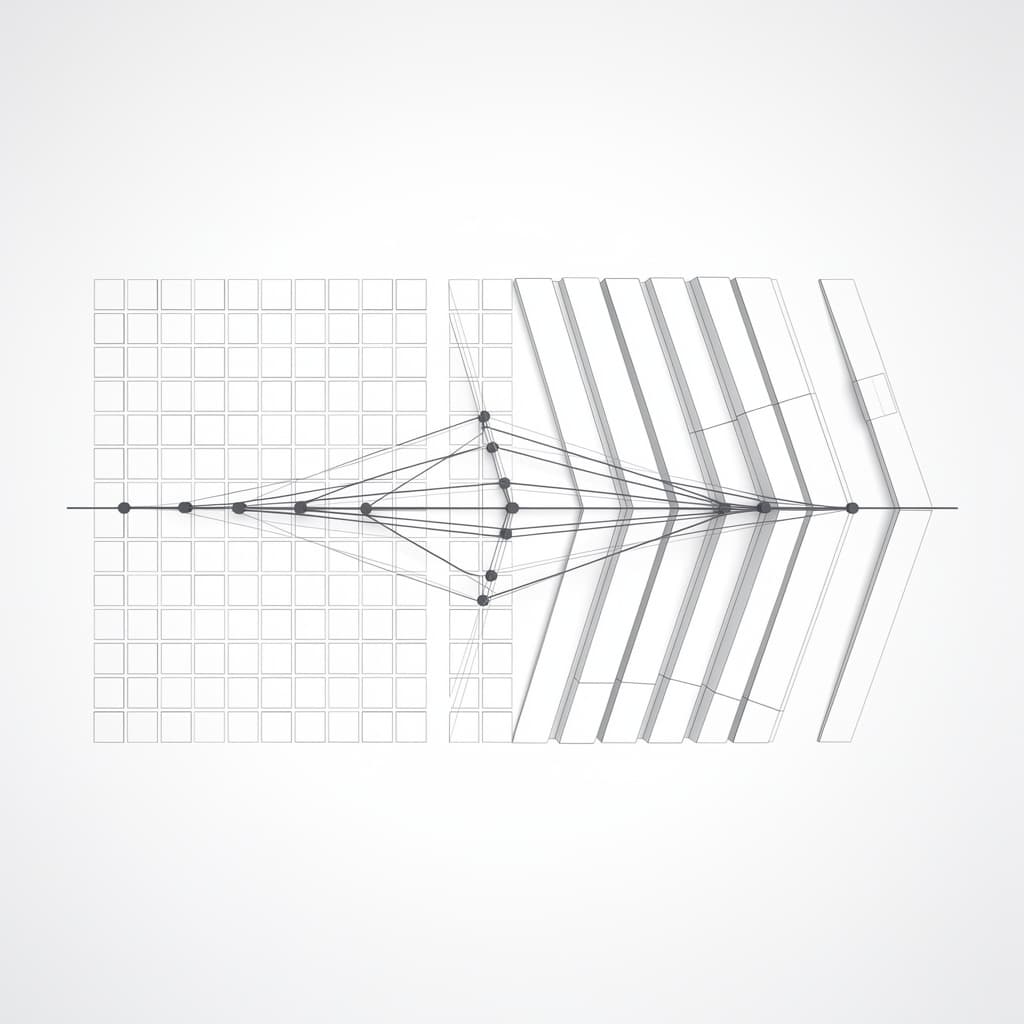
The study of how solid materials respond to external forces is the cornerstone of structural engineering and materials science. At the heart of this discipline lies the conceptual framework of stress and strain, two variables that quantify the internal intensity of forces and the resulting deformation, respectively. Unlike external loads, which depend on the specific geometry of a component, stress and strain provide a normalized language that allows engineers to predict how any quantity of a material will behave under pressure. By understanding the structural logic governing these interactions, we can design everything from micro-electromechanical systems to soaring skyscrapers with a high degree of mathematical certainty.
Fundamental Definitions of Force and Deformation
When an external load is applied to a physical body, the material does not simply move; it resists. This resistance is generated by the interatomic bonds that hold the solid together, creating an internal distribution of force. Engineering stress, denoted by the Greek letter sigma ($\sigma$), is defined as the intensity of these internal forces distributed over a specific area. In its most basic form, it is calculated as the applied force ($F$) divided by the original cross-sectional area ($A_0$) of the object. This abstraction is vital because it allows us to compare the strength of a thin wire to that of a massive steel column regardless of their physical dimensions. Characterizing the physical response to this stress requires a measure of deformation known as strain. Represented by the Greek letter epsilon ($\epsilon$), strain is a dimensionless quantity that describes the ratio of change in length to the original length of the material. When a rod of length $L_0$ is pulled until it reaches a new length $L$, the strain is expressed as $\epsilon = (L - L_0) / L_0$, or simply $\Delta L / L_0$. Because strain is a ratio, it provides a universal metric for how "stretched" or "compressed" a material is, independent of its initial size. This normalization is what permits a scientist to test a small sample in a laboratory and apply those findings to a full-scale industrial bridge. The relationship between load and geometry is inherently coupled, yet the definitions of stress and strain seek to decouple them for the sake of material analysis. While a heavier load will always produce more deformation in a given object, the "logic" of the material remains constant. For example, if you double the cross-sectional area of a support beam, the stress within that beam is halved for the same given load, which subsequently reduces the strain. Engineering design is essentially the art of manipulating geometry—specifically the cross-sectional area and shape—to ensure that the internal stresses remain within the safe operating limits of the chosen material.The Linear Elasticity of Solid Bodies
In the initial stages of loading, most engineering materials exhibit a behavior known as linear elasticity. This regime is characterized by a direct proportionality between stress and strain, meaning that if the load is doubled, the deformation also doubles. More importantly, elastic deformation is reversible; once the external force is removed, the atoms return to their original equilibrium positions, and the object regains its initial shape. This phenomenon was first formalized by Robert Hooke in the seventeenth century, leading to what we now call Hooke’s Law, which is expressed mathematically as $\sigma = E \epsilon$. The constant of proportionality in Hooke’s Law, $E$, is known as Young’s modulus or the modulus of elasticity. From a physical perspective, Young’s modulus represents the "stiffness" of a material, or its resistance to being stretched or compressed. On an atomic level, this stiffness is a macroscopic manifestation of the "spring constant" of the chemical bonds between atoms. Materials with strong covalent or metallic bonds, such as diamond or tungsten, possess very high values of Young's modulus, whereas materials with weaker intermolecular forces, like polymers, exhibit much lower values. However, this linear relationship is not infinite and is bounded by the limits of proportionality. Within a crystalline lattice, as the atoms are pulled further apart, the restorative forces eventually stop being linear. If the stress exceeds a certain threshold, the bonds may begin to break or slide, leading to permanent changes in the material's structure. Understanding this limit is crucial for precision engineering, as any component designed to function as a spring or a flexible support must operate strictly within this linear elastic range to avoid permanent set or functional failure.Analyzing the Stress Strain Curve
To fully understand a material's life cycle under load, engineers perform a tensile test to generate a stress strain curve. This graph serves as a "biography" of the material, mapping its journey from the first application of force to its eventual rupture. The curve typically begins with the linear elastic region, but as the stress increases, it reaches the yield point. At this critical juncture, the material transitions from elastic to plastic deformation, meaning the changes are no longer reversible. For many metals, this transition is marked by a noticeable "dip" or a leveling off of the curve as the atomic planes begin to slip past one another. Once the material enters the plastic region, it undergoes a process known as strain hardening or work hardening. In this phase, the internal structure of the material becomes more resistant to further deformation due to the entanglement of dislocations within the crystal lattice. This is why a metal wire becomes harder to bend the more you work it. The curve continues to rise until it reaches the ultimate tensile strength (UTS), which represents the maximum engineering stress the material can withstand. Beyond this point, the material can no longer support increasing loads effectively, and the structural integrity begins to degrade rapidly. The final stage of the stress strain curve is characterized by the necking phenomenon and subsequent fracture. After the UTS is reached, deformation becomes localized in a small region of the specimen, causing the cross-sectional area to decrease significantly—a process that looks like the "neck" of a bottle. Because the engineering stress calculation uses the original area $A_0$, the curve appears to drop, even though the actual stress on the reduced area is increasing. Eventually, the material reaches its breaking point, resulting in a physical fracture. The shape of the curve at this final stage tells us whether the failure was "ductile" (stretching significantly before breaking) or "brittle" (snapping suddenly).Variations in Mechanical Loading
While tensile stress—pulling a material apart—is the most common focus of study, real-world structures are subjected to a variety of complex loading conditions. Compressive forces are the opposite of tensile forces, pushing atoms together rather than pulling them apart. While many metals behave similarly in tension and compression, brittle materials like concrete, stone, and cast iron are significantly stronger in compression. This is why ancient architects used arches and domes; these shapes convert the weight of the structure into compressive stress, taking advantage of the material's inherent strengths while avoiding its weaknesses in tension. Another fundamental type of loading is shear stress, denoted by the Greek letter tau ($\tau$). Unlike tensile stress, which acts normal (perpendicular) to a surface, shear stress acts parallel to the cross-section. This results in an angular distortion known as shear strain ($\gamma$). A classic example of shear is the force acting on a rivet holding two plates together, or the twisting of a drive shaft in an engine. The relationship between shear stress and strain is governed by the shear modulus ($G$), which is related to Young's modulus but specifically describes a material’s resistance to shape change without necessarily changing its volume. Beyond linear and angular changes, materials also experience volumetric strain when subjected to uniform pressure from all sides, such as a submerged object in the deep ocean. This response is quantified by the Bulk modulus ($K$), which measures a material's resistance to compression under hydrostatic pressure. Understanding these different moduli is essential because a material might be incredibly stiff against stretching (high $E$) but relatively easy to twist (low $G$). Comprehensive structural analysis requires a multi-dimensional approach to these forces to ensure that all possible modes of failure are addressed.Intrinsic Mechanical Properties of Materials
The data derived from the stress and strain relationship allows us to categorize materials based on their mechanical properties. One of the most important of these is ductility, which is a measure of how much plastic deformation a material can undergo before it breaks. Metals like gold, copper, and aluminum are highly ductile, allowing them to be drawn into thin wires or hammered into sheets (a property specifically called malleability). Ductility is a safety feature in engineering; a ductile beam will sag and deform visibly before it collapses, providing a clear warning sign of structural distress. In contrast, brittle behavior is characterized by little to no plastic deformation before sudden failure. Glass, ceramics, and high-carbon steels are classic examples of brittle materials. While they may have a very high Young's modulus and be very strong, they are prone to catastrophic failure because they cannot absorb energy through deformation. When a brittle material fails, the crack propagates almost at the speed of sound, leaving no room for intervention. This makes brittle materials challenging to use in applications where impact or unexpected overloads might occur. A third critical property is toughness, which is often confused with strength but has a distinct mathematical definition. Toughness is the total amount of energy a material can absorb per unit volume before it fractures, and it is represented by the total area under the entire stress strain curve. A material can be strong but not tough (like glass) or tough but not particularly strong (like some rubbers). The ideal structural material often possesses a balance of high yield strength and high ductility, resulting in a large area under the curve and, therefore, high toughness.Geometric Influence on Structural Response
The way a material responds to stress is not just a function of its chemistry, but also of its geometry and environment. The cross-sectional area is the primary geometric factor in determining stress distribution. In a simple tension member, the stress is assumed to be uniform across the area; however, in reality, any change in geometry—such as a hole, a notch, or a sharp corner—creates a "stress concentration." These areas experience significantly higher stress than the average, often acting as the starting point for cracks and eventual failure. This is why high-performance components, like airplane windows, are rounded rather than square. Another geometric phenomenon is the Poisson's ratio, denoted by the Greek letter nu ($\nu$). When you stretch a rubber band, it becomes thinner in the middle; this lateral contraction in response to axial stretching is a fundamental property of almost all solids. Poisson's ratio is the negative ratio of lateral strain to axial strain: $$\nu = -\frac{\epsilon_{lateral}}{\epsilon_{axial}}$$ For most metals, this value is approximately 0.3. This effect is crucial in precision machinery where the "thinning" of a component under tension might lead to a loss of fit or unintended clearance in a mechanical assembly. Furthermore, environmental factors like temperature can induce thermal expansion, which results in "thermal strain." If a material is heated but physically constrained so it cannot expand, the thermal strain is converted into internal residual stresses. This can be devastating for structures like railway tracks or bridges if thermal expansion joints are not properly designed. The structural logic of stress and strain must, therefore, account for the fact that a material's state of "rest" is relative to its temperature and the physical constraints of its surroundings.Mathematical Modeling of Material Behavior
As we move into advanced engineering, the simple definitions of stress and strain must be refined to account for large deformations and complex loading. Engineering stress and strain use the original dimensions of the sample, but true stress ($\sigma_t$) and true strain ($\epsilon_t$) use the instantaneous dimensions. As a sample is stretched and its area decreases, the true stress becomes significantly higher than the engineering stress. The relationship between the two is often expressed as $\sigma_t = \sigma(1 + \epsilon)$ and $\epsilon_t = \ln(1 + \epsilon)$, which provides a more accurate physical model for processes like metal forging and deep drawing. In three-dimensional space, stress cannot be represented by a single number; it requires a stress tensor. This is a $3 \times 3$ matrix that describes the normal and shear stresses acting on all faces of an infinitesimal cube within the material. By using tensor calculus, engineers can calculate the "Principal Stresses"—the maximum and minimum stresses acting at a point—and determine the orientation of the planes where they occur. This is essential for predicting failure in complex parts like turbine blades or engine blocks, where forces are coming from multiple directions simultaneously. Finally, we must consider the dimension of time through creep and time-dependent deformation. Some materials, especially at high temperatures, will continue to strain even if the stress is kept constant. This "creep" is a slow, permanent deformation that can lead to failure over years of service. Conversely, some materials exhibit "stress relaxation," where the internal stress decreases over time under a constant strain. Modeling these behaviors requires sophisticated differential equations that blend the elastic logic of Hooke with the viscous logic of fluids, ensuring that structures remain safe not just today, but for decades to come.References
- Callister, W. D., & Rethwisch, D. G., "Materials Science and Engineering: An Introduction", Wiley, 2018.
- Hibbeler, R. C., "Mechanics of Materials", Pearson Education, 2016.
- Beer, F. P., Johnston, E. R., DeWolf, J. T., & Mazurek, D. F., "Mechanics of Materials", McGraw-Hill Education, 2020.
- Young, T., "A Course of Lectures on Natural Philosophy and the Mechanical Arts", Taylor and Walton, 1807.
Recommended Readings
- The New Science of Strong Materials by J.E. Gordon — A brilliantly written, non-technical introduction to why materials stay together and why they fall apart.
- Structures: Or Why Things Don't Fall Down by J.E. Gordon — This companion book explains the application of stress and strain to the world of architecture and biology with wit and clarity.
- Fundamentals of Materials Science and Engineering by William D. Callister — A standard university-level text that provides a deep dive into the atomic-level causes of macroscopic material behavior.
stress and strainstress strain curveYoung's modulusHooke's lawmechanical properties of materialstensile stressengineering stress