languages11 min read
The Structural Logic of English Verb Tenses
The English verb system is not merely a collection of isolated rules, but a sophisticated matrix of temporal and aspectual relationships. By mastering the 12 verb tenses in English , speakers can...
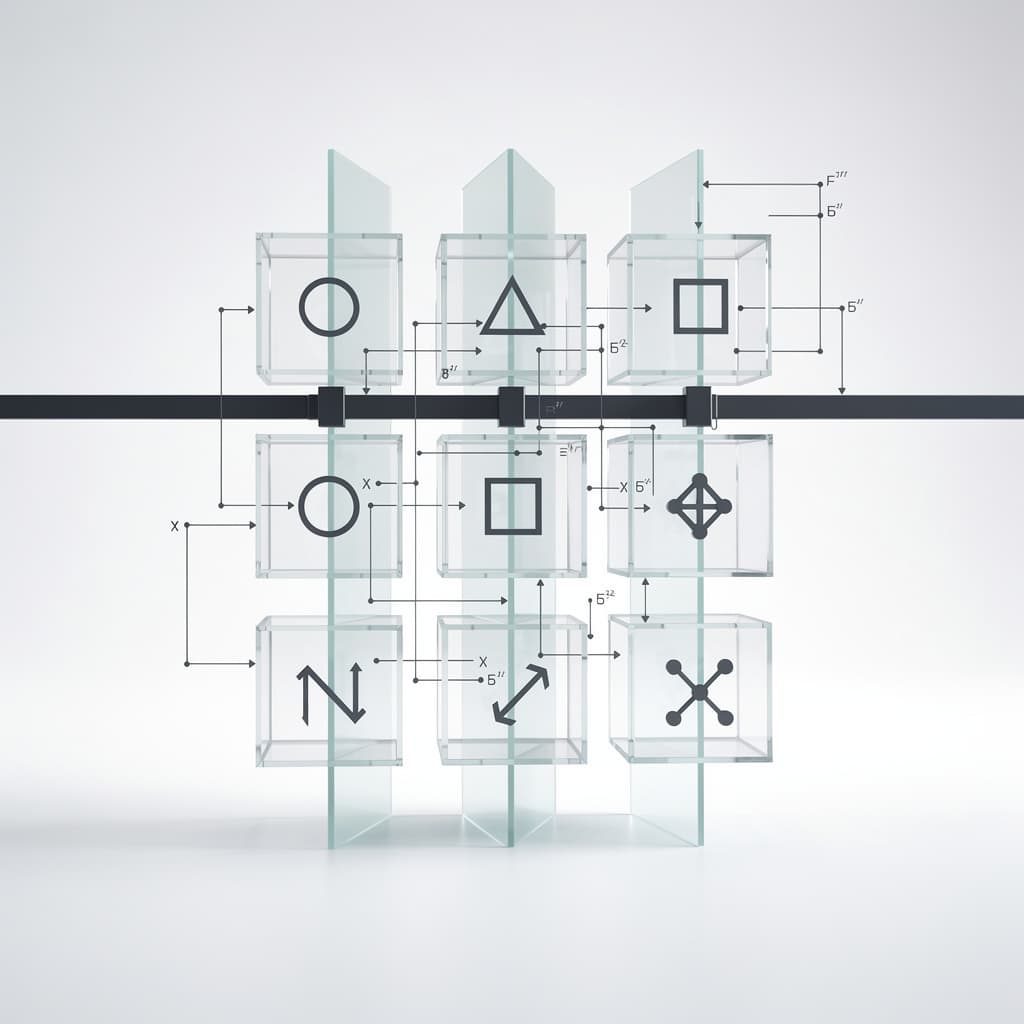
The English verb system is not merely a collection of isolated rules, but a sophisticated matrix of temporal and aspectual relationships. By mastering the 12 verb tenses in English, speakers can navigate the nuances of time with mathematical precision, moving beyond basic communication to nuanced storytelling and analytical discourse. This system operates on two primary axes: the temporal plane (past, present, and future) and the aspectual quality (simple, continuous, perfect, and perfect continuous). Understanding the structural logic behind these combinations allows for a deeper comprehension of how English-speaking cultures perceive the flow of events and the relevance of the past to the present moment.
This matrix reveals the structural symmetry of the language. Each "Perfect" tense involves a completion relative to another point, and each "Continuous" tense involves a process. By understanding this grid, learners can move away from memorizing individual sentences and toward a conceptual understanding of temporal logic. For example, if you know that the "Perfect" aspect always relates an action to a later point, you can deduce the meaning of the Future Perfect even if you have never encountered it before.
In conclusion, the 12 verb tenses in English provide a robust and flexible framework for expressing the complexities of human activity through time. From the simple statement of a fact to the intricate layering of a historical narrative, these tenses allow speakers to be precise, evocative, and logical. Mastery of this system is not just a matter of grammatical correctness; it is the acquisition of a powerful tool for structuring thought and sharing the human experience across the temporal landscape. As one becomes more comfortable with the structural logic of these tenses, the language transforms from a set of rules into a vivid and dynamic medium for expression.
Fundamentals of Temporal Architecture
The foundation of English temporal logic rests on the distinction between time and aspect. While time indicates the chronological location of an event—past, present, or future—aspect describes the internal temporal contour of that event, such as whether it is completed, ongoing, or repetitive. In English, these two dimensions intersect to form a grid of twelve distinct functional units. For example, a speaker does not just choose a "past" tense; they choose between a past that is viewed as a finished point (Simple), a past that was in progress (Continuous), or a past that relates to a prior point (Perfect). This architecture ensures that every verb conveys a specific relationship between the speaker's "now" and the event being described. The four aspects serve as the functional modifiers of the three temporal planes. The Simple aspect treats actions as whole, bounded units or habitual states without focusing on their internal structure. The Continuous (or progressive) aspect focuses on the duration and dynamic nature of an action, viewing it as an ongoing process. The Perfect aspect is fundamentally relational, acting as a bridge between two points in time, often focusing on the result or completion of an action. Finally, the Perfect Continuous aspect combines duration with relevance to a subsequent point, emphasizing the "how long" of a process. Together, these aspects provide the "texture" of time, allowing for a level of precision that distinguishes English from more aspect-limited languages.The Present Temporal Plane
The present tense in English is perhaps the most versatile and, paradoxically, the least used for describing what is happening at this exact micro-second. The Present Simple is primarily utilized for universal truths, permanent states, and habitual actions rather than fleeting moments. For instance, when we say,The sun rises in the east, we are not describing a single event, but a timeless law of nature. This tense functions as the default mode for stating facts or schedules, providing a stable foundation for communication. It strips away the nuance of duration to focus on the essential reality of the verb's meaning.
To capture dynamic, unfolding actions, English employs the Present Continuous. This tense uses the auxiliary verb to be plus the present participle (the -ing form) to signal that an action is temporary and currently in progress. While a speaker might say "I work in London" (Present Simple) to denote a permanent career, saying "I am working in London" (Present Continuous) implies a temporary assignment or a specific moment of activity. This distinction is vital for setting the scene in conversation, as it differentiates between one's identity or habits and one's current state of being.
The Present Perfect Continuous serves as a bridge between the past and the immediate present, emphasizing the continuity of an action that began earlier and still persists. It is the tense of "stamina" and "accumulation," often used with markers like since or for. For example, "She has been studying for six hours" suggests a process that started in the past and is still taking place, with the focus squarely on the duration. This tense is particularly useful for explaining current physical or mental states as the result of recent, prolonged activity. It adds a layer of causal history to the present moment that the simple continuous tense lacks.
Navigating the Past Landscape
When we look backward, the Past Simple acts as the primary tool for narrative progression. It is used to describe completed actions that occurred at a specific, finished time in the past, effectively "closing the book" on those events. Whether the event lasted a second or a century, the Past Simple treats it as a single point on a timeline. In storytelling, this tense drives the plot forward: "He arrived, he saw the mess, and he left." Each verb represents a finished step in a sequence, providing a clear and concise account of what transpired without lingering on the process itself. In contrast, the Past Continuous provides the background atmosphere or the "scenery" for these completed actions. It describes actions that were in progress at a specific moment in the past, often serving as a setup for an interruption by a Past Simple event. Consider the sentence: "I was sleeping when the phone rang." Here, the continuous aspect establishes a state of being that was already underway, creating a sense of immersion for the listener. This tense is essential for descriptive writing, as it allows the speaker to paint a picture of a past world in motion rather than just a list of finished deeds. The logic of the past is further refined by the Past Perfect, which functions as the "past of the past." Its primary purpose is to establish a clear chronological sequence between two past events, ensuring the listener understands which happened first. When a speaker says, "By the time the guests arrived, we had already finished dinner," the Past Perfect (had finished) pushes the first action further back into the past. This prevents ambiguity in complex narratives where the order of events is crucial for understanding causality. Without the Past Perfect, the relationship between different points in history would become a muddled soup of concurrent actions.
Deciphering the Perfective Aspect
The Present Perfect is often the most challenging of the 12 verb tenses in English for learners because it occupies a linguistic "grey area" between past and present. Unlike the Past Simple, which requires a finished time period, the Present Perfect connects a past action to the current moment, either because the time period is still open or because the result of the action is still relevant. If someone says, "I have lost my keys," the implication is that the keys are still missing now. The focus is not on when the loss occurred, but on the current state of "keylessness" that the speaker is experiencing. The logical divide between the Present Perfect vs Past Simple can be visualized as the difference between a "connected" and "disconnected" past. The Past Simple is a distant island; once you mention a specific time likeyesterday or in 1990, you must use the Past Simple. The Present Perfect, however, is a bridge that keeps the past alive in the present. This is why we say, "I have visited France three times," implying that more visits are possible in the future. Once the person is deceased or the opportunity is gone, the tense shifts to the Past Simple: "He visited France three times during his life."
Cumulative experiences and their linguistic markers play a significant role in how the perfective aspect is deployed. Words like already, yet, ever, and never act as signals for the Present Perfect because they deal with the sum of experience up to the present point. This tense allows us to discuss our life "so far" as an ongoing tally. It treats our history as a collection of assets or events that we still "possess" in our current identity. By using the auxiliary have, the language literally indicates that we "hold" the completion of the action in our current reality.
Projections and Future Certainties
Predictive statements and the expression of intent are handled by a variety of future constructions, most notably the Future Simple. Usingwill or shall, this tense allows speakers to make spontaneous decisions, express volitional promises, or state objective facts about what is to come. For instance, "I will help you with that" expresses a momentary decision, while "The sun will rise at 6:00 AM" states a future certainty. The Future Simple is the most direct way to project the timeline forward, though it is often supplemented by be going to for planned intentions or predictions based on current evidence.
To describe immersion in a future activity, the Future Continuous is employed. This tense (will be + -ing) shifts the perspective to a specific point in the future where an action will be in progress. It is often used for politeness or to describe a "business as usual" scenario. When a host says, "We will be serving dinner at eight," it sounds more like a planned, ongoing event than the more sudden "We will serve dinner at eight." This aspect allows us to visualize ourselves within a future timeframe, experiencing the duration of an event rather than just its occurrence.
Symmetry is maintained across the past present and future tenses through the Future Perfect and Future Perfect Continuous. The Future Perfect (will have + past participle) allows a speaker to project themselves into the future and look back at a completed action, usually relative to a deadline. "By next year, I will have graduated" creates a future point of completion. The Future Perfect Continuous (will have been + -ing) adds a durative element to this backward look, stating how long an action will have been in progress by a certain time. These tenses complete the matrix, ensuring that the same logical relationships available in the past and present are equally accessible in the future.
Advanced Mechanics and Tense Integration
Applying systematic verb tense rules with examples requires an understanding of how tenses shift when the context changes, particularly in complex sentences. In Conditional relationships, tenses do not always represent literal time, but rather "social distance" or "probability distance." In a Zero Conditional (If you heat ice, it melts), the Present Simple is used for universal logic. However, in a Second Conditional (If I won the lottery, I would travel), the Past Simple (won) is used to indicate that the scenario is hypothetical or unlikely, rather than actually in the past. This "backshifting" of tense to show unreality is a core mechanic of advanced English grammar.
Reporting speech is another area where the logic of tense shifts is paramount. When we move from direct speech to indirect speech, we typically move the tense "one step back" into the past to account for the fact that the original statement is now a past event. If John says, "I am hungry" (Present Simple), and we report it later, we say, "John said that he was hungry" (Past Simple). This backshifting applies across the entire system: Present Perfect becomes Past Perfect, and "will" becomes "would." This maintains the logical integrity of the narrative timeline, ensuring that the reported information is correctly situated relative to the reporting verb.
"The English tense system is a mirror of the human experience of time, allowing us to describe not just what happened, but the perspective from which we view the occurrence." — Traditional Linguistic MaximThe integration of these tenses allows for sophisticated nuanced communication. For instance, a speaker might use the Present Continuous to describe a future arrangement ("I am meeting him tomorrow"), leveraging the "in progress" nature of the aspect to imply that the plan is already underway. Similarly, the use of the "Historical Present" in literature uses the Present Simple to describe past events, bringing a sense of immediacy and urgency to a narrative. These functional shifts demonstrate that while the rules are systematic, their application is flexible enough to accommodate the creative and psychological needs of the speaker.
Visualizing the Twelve-Part Matrix
To master the 12 verb tenses in English, it is helpful to view them as a unified English tenses chart. This chart functions as a coordinate system where one can plot any action based on its timing and its nature. The functional harmony within the tense system ensures that there are no "logical gaps"; for every possible temporal relationship, there is a corresponding verb structure. Below is a systematic representation of how these tenses interact:| Aspect | Past | Present | Future |
|---|---|---|---|
| Simple | I worked (Completed) | I work (Habit/State) | I will work (Prediction) |
| Continuous | I was working (Interrupted) | I am working (Current) | I will be working (Immersion) |
| Perfect | I had worked (Sequence) | I have worked (Relevance) | I will have worked (Deadline) |
| Perfect Continuous | I had been working (Duration) | I have been working (Persistence) | I will have been working (Projection) |
References
- Quirk, R., Greenbaum, S., Leech, G., & Svartvik, J., "A Comprehensive Grammar of the English Language", Longman, 1985.
- Huddleston, R., & Pullum, G. K., "The Cambridge Grammar of the English Language", Cambridge University Press, 2002.
- Biber, D., Johansson, S., Leech, G., Conrad, S., & Finegan, E., "Longman Grammar of Spoken and Written English", Pearson Education Ltd, 1999.
- Crystal, D., "The Cambridge Encyclopedia of the English Language", Cambridge University Press, 2018.
Recommended Readings
- Practical English Usage by Michael Swan — An essential reference for learners and teachers that explains the practical logic behind tense choices in real-world contexts.
- English Grammar in Use by Raymond Murphy — A widely respected guide that uses clear visual layouts and examples to build intuition for the 12 verb tenses.
- Understanding and Using English Grammar by Betty Azar — A foundational textbook that focuses on the functional application of grammar through extensive contextual examples.
- The English Verb by Michael Lewis — A deep dive into the semantics and "mental models" that English speakers use when selecting different aspects and tenses.
12 verb tenses in EnglishEnglish tenses chartverb tense rules with examplespast present and future tensespresent perfect vs past simple