15 min read
The Mechanics of Active and Passive Voice
Master the rules of active and passive voice. Explore structural formulas, conversion techniques, and examples to refine your writing and grammar skills today.
In this articleThe Foundation of Syntactic Voice
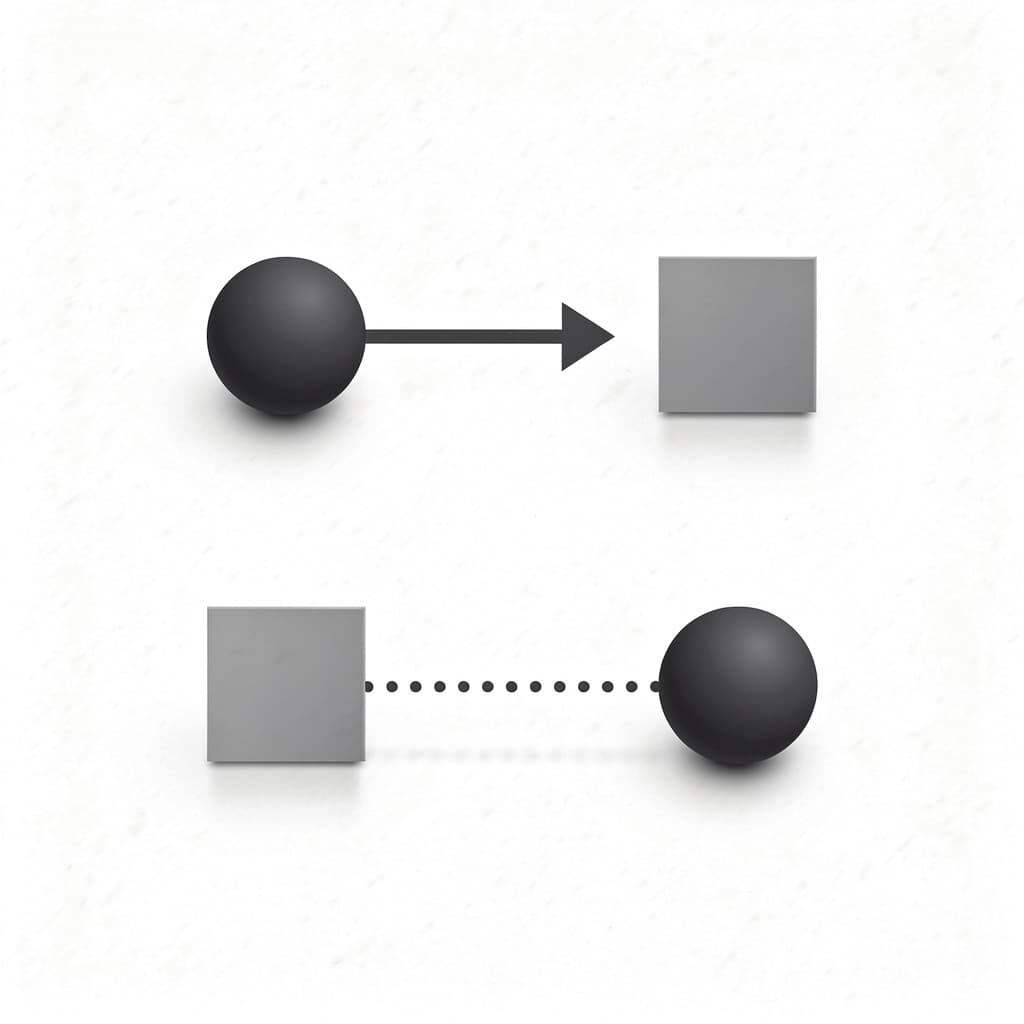

The concept of syntactic voice represents one of the most sophisticated mechanisms within English grammar, serving as the primary tool for defining the relationship between an action and its participants. At its core, the distinction between active and passive voice is a matter of perspective, determining whether a sentence focuses on the "doer" of an action or the "receiver." While many students of linguistics initially view these as mere stylistic choices, they are actually governed by a rigorous structural logic that dictates how information is prioritized and processed by the human brain. This article explores the mechanical underpinnings of these voices, moving from the foundational requirements of verb transitivity to the complex nuances of the middle voice and the pragmatic applications of the passive in professional discourse.
The Foundation of Syntactic Voice
Defining the Subject-Verb Relationship
In the study of linguistics, "voice" is the grammatical category that describes the relationship between the action expressed by the verb and the participants identified by its arguments. Every sentence involves a certain degree of semantic roles, primarily the agent, who performs the action, and the patient, who undergoes or is affected by the action. In a standard English sentence, the grammatical subject usually aligns with the semantic agent, creating a straightforward narrative path. However, voice allows for a realignment of these roles, where the patient can be promoted to the subject position to alter the focus of the statement. This flexibility is essential for maintaining cohesion in complex texts, as it allows writers to keep the most relevant information at the forefront of the reader's attention. The interaction between the subject and the verb is not merely a sequence of words but a declaration of agency and responsibility. When the subject is the agent, the sentence crackles with energy and directness, whereas when the subject is the patient, the sentence adopts a more descriptive or reflective tone. This relationship is codified through specific morphological changes in the verb and the arrangement of noun phrases. To understand active and passive voice, one must first appreciate that the "subject" is a functional slot in a sentence that can be filled by different participants depending on the speaker's intent. By manipulating this slot, language users can highlight results over causes or protect the identity of an actor when their identity is unknown or irrelevant.Transitivity and the Capacity for Voice
Not all verbs possess the inherent capacity to shift between active and passive forms; this ability is strictly governed by the concept of transitivity. A transitive verb is one that requires a direct object to complete its meaning, indicating an action that "passes over" from the subject to a recipient. For instance, in the sentence "The architect designed the bridge," the verb "designed" is transitive because the action is directed at the bridge. Only these types of verbs can be converted into the passive voice because there must be an object available to be promoted to the subject position. Without a recipient of the action, there is no entity to take the spotlight in a passive construction, making transitivity the literal "fuel" for voice transformation. In contrast, intransitive verbs—such as "sleep," "arrive," or "happen"—do not take a direct object and therefore cannot be passivized under standard English rules. One cannot say "The bed was slept" or "The station was arrived" because these actions do not affect an external patient in a way that allows for structural reversal. This distinction is vital for learners who often struggle with "how to change active to passive voice" when dealing with verbs of motion or state. Understanding the transitivity of a verb allows a writer to immediately identify whether a passive construction is even grammatically possible. This mechanical constraint ensures that the passive voice remains a tool for describing interactions rather than isolated occurrences.The Architecture of the Active Voice
Direct Agency and Linear Progression
The active voice is the most common and arguably the most natural form of communication in English, following a Subject-Verb-Object (SVO) pattern. This architecture mirrors the way humans typically perceive events in the physical world: we see an actor perform an action that results in a change to an object. By placing the agent at the beginning of the sentence, the active voice establishes clear accountability and a linear progression of time and causality. This structure is highly efficient for storytelling and persuasive writing because it emphasizes the "who" before the "what." It creates a sense of momentum, driving the reader from the source of the action through the process and toward the final outcome. Beyond its narrative benefits, the active voice is prized for its structural economy and psychological clarity. Research in psycholinguistics suggests that active sentences are generally processed faster by the brain than passive ones because they align with our cognitive expectations of agency. When we hear the subject of a sentence, our minds immediately look for the action that subject is taking. In an active construction, this expectation is met instantly, reducing the cognitive load required to decode the message. This is why many style guides, from journalism to technical writing, advocate for the active voice as the "default" setting for clear, vigorous communication that leaves little room for ambiguity.Structural Economy in Active Construction
The efficiency of the active voice is also reflected in its word count and syntactic simplicity. Because it does not require auxiliary verbs or prepositional phrases to identify the agent, active sentences are almost always shorter than their passive counterparts. For example, "The chef prepared the meal" (5 words) is more concise than "The meal was prepared by the chef" (7 words). In professional environments where brevity is a virtue, this structural economy makes the active voice the preferred choice for memos, instructions, and headlines. It eliminates the "clutter" of unnecessary functional words, allowing the core meaning—the interaction between the actor and the object—to shine through without interference. Furthermore, the active voice avoids the potential for "dangling" or "hidden" agents that can complicate a reader's understanding. In an active sentence, the actor is explicitly named and positioned as the driver of the narrative. This transparency is crucial in legal and ethical contexts where identifying the responsible party is of paramount importance. By utilizing the active vs passive voice rules effectively, a writer ensures that every action is tethered to a specific entity. This prevents the "bureaucratic" feel often associated with the passive voice, where actions seem to happen spontaneously without anyone being held accountable for them.Studying this for an exam?
Noesis builds the syllabus, notes and tests for you, and you study them with a tutor that knows your material.
Deconstructing the Passive Voice Formula
The Role of the Auxiliary Verb Be
The transition from active to passive necessitates a significant change in the verb's morphology, specifically through the introduction of the auxiliary verb "be." The passive voice formula is a multi-part construction that requires the auxiliary "be" to be conjugated to match the tense of the original active sentence. This is followed by the past participle of the main verb. For example, if the active verb is "writes" (simple present), the passive becomes "is written." If the active is "was writing" (past continuous), the passive becomes "was being written." The auxiliary verb acts as a placeholder for time, while the main verb provides the semantic content of the action. The auxiliary verb "be" is the "engine" of the passive voice, providing the necessary grammatical scaffolding to support the patient-subject. Without this auxiliary, the sentence would lack the necessary markers to distinguish it from a simple past tense active sentence. For instance, "The window broken" is a fragment, but "The window was broken" is a complete passive thought. The flexibility of the "be" verb allows the passive voice to exist in every possible English tense, from the future perfect continuous ("will have been being studied") to the simple past ("was studied"). This complexity is often the most difficult aspect for learners to master, as it requires a deep understanding of auxiliary conjugation across the entire temporal spectrum.Past Participles and the Patient Subject
The second essential component of the passive voice is the past participle (often called the V3 form of the verb). Unlike the present participle (-ing) which suggests ongoing action, the past participle often carries a sense of completion or state. When combined with the "be" verb, it transforms the verb from a "doing" word into a "description of a state" applied to the subject. In the sentence "The letter was mailed," the subject "letter" is not performing the mailing; rather, it exists in a state of having been mailed. This shift in the verb's nature is what allows the grammatical subject to remain passive while still being the focal point of the sentence. Mathematically, the passive voice formula can be expressed as:This formula highlights that the "agent" (the original subject) is now optional. In many passive sentences, the agent is omitted entirely because they are unknown or because the writer wishes to focus solely on the result. This "agentless passive" is a powerful tool in academic and scientific writing, where the objective outcome of an experiment is more important than the individual person who performed the observation. By deconstructing the formula, we see that the passive voice is not just a "flipped" active sentence, but a sophisticated realignment of priority and state.
Mechanisms for Transforming Sentences
Realigning the Subject and Object
The process of how to change active to passive voice involves a systematic "X-shaped" movement of sentence components. The direct object of the active sentence moves to the front to become the new subject, while the original subject moves to a prepositional phrase starting with "by" at the end of the sentence, or is dropped entirely. This transformation requires the writer to identify the "core" of the action first. Consider the active sentence: "The storm damaged the roof." To convert this, "the roof" (object) becomes the subject, and "the storm" (subject) becomes the agent in a "by" phrase. The result is: "The roof was damaged by the storm." This realignment is not merely a mechanical swap; it requires a change in the pronoun case if the participants are represented by pronouns. For example, "He helped her" becomes "She was helped by him." Notice how "he" (nominative) shifts to "him" (objective) and "her" (objective) shifts to "she" (nominative). This demonstrates that the active and passive voice are deeply integrated into the broader grammatical system of the English language. A failure to adjust these cases results in "She was helped by he," which is a clear violation of English syntactic rules. Mastery of this transformation is a hallmark of advanced linguistic competence.Handling Tense Consistency during Conversion
One of the most frequent errors in voice conversion is the failure to maintain the original tense. The rule is absolute: the passive version of a sentence must occur in the same temporal space as the active version. This is achieved entirely through the conjugation of the auxiliary "be." If the active sentence is in the present perfect ("The chef has prepared the meal"), the passive must also be in the present perfect ("The meal has been prepared by the chef"). The past participle "prepared" remains constant; only the "be" component ("has been") changes to reflect the tense. This consistency ensures that the logical flow of time is preserved despite the change in perspective. To illustrate the variety of these transformations, consider the following table of active vs passive voice rules applied across different tenses:| Tense | Active Voice Structure | Passive Voice Structure |
|---|---|---|
| Simple Present | The cat chases the mouse. | The mouse is chased by the cat. |
| Past Continuous | The cat was chasing the mouse. | The mouse was being chased by the cat. |
| Future Simple | The cat will chase the mouse. | The mouse will be chased by the cat. |
| Present Perfect | The cat has chased the mouse. | The mouse has been chased by the cat. |
Essential Active vs Passive Voice Rules
Constraints on Intransitive Verbs
As previously touched upon, the primary constraint on the passive voice is the requirement for a direct object. This rule fundamentally excludes intransitive verbs. However, there is a sub-category of verbs known as stative verbs that, while transitive, often resist passivization. Verbs like "have" (in the sense of possession), "resemble," "fit," or "suit" rarely appear in the passive voice. For example, while "I have a car" is a perfectly valid active sentence, "A car is had by me" is considered non-standard or semantically awkward. These active vs passive voice rules exist because the passive voice typically implies an action that affects an object, whereas stative verbs merely describe a relationship or state of being. Furthermore, some verbs can be both transitive and intransitive depending on the context. Consider the verb "read." In the sentence "He reads every day," the verb is intransitive and cannot be made passive. However, in "He reads the book," the verb is transitive, allowing for "The book is read by him." This duality means that writers must analyze the specific function of the verb within the individual sentence rather than relying on a static list of "passive-friendly" words. This level of analysis is what separates a deep understanding of active and passive voice from a superficial memorization of rules.The Use of the Prepositional Agent
Another critical rule involves the "by-phrase," which identifies the agent in a passive sentence. While many learners are taught to always include the agent, in actual practice, approximately 80 percent of passive sentences in English omit the agent entirely. This is known as the short passive. The decision to include the "by-phrase" depends on whether the identity of the agent adds necessary information. If the agent is "people in general," "someone," or obvious from the context, it is usually omitted. For example, "The law was passed" is preferred over "The law was passed by the legislators," as the latter is redundant. However, the agent must be included if the information is new, surprising, or essential to the sentence's meaning. In the sentence "The Starry Night was painted by Vincent van Gogh," the agent is the most important part of the message. Removing it ("The Starry Night was painted") leaves the reader with an incomplete thought. Thus, the active vs passive voice rules regarding the prepositional agent are as much about pragmatics and information density as they are about grammar. A skilled writer uses the agent only when it serves a specific rhetorical purpose, keeping the prose lean and focused.Functional Use and Passive Voice Examples
Emphasizing Results in Scientific Writing
One of the most prominent uses of the passive voice is found in scientific and technical documentation. In these fields, the goal is often objectivity—the idea that the results of an experiment should be the same regardless of who performs it. By using the passive voice, researchers remove themselves from the narrative, focusing the reader's attention on the methodology and the findings. Instead of saying "I mixed the chemicals and observed a reaction," a scientist writes, "The chemicals were mixed, and a reaction was observed." This use of passive voice examples demonstrates how the structure can lend an air of authority and impartiality to the text. In this context, the passive voice is not "weak" or "wordy," as some critics suggest, but rather a functional tool for highlighting the patient (the chemicals, the data, the results). It allows for a standardized way of reporting that emphasizes the repeatability of the work. When the "who" is secondary to the "what," the passive voice becomes the logical choice. However, modern scientific journals are increasingly encouraging a mix of voices—using the active for the introduction and conclusion (where the authors' perspectives matter) and the passive for the methods section (where the process is paramount).Obfuscation and Clarity in Narrative Prose
Conversely, the passive voice can be used for less noble reasons, such as obfuscation or the avoidance of responsibility. This is frequently seen in political discourse or corporate crisis management. The classic phrase"Mistakes were made"is a masterpiece of the passive voice. By removing the agent, the speaker acknowledges the error without identifying who is to blame. This "distancing" effect is a common rhetorical strategy to deflect criticism. In these passive voice examples, the mechanic of the voice is used to hide information rather than clarify it, showing the profound impact that a simple grammatical choice can have on public perception. In narrative prose, the passive voice can also be used to create a sense of mystery or to emphasize a character's lack of control. If a character wakes up in a strange room, a writer might use the passive: "The door was locked from the outside." This emphasizes the character's victimhood and the external forces acting upon them. If the sentence were active—"Someone locked the door from the outside"—the focus would shift to the mysterious "someone." By choosing the passive, the writer forces the reader to feel the character's confinement. This demonstrates that active vs passive voice is a powerful tool for controlling the emotional "camera angle" of a story.
Complex Variations in English Voice
The Get-Passive and Informal Speech
Beyond the standard "be-passive," English features an informal variation known as the get-passive. In this construction, the verb "get" replaces the auxiliary "be," as in "He got promoted" or "They got caught." The get-passive is almost exclusively used in spoken, informal English and often carries a specific semantic nuance. It is frequently used to describe events that are either detrimental or beneficial to the subject, or events that involved some degree of effort or intent on the part of the subject. For instance, "He got arrested" sounds more dynamic and perhaps more "deserved" than the more clinical "He was arrested." The get-passive is restricted in ways the be-passive is not. It cannot be used with stative verbs (one cannot say "He got known" instead of "He was known"). It also tends to focus on the process or the culmination of an action rather than a lasting state. Linguistics experts often point out that the get-passive is increasing in frequency in modern English, reflecting a shift toward more casual and action-oriented expression. Understanding this variation is essential for capturing natural-sounding dialogue and for recognizing the subtle emotional weight that different auxiliaries can carry.Middle Voice and Ergative Verbs
Perhaps the most fascinating complexity in the mechanics of voice is the middle voice, which sits between the active and the passive. In the middle voice, the subject is the undergoer of the action (like a passive), but the verb form is active. This is common with ergative verbs. Consider the sentence "The bread cuts easily." The bread is not doing the cutting, yet the verb "cuts" is in the active form. This construction suggests that some inherent quality of the subject (the softness of the bread) makes the action possible. It is a subtle way of attributing agency to an inanimate object based on its properties. Other examples of this phenomenon include "The door opened" or "The cake is baking." In these cases, English allows the patient to occupy the subject position without the formal "be + past participle" structure of the passive. This creates a sense of spontaneity, as if the action is happening of its own accord. The middle voice is a reminder that the active and passive voice are not a simple binary, but part of a sophisticated spectrum of agency. Mastering these "edge cases" allows a writer to navigate the finest nuances of the language, choosing exactly the right level of agency and focus for any given situation.References
- Quirk, R., Greenbaum, S., Leech, G., & Svartvik, J., "A Comprehensive Grammar of the English Language", Longman, 1985.
- Pinker, S., "The Sense of Style: The Thinking Person's Guide to Writing in the 21st Century", Viking, 2014.
- Huddleston, R., & Pullum, G. K., "The Cambridge Grammar of the English Language", Cambridge University Press, 2002.
- Chomsky, N., "Aspects of the Theory of Syntax", MIT Press, 1965.
Recommended Readings
- The Elements of Style by Strunk and White — A classic guide that, while prescriptive, offers foundational advice on the rhetorical impact of active versus passive constructions.
- The Language Instinct by Steven Pinker — Provides a deep dive into how our brains process syntactic structures like voice and agency from a cognitive science perspective.
- Style: Lessons in Clarity and Grace by Joseph M. Williams — An excellent resource for understanding when to use the passive voice to improve the cohesion and flow of professional writing.
- English Grammar in Use by Raymond Murphy — A practical, widely-respected reference for seeing hundreds of real-world examples of voice transformations in context.
Turn this topic into a full course
Noesis builds the syllabus, notes and tests for you, and you study them with a tutor that knows your material.