The Mathematical Architecture of Normal Distributions
The normal distribution , often colloquially referred to as the bell curve , stands as the cornerstone of modern statistical theory and a profound reflection of the underlying order in the natural...
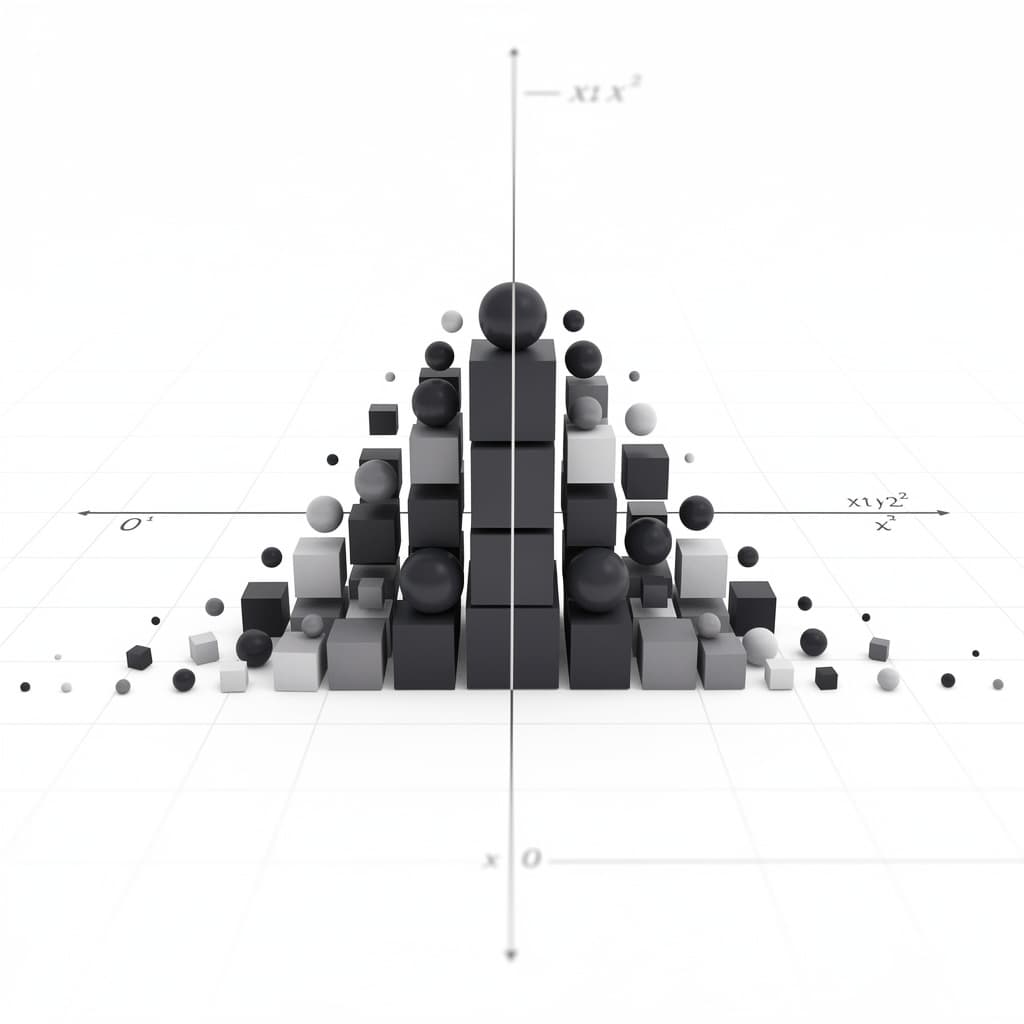
The normal distribution, often colloquially referred to as the bell curve, stands as the cornerstone of modern statistical theory and a profound reflection of the underlying order in the natural world. From the distribution of human height to the precision of manufacturing tolerances, this mathematical model provides a universal language for describing how data clusters around a central value. Its elegance lies in its mathematical architecture, which balances the chaos of individual random events with a predictable, symmetric regularity that allows scientists to make inferences about vast populations from limited samples. Understanding the normal distribution requires more than just memorizing a formula; it involves grasping the geometric and probabilistic logic that governs how variance influences the shape of information itself.
Foundations of the Gaussian Function
The mathematical heart of the normal distribution is the Probability Density Function (PDF), a sophisticated equation that describes the likelihood of a continuous random variable falling within a specific range. While the concept was first explored by Abraham de Moivre in the context of coin-flipping, it was Carl Friedrich Gauss who formalized the function to account for errors in astronomical observations, leading to its frequent designation as the Gaussian distribution. The PDF is defined by the exponential function: $$f(x | \mu, \sigma) = \frac{1}{\sigma\sqrt{2\pi}} e^{-\frac{1}{2}\left(\frac{x-\mu}{\sigma}\right)^2}$$ This equation reveals that the probability density is determined by two fundamental constants—$\pi$ (pi) and $e$ (Euler's number)—suggesting that the distribution is a fundamental property of mathematical logic rather than a mere empirical observation. Every feature of the curve, from its height to the width of its tails, is a direct consequence of how these mathematical constants interact with the data's specific parameters.
Central to this architecture is the concept of symmetry and central tendency. In a perfectly normal distribution, the arithmetic mean, the median, and the mode are all located at the exact center of the distribution, creating a peak that represents the most frequent value. This symmetry implies that for any point above the mean, there is a corresponding point below the mean with the exact same probability density. This balance is not a coincidence but a requirement of the distribution's logic: it assumes that deviations from the center are equally likely in either direction. This makes the normal distribution an ideal model for processes where errors or variations are truly random, such as the thermal noise in electronic circuits or the natural variation in biological traits.
The behavior of the distribution is dictated by two parameters: the location parameter ($\mu$) and the scale parameter ($\sigma$). The mean ($\mu$) determines the position of the curve along the horizontal axis, effectively shifting the entire bell curve left or right without altering its shape. The standard deviation ($\sigma$) controls the spread or "scale" of the data, determining whether the curve is tall and narrow or short and wide. Together, these two parameters allow the normal distribution to adapt to different contexts while maintaining its essential mathematical properties. This flexibility is why the distribution is described as a "family" of curves; while every normal curve shares the same structural logic, their specific appearances vary based on the scale and location of the data they represent.
The Bell Curve Explained Through Geometry
Visualizing the normal distribution as a geometric object reveals how the abstract PDF translates into a physical shape. The curve is characterized by a high central peak that gradually slopes downward, approaching but never quite touching the horizontal axis—a property known as asymptotic behavior. This geometric structure represents a continuous distribution, meaning that it can describe variables with an infinite number of possible values within an interval, such as time, weight, or distance. Unlike discrete distributions that look like staircases or bar charts, the normal curve is a smooth, unbroken line that reflects the fluid nature of physical measurements. The area under this curve is not merely a visual representation but a quantitative measure of probability, where the total area is exactly equal to one.
The shape of the peak is governed by variance, which is the square of the standard deviation ($\sigma^2$). When the variance is low, the data points are tightly clustered around the mean, resulting in a leptokurtic curve with a sharp, high peak and thin tails. Conversely, high variance suggests that data points are widely dispersed, stretching the curve into a platykurtic shape that is flatter and broader. This relationship between variance and geometry is crucial for statistical inference because it dictates how much "certainty" we have in our data. A narrow curve indicates a high level of consistency, while a wide curve warns of significant volatility or diversity within the population. Engineers and scientists use these geometric insights to determine the reliability of their systems and the precision of their measurements.
A fascinating geometric feature of the normal curve is the inflection point, the specific location where the curve transitions from being concave (curving downward) to convex (curving upward). In any normal distribution, these inflection points occur exactly at one standard deviation away from the mean ($\mu - \sigma$ and $\mu + \sigma$). These points are not just visual markers; they represent the mathematical threshold where the rate of change in probability density begins to slow down. Recognizing these inflection points allows observers to visually estimate the standard deviation of a dataset simply by looking at its bell curve. This intersection of calculus and geometry provides a rigorous foundation for the empirical rule, turning a complex probability function into a predictable spatial map.
Inherent Normal Distribution Properties
Beyond its visual shape, the normal distribution possesses several inherent properties that make it mathematically unique among probability models. The most significant is the total area under the curve, which is normalized to 1.0 (or 100 percent). This property ensures that the distribution accounts for all possible outcomes of a random variable, making it a complete probabilistic space. Because the curve is symmetric, exactly 0.5 of the area lies to the left of the mean, and 0.5 lies to the right. This allows statisticians to calculate the probability of a value falling within a certain range by integrating the PDF over that interval, essentially measuring a slice of the total area. Without this property of unity, the distribution would lose its predictive power and its ability to represent real-world probabilities accurately.
Another defining characteristic is the asymptotic behavior at the extremes, or "tails," of the distribution. The curve extends infinitely in both directions, meaning that while the probability of extreme values (outliers) becomes vanishingly small, it never reaches zero. This mathematical nuance reflects the reality of uncertainty: in a truly normal process, there is always a non-zero probability of an extreme event occurring, no matter how improbable it may seem. This property is vital in fields like finance and risk management, where "fat-tailed" distributions (which deviate from the normal model) can lead to catastrophic failures if the probability of extreme events is underestimated. The normal distribution serves as a benchmark for understanding these risks by defining exactly how quickly probabilities should diminish as we move away from the center.
The convergence of mean, median, and mode at the center of the distribution is perhaps its most intuitive property. In many other distributions, such as the skewed distributions seen in income data or house prices, these three measures of central tendency can be far apart. However, the logic of the normal distribution dictates that the most frequent value (mode) must also be the middle value (median) and the mathematical average (mean). This convergence simplifies data analysis by allowing a single number to represent the heart of the dataset from multiple statistical perspectives. When a dataset exhibits this convergence, it is a strong indicator that the underlying process follows a normal distribution, enabling the use of powerful parametric statistical tests that rely on this structural harmony.
The Empirical Rule of Probability
In practical applications, the normal distribution is most famously applied through the Empirical Rule, often called the 68-95-99.7 rule. This rule provides a shortcut for understanding the spread of data without needing to perform complex integration. It states that approximately 68 percent of all data points in a normal distribution will fall within one standard deviation ($\sigma$) of the mean. This "first sigma" range represents the "normal" or expected range for the majority of a population. For instance, if the average height of a group is 170 cm with a standard deviation of 10 cm, the Empirical Rule tells us that 68 percent of the group will stand between 160 cm and 180 cm tall, providing an immediate sense of the population's core characteristics.
As we move further from the center, the second sigma covers a much broader area, encompassing approximately 95 percent of the data within two standard deviations ($\mu \pm 2\sigma$). This range is frequently used in scientific research as the threshold for "statistical significance." If an observation falls outside this 95 percent window, it is often considered unusual or unlikely to have occurred by chance alone. This logic forms the basis of the 95 percent confidence interval, a standard tool in everything from medical trials to political polling. By establishing that 19 out of 20 observations should fall within this range, the normal distribution provides a rigorous mathematical boundary for what we consider "typical" versus "exceptional" behavior within a system.
The third sigma extends the coverage to 99.7 percent of the data within three standard deviations of the mean. Values that fall beyond this range—the remaining 0.3 percent—are considered extreme outliers. In industrial manufacturing, this logic is utilized in the Six Sigma methodology, which aims to reduce defects by ensuring that processes are so precise that the "out-of-bounds" errors occur only at the extreme edges of the distribution. By understanding that almost all data is contained within three standard deviations, organizations can set rigorous quality standards. The Empirical Rule thus transforms the abstract bell curve into a practical diagnostic tool, allowing anyone to quickly assess the probability of a value and the reliability of a dataset.
Defining the Standard Normal Distribution
While normal distributions can have any mean and any standard deviation, mathematicians often utilize a special case known as the Standard Normal Distribution. This is a "unit" version of the curve where the mean is exactly 0 and the standard deviation is exactly 1, denoted as $Z \sim N(0, 1)$. The power of the standard normal distribution lies in its role as a universal translator. Because data from different sources (such as test scores in points and heights in inches) cannot be compared directly, they must be "normalized" or "standardized." By converting raw data into z-scores, we effectively map any normal distribution onto this standard unit curve, allowing for a direct comparison between disparate datasets.
The process of standardization involves shifting the distribution so its center is at zero and scaling it so its spread is measured in units of standard deviation. This transformation does not change the relative position of data points; it merely changes the scale of the "ruler" used to measure them. A z-score of +2.0 always means the same thing, regardless of the original units: the data point is exactly two standard deviations above the mean. This universality is what makes the standard normal distribution so essential in global standardized testing, where scores from different years or versions of a test must be equated to ensure fairness and consistency across different populations.
Standardizing different populations also simplifies the calculation of probabilities. Instead of solving the complex PDF integral for every new mean and standard deviation, statisticians can use a single set of pre-calculated values associated with the standard normal curve. These values are typically found in a Z-table or computed by software. By standardizing a population of, say, lightbulb lifespans and a population of high school grades, a researcher can use the same standard normal logic to find the probability of a lightbulb lasting 2000 hours as they would use to find a student scoring above 1400 on an exam. The unit normal curve acts as a mathematical bridge, connecting different realms of data through a shared, standardized architecture.
Calculating Probability with the Z-Score Formula
To move from a raw data point to a meaningful probability, one must apply the z-score formula. This transformation equation is the engine that drives statistical normalization: $$z = \frac{x - \mu}{\sigma}$$ In this formula, $x$ represents the raw score, $\mu$ is the population mean, and $\sigma$ is the standard deviation. The logic is straightforward: by subtracting the mean, we find the distance of the score from the center; by dividing by the standard deviation, we express that distance in terms of "sigmas." A positive z-score indicates a value above the mean, while a negative z-score indicates a value below it. This simple arithmetic converts any value into a coordinate on the standard normal curve, making the data's probability immediately accessible.
Once a z-score is calculated, it can be used to read a cumulative distribution table (Z-table). These tables provide the area under the curve to the left of a given z-score, representing the probability that a randomly selected value will be less than or equal to $x$. For example, a z-score of 1.0 corresponds to an area of approximately 0.8413. This tells us that about 84 percent of the population falls below one standard deviation above the mean. To find the probability of a value being greater than $x$, one simply subtracts the table value from 1.0. This systematic approach allows for the translation of raw numbers into actionable probabilities, such as determining the likelihood of a flood exceeding a certain height or a battery failing before its warranty expires.
Translating raw scores into probabilities is a multi-step logical process that highlights the utility of the normal distribution. Consider a worked example: a university entrance exam has a mean score of 500 and a standard deviation of 100. If a student scores 700, their z-score is $(700 - 500) / 100 = 2.0$. Looking at a Z-table, a z-score of 2.0 corresponds to a cumulative probability of 0.9772. This result provides immediate context: the student performed better than approximately 97.7 percent of all test-takers. Without the z-score formula and the normal distribution, the raw score of 700 would be an isolated figure; with them, it becomes a precise measure of relative standing and probability.
The Logic of the Central Limit Theorem
The ubiquity of the normal distribution in nature is explained by the Central Limit Theorem (CLT), one of the most powerful ideas in all of mathematics. The CLT states that when you add together a large number of independent random variables, their normalized sum tends toward a normal distribution, regardless of the original shape of those variables' distribution. This means that even if the underlying data is skewed, uniform, or entirely chaotic, the averages of samples taken from that data will eventually form a bell curve. This convergence is the reason why the normal distribution appears in so many diverse fields; most natural phenomena are the result of many small, independent factors acting together.
The logic of summation of independent variables explains why biological traits like height follow a normal distribution. Height is not determined by a single gene but by the additive effects of hundreds of genetic variants and environmental factors like nutrition and health. Each of these factors acts as a small, independent "nudge" to the final result. According to the CLT, the combination of these many small influences inevitably leads to a normal distribution. This principle also applies to measurement errors in science: an error in a laboratory reading is often the sum of many tiny, independent errors (e.g., temperature fluctuations, vibration, human reaction time), causing the total error to be normally distributed around zero.
Finally, the Law of Large Numbers complements the CLT by ensuring that as a sample size ($n$) increases, the sample mean becomes a more accurate reflection of the population mean. In statistical practice, a sample size of $n \ge 30$ is often cited as the point where the distribution of the sample mean becomes approximately normal, regardless of the population's shape. This allows statisticians to use normal distribution techniques on data that isn't inherently normal, provided the sample size is large enough. The Central Limit Theorem thus provides the logical justification for using the normal distribution as a "universal" model, proving that out of the aggregate of random chaos, mathematical order and the bell curve will always emerge.
References
- Stigler, S. M., "The History of Statistics: The Measurement of Uncertainty before 1900", Harvard University Press, 1986.
- Casella, G., & Berger, R. L., "Statistical Inference", Duxbury Press, 2002.
- Gauss, C. F., "Theoria motus corporum coelestium in sectionibus conicis solem ambientium", Perthes et Besser, 1809.
- Feller, W., "An Introduction to Probability Theory and Its Applications, Vol. 1", Wiley, 1968.
Recommended Readings
- The Drunkard's Walk: How Randomness Rules Our Lives by Leonard Mlodinow — An accessible exploration of how the laws of probability, including the normal distribution, shape our everyday experiences.
- Against the Gods: The Remarkable Story of Risk by Peter L. Bernstein — A historical narrative that explains the discovery of the bell curve and how it revolutionized our understanding of risk and uncertainty.
- Statistics in Plain English by Timothy C. Urdan — A straightforward guide that breaks down complex statistical concepts like z-scores and the Central Limit Theorem for non-mathematicians.
- The Lady Tasting Tea by David Salsburg — A fascinating look at how 20th-century statistics was developed and the personalities who defined the logic of modern data analysis.