The Thermal Architecture of Earth's Atmosphere
The Earth’s atmosphere is not a uniform blanket of gas but a highly structured, multi-layered system that serves as the planet’s primary defense against the vacuum and radiation of space. This...
The Earth’s atmosphere is not a uniform blanket of gas but a highly structured, multi-layered system that serves as the planet’s primary defense against the vacuum and radiation of space. This gaseous envelope, held in place by gravity, is organized into distinct layers of the atmosphere based on thermal characteristics, chemical composition, and physical behavior. Understanding this thermal architecture is essential for comprehending global climate patterns, satellite communications, and the fundamental protection of life on the surface. By examining the vertical profile of the atmosphere, we transition from the dense, weather-churning air at the surface to the tenuous, high-energy environment where the atmosphere gradually fades into the solar wind.
The Gaseous Foundation
The chemical makeup of our atmosphere is remarkably consistent in the lower regions, a zone known as the homosphere, which extends to approximately 100 kilometers in altitude. Nitrogen and oxygen dominate this mixture, accounting for roughly 78 percent and 21 percent of the total volume, respectively, while argon represents the majority of the remaining one percent. Despite their abundance, these primary gases are relatively transparent to incoming solar radiation and outgoing longwave terrestrial radiation. Their primary role is providing the physical pressure and density required for respiration and atmospheric weight, establishing the medium through which energy and moisture are transported across the globe. This atmospheric composition remains stable because of constant mixing driven by turbulent air currents and convective cycles.
As one ascends through the atmosphere, the most immediate physical change is the rapid decrease in density and pressure, which follows a logarithmic decay. Because air is compressible, the weight of the overlying atmosphere squeezes the molecules closest to the surface, resulting in nearly 99 percent of the total atmospheric mass being concentrated within the first 30 kilometers. The relationship between pressure and altitude can be expressed through the hydrostatic equation, where the change in pressure $P$ relative to altitude $z$ is given by $$dP = -\rho g dz$$. This exponential drop-off means that at the top of Mount Everest, a climber is already above two-thirds of the Earth's atmosphere by mass, highlighting how thin our protective veil actually is. This vertical density gradient dictates everything from the flight ceilings of commercial aircraft to the distribution of thermal energy.
While nitrogen and oxygen provide the bulk, the role of trace gases is disproportionately significant in governing the Earth’s thermal balance. Carbon dioxide, methane, nitrous oxide, and water vapor act as greenhouse gases, absorbing infrared radiation emitted by the Earth’s surface and re-radiating it in all directions. Without these trace components, the average surface temperature of the Earth would be approximately -18 degrees Celsius, far too cold to support liquid water and complex life. Water vapor is particularly unique because its concentration varies wildly from nearly four percent in the tropics to almost zero in polar regions and the upper atmosphere. This variability drives the latent heat exchange that fuels massive storm systems and determines local humidity levels, making trace gases the primary architects of the planet’s heat retention.
The Dynamics of the Troposphere
The troposphere is the lowest layer of the atmosphere, extending from the surface to an average altitude of 12 kilometers, and it contains approximately 80 percent of the atmosphere's total mass. Its name is derived from the Greek word "tropos," meaning "turning" or "change," reflecting the constant churning and mixing of air that characterizes this region. In the troposphere, the temperature generally decreases with altitude at a standard rate known as the environmental lapse rate. On average, this cooling occurs at approximately 6.5 degrees Celsius per kilometer of ascent, a phenomenon caused by the fact that the troposphere is primarily heated from below by the Earth's surface. As air parcels rise, they expand due to lower surrounding pressure, and this adiabatic expansion leads to a drop in internal energy and temperature.
Convection is the engine of the troposphere, driving the weather patterns that dictate life on the surface. When the sun warms the Earth, the air immediately above the ground becomes less dense and rises, creating thermal updrafts that carry moisture and heat into the upper reaches of the layer. This process leads to the formation of clouds and precipitation as the rising air cools to its dew point and water vapor condenses into liquid droplets or ice crystals. This vertical movement is why almost all of the Earth's weather, from gentle breezes to massive cyclonic storms, is confined to this single layer. The interaction between the rotating Earth and these convective cells creates the global wind belts, such as the Trade Winds and Westerlies, which distribute heat from the equator toward the poles.
The upper boundary of this layer is the tropopause, a critical transition zone where the temperature stops decreasing with height and begins to stabilize. The height of the tropopause is not uniform; it is highest over the equator, reaching up to 18 kilometers, and lowest over the poles, where it may descend to only 8 kilometers. This variation is due to the intense convective activity in the tropics which pushes the boundary upward, compared to the cold, dense air at the poles that sits lower. The tropopause acts as a functional "ceiling" for most weather phenomena, as the cessation of the temperature drop prevents further vertical rise of air parcels. Modern jet aircraft typically fly just at or above the tropopause to avoid the turbulence and weather found in the lower troposphere while benefiting from the thinner air.
Radiative Balance in the Stratosphere
Above the tropopause lies the stratosphere, a layer that extends to about 50 kilometers and exhibits a thermal profile that is the inverse of the troposphere. In this region, temperatures actually increase with altitude, a phenomenon known as a temperature inversion. This warming is caused by the presence of the ozone layer, which absorbs high-energy ultraviolet (UV) radiation from the sun. The chemical reaction involves the dissociation of oxygen molecules ($O_2$) into individual atoms, which then combine with other $O_2$ molecules to form ozone ($O_3$). This exothermic process converts solar radiant energy into kinetic thermal energy, heating the upper stratosphere to temperatures that can approach 0 degrees Celsius, significantly warmer than the frigid tropopause below.
The ozone layer is a vital biological shield, filtering out the vast majority of harmful UV-B and UV-C radiation before it can reach the surface. The concentration of ozone is highest between 15 and 35 kilometers, though even here, it is present in only a few parts per million. If all the ozone in the stratosphere were compressed to sea-level pressure, it would form a layer only 3 millimeters thick, yet this thin veil is sufficient to prevent DNA damage in terrestrial organisms. The thermal inversion created by this absorption makes the stratosphere extremely stable. Unlike the turbulent troposphere, there is very little vertical mixing here, leading to a stratified environment where air moves primarily in horizontal sheets, which is the origin of the layer's name.
Because of this stability and the lack of water vapor, the stratosphere is almost entirely free of clouds and weather. Occasionally, in the extremely cold polar winters, polar stratospheric clouds (PSCs) may form, which play a significant role in the chemical reactions that lead to ozone depletion. For the most part, however, the stratosphere is a serene, dry environment where volcanic ash and human-made aerosols can linger for years because there is no rain to "wash" them out. This longevity means that major volcanic eruptions can have long-term cooling effects on the global climate by reflecting sunlight away from the Earth. The transition at the top of this layer, the stratopause, marks the point where the temperature reaches its local maximum before beginning to fall again.
The Cold Depths of the Mesosphere
The mesosphere is often described as the most mysterious layer of the atmosphere because it is too high for weather balloons and aircraft but too low for most satellites to maintain a stable orbit. Extending from the stratopause at 50 kilometers to the mesopause at roughly 85 kilometers, this layer sees a return to the trend of decreasing temperature with altitude. In fact, the mesosphere is the coldest place in the Earth system, with temperatures at the upper boundary plummeting to as low as -90 degrees Celsius or even -130 degrees Celsius. This cooling occurs because there are no significant chemical species like ozone to absorb solar radiation, and the thinning air efficiently radiates heat away into space through carbon dioxide emissions.
Despite the extreme cold and low density, the mesosphere is dense enough to provide significant resistance to incoming celestial objects. This is the layer where most meteors burn up upon entry, as the friction between the high-velocity space rocks and the atmospheric gases generates enough heat to vaporize the material. The visible streaks of light we call "shooting stars" are a testament to the protective density of the mesosphere. Furthermore, the mesosphere is home to rare, high-altitude phenomena known as noctilucent clouds, or "night-shining" clouds. These are composed of tiny ice crystals that form on "meteor smoke" (dust left behind by vaporized meteors) and are visible from the ground only during twilight when the sun illuminates them from below the horizon.
The transition zone at the top of the mesosphere is the mesopause, which represents the minimum temperature point in the entire order of atmospheric layers. Research into the mesosphere is often conducted using sounding rockets, which provide brief snapshots of the chemical and thermal conditions in this "ignosphere." Scientists are particularly interested in the mesosphere because it serves as a sensitive indicator of climate change; while the troposphere warms due to the greenhouse effect, the mesosphere is expected to cool and contract. This contraction can be measured by tracking the orbits of low-altitude satellites, providing a different perspective on the Earth's changing energy balance. The mesopause effectively marks the end of the homosphere and the beginning of the high-energy outer atmosphere.
High Energy in the Thermosphere
The thermosphere begins above the mesopause and extends upward to approximately 600 kilometers, representing a region where the laws of thermodynamics behave in ways that defy our surface-level intuition. In this layer, temperatures rise dramatically with altitude, sometimes exceeding 2,000 degrees Celsius during periods of high solar activity. This extreme heating is caused by the absorption of highly energetic X-rays and extreme ultraviolet (EUV) radiation by the sparse atoms of nitrogen and oxygen. However, it is vital to distinguish between thermal energy and perceived heat. Because the air is so incredibly thin—effectively a vacuum by laboratory standards—there are so few atoms to collide with an object that a person standing in the thermosphere would feel freezing cold despite the high kinetic temperature of individual molecules.
This layer is also the site of the ionosphere, a region where solar radiation is so intense that it strips electrons from gas atoms, creating a sea of ionized plasma. This ionization allows the thermosphere to reflect certain frequencies of radio waves, a property that was historically essential for long-distance "shortwave" radio communication before the advent of satellites. The interaction between the Earth’s magnetic field and the solar wind also funnels charged particles toward the poles, where they collide with thermospheric gases. These collisions excite the atoms, causing them to emit light and creating the spectacular auroras (the Northern and Southern Lights). The specific colors of the aurora—green from oxygen and red or blue from nitrogen—are direct signatures of the atmospheric composition at these altitudes.
The thermosphere is the primary environment for human spaceflight and orbital infrastructure. The International Space Station (ISS) maintains a stable orbit within the thermosphere at an altitude of approximately 400 kilometers. While the air is thin, it is not non-existent; the ISS experiences a small amount of "atmospheric drag" that causes its orbit to decay over time, requiring periodic re-boosts from docked spacecraft. This drag is highly variable, as the thermosphere expands and contracts in response to the 11-year solar cycle. When the sun is active, the increased radiation causes the thermosphere to swell, increasing the density at orbital altitudes and forcing satellites to consume more fuel to maintain their positions. This dynamic nature makes the thermosphere a crucial focus for space weather forecasting.
Dissipation Within the Exosphere
The exosphere is the outermost fringe of the Earth's atmosphere, acting as a transitional zone between our planet's gaseous envelope and the near-vacuum of interplanetary space. Beginning at the exobase, roughly 600 kilometers above the surface, the atmosphere becomes so attenuated that the very concept of a "gas" begins to break down. In the lower layers, gas molecules are constantly colliding with one another, but in the exosphere, the mean free path—the average distance a molecule travels before hitting another—is so large that molecules can travel hundreds of kilometers without a single collision. Consequently, the movement of atoms in the exosphere is governed more by individual ballistic trajectories under the influence of gravity than by the fluid dynamics that define the lower atmosphere.
The chemical makeup of the exosphere is dominated by the lightest elements, specifically hydrogen and helium. These atoms are light enough that, when they gain sufficient kinetic energy from solar radiation, they can reach "escape velocity" and bleed away into space entirely. This process of atmospheric escape is slow but constant, and it is most visible in the geocorona, a faint glow of ultraviolet light caused by the scattering of sunlight by the Earth's extended hydrogen envelope. This geocorona has been observed to extend as far as 630,000 kilometers from the Earth, which is well beyond the orbit of the Moon. From a purely chemical perspective, the Earth’s influence stretches much farther into space than most people realize.
Defining the "edge of space" is a matter of convention rather than a strict physical boundary, though the Karman Line at 100 kilometers is the most widely accepted legal limit. However, the exosphere continues much further, housing the vast majority of our satellite constellations, including those used for GPS and telecommunications. Objects in the exosphere are effectively free from atmospheric drag, allowing them to remain in orbit for decades or even centuries. As one moves further out, the Earth’s gravity weakens until the solar wind—the stream of charged particles from the sun—becomes the dominant force. At this point, the layers of the atmosphere have completely dissipated, and the transition to the solar system's broader environment is complete.
The Hierarchical Order of Atmospheric Layers
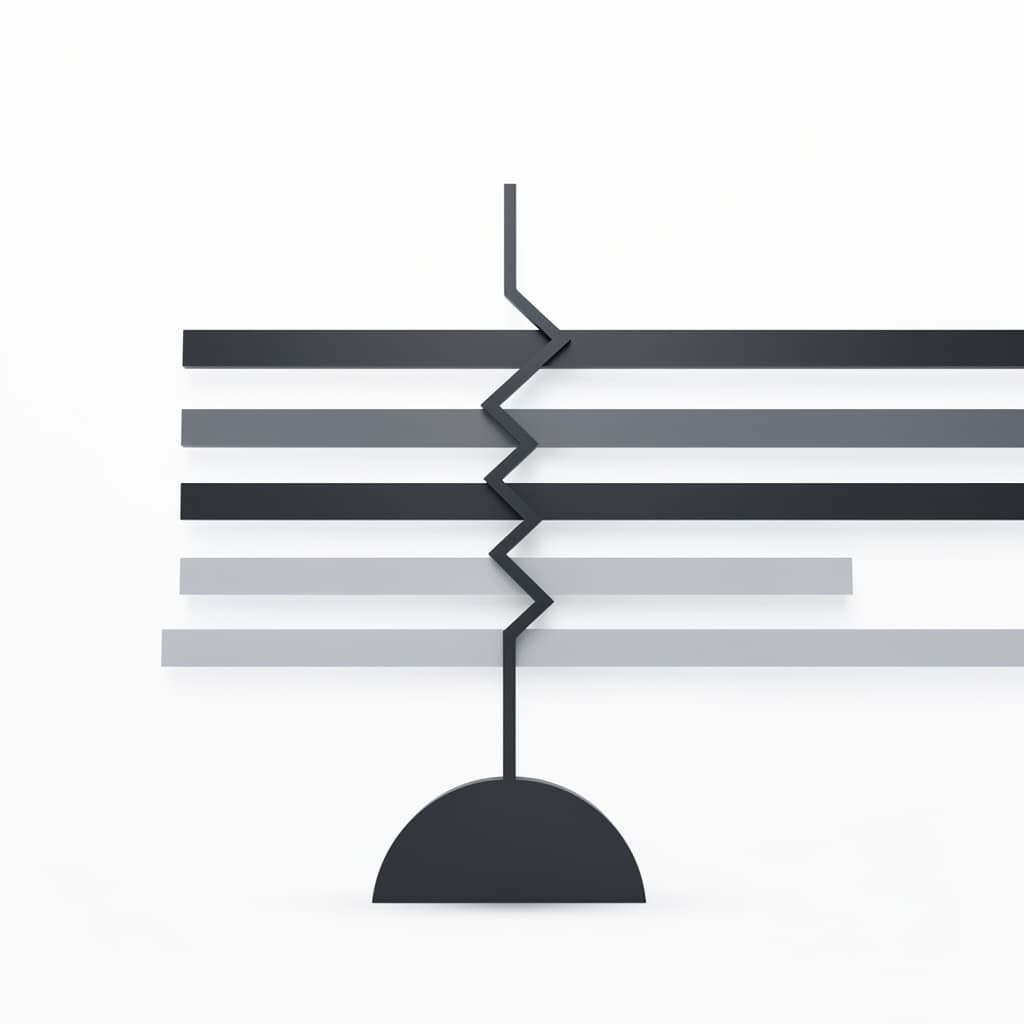
The order of atmospheric layers is not an arbitrary arrangement but a result of the fundamental principles of physics and chemistry acting on a planetary scale. The primary driver of this stratification is the way different parts of the atmosphere interact with solar and terrestrial energy. We see a "zig-zag" temperature profile: cooling in the troposphere (heated by the ground), warming in the stratosphere (heated by ozone), cooling in the mesosphere (lack of heating), and warming in the thermosphere (heated by high-energy solar radiation). This thermal structure creates boundaries like the tropopause and mesopause that act as physical barriers to air movement, effectively compartmentalizing the atmosphere into functional zones.
Pressure, unlike temperature, follows a simple and predictable path of decline across all layers. Because gravity pulls air toward the Earth, the weight of all the air above any given point creates the pressure measured at that point. This leads to the condition of hydrostatic equilibrium, where the downward force of gravity is perfectly balanced by the upward pressure gradient force. This balance ensures that our atmosphere does not collapse into a thin film on the ground nor drift away into the void. The pressure variation is so consistent that it is used as the primary method for determining altitude in aviation, with the understanding that for every 5.5 kilometers of ascent, the atmospheric pressure is reduced by approximately half.
Ultimately, the atmosphere functions as a cohesive whole, where each layer influences the others through the transfer of energy and momentum. For instance, massive gravity waves generated by thunderstorms in the troposphere can travel upward and break in the mesosphere, much like waves on a beach, transferring energy across vast vertical distances. Similarly, changes in solar activity that heat the thermosphere can influence the chemical cycles in the stratosphere, which in turn can alter the jet stream patterns that dictate our weather. This complex, hierarchical architecture is what makes Earth a unique, habitable world, providing a masterclass in thermal regulation and protective engineering on a global scale.
References
- Wallace, J. M., & Hobbs, P. V., "Atmospheric Science: An Introductory Survey", Academic Press, 2006.
- Andrews, D. G., "An Introduction to Atmospheric Physics", Cambridge University Press, 2010.
- National Oceanic and Atmospheric Administration (NOAA), "The Structure of the Atmosphere", U.S. Department of Commerce, 2023.
- Salby, M. L., "Fundamentals of Atmospheric Physics", Academic Press, 1996.
- Lutgens, F. K., Tarbuck, E. J., & Tasa, D. G., "The Atmosphere: An Introduction to Meteorology", Pearson, 2018.
Recommended Readings
- The Atmosphere: A Very Short Introduction by Paul I. Palmer — A concise and accessible guide that provides a high-level overview of atmospheric dynamics and chemistry.
- Atmospheric Chemistry and Physics: From Air Pollution to Climate Change by Seinfeld and Pandis — A deep dive into the chemical processes that define the different layers of our atmosphere.
- The Cloudspotter's Guide by Gavin Pretor-Pinney — While focused on clouds, this book builds an excellent intuition for the movement and physics of the troposphere.
- Physics of the Atmosphere and Climate by Murry Salby — A comprehensive textbook for those who want to understand the rigorous mathematical foundations of atmospheric thermal structures.