The Structural Logic of Plate Tectonics
Plate tectonics represents the foundational framework of modern Earth science, providing a unified explanation for the planet’s surface evolution over billions of years. This theory describes the...
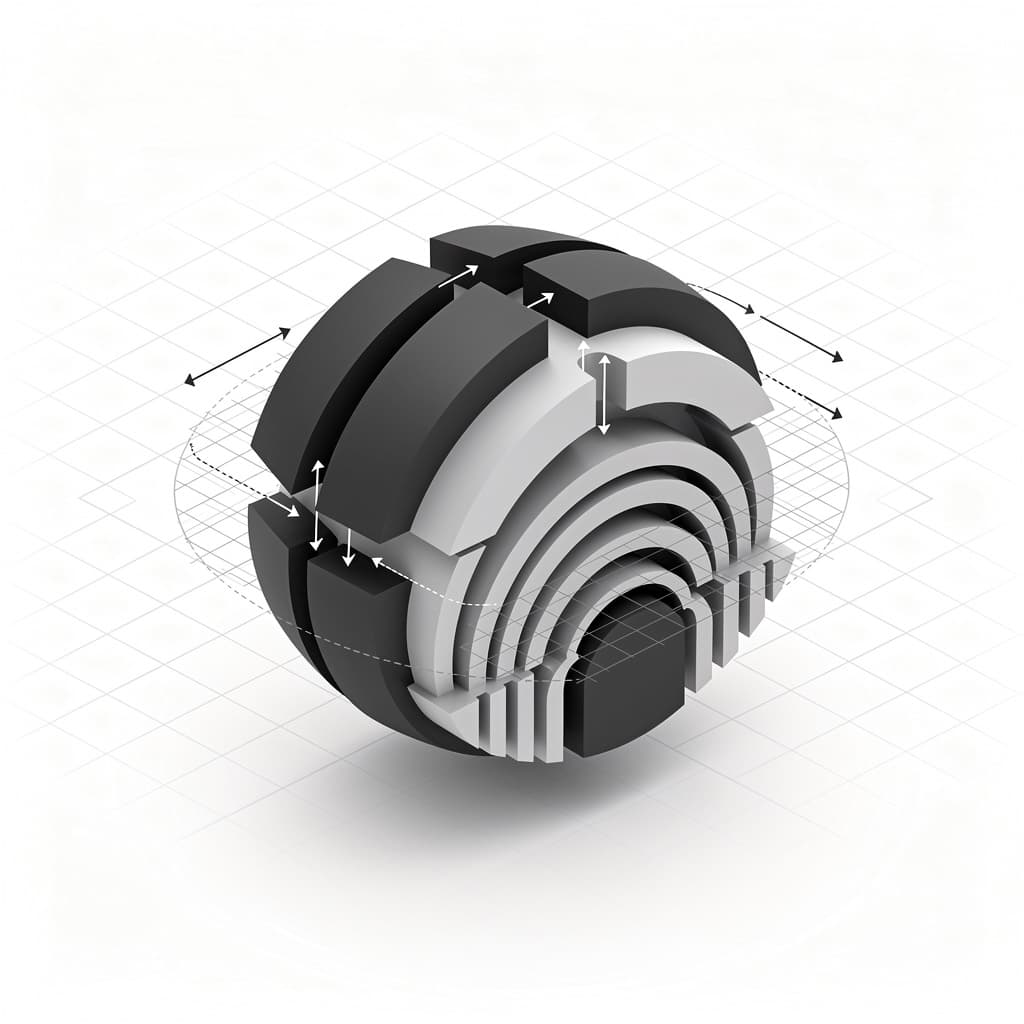
Plate tectonics represents the foundational framework of modern Earth science, providing a unified explanation for the planet’s surface evolution over billions of years. This theory describes the large-scale motion of the Earth's lithosphere, a rigid outer shell divided into several major and minor plates that glide over a more ductile layer beneath. By understanding plate tectonics explained through the lens of structural logic, we can decipher the origins of mountain ranges, the distribution of earthquakes, and the creation of new oceanic crust. It is a dynamic system driven by the internal heat of the Earth, acting as a planetary cooling mechanism that continuously recycles material between the surface and the deep interior. This article explores the mechanical architecture of these plates, the historical evidence that confirmed their movement, and the complex forces that drive the perpetual reshaping of our world.
The Architecture of the Earths Crust
Oceanic vs Continental Lithosphere
To understand the structural logic of our planet, one must first distinguish between the two primary types of lithosphere: oceanic and continental. The lithosphere is not synonymous with the "crust" alone; it includes the crust and the uppermost portion of the mantle that behaves as a rigid solid. Oceanic lithosphere is relatively thin, typically ranging from 50 to 100 kilometers in thickness, and is composed primarily of mafic rocks such as basalt and gabbro. Because these rocks are rich in iron and magnesium, oceanic lithosphere has a high density, approximately $$3.0 \text{ g/cm}^3$$, which causes it to sit lower in the mantle and eventually subduct during collisions. This density-driven behavior is fundamental to the recycling of the seafloor and the maintenance of the Earth's chemical balance.
In contrast, continental lithosphere is much thicker and significantly more buoyant, with a thickness often exceeding 150 to 200 kilometers beneath ancient mountain roots. It is primarily composed of felsic rocks like granite, which are rich in silica and aluminum and have a lower average density of about $$2.7 \text{ g/cm}^3$$. This lower density prevents continental crust from being easily subducted into the mantle, meaning that continental landmasses are often billions of years old, whereas the oldest oceanic crust is generally less than 200 million years old. The interaction between these two distinct types of lithosphere dictates the geography of our planet, as the dense oceanic plates sink while the buoyant continental plates remain "floating" at the surface, a concept known as isostasy.
Categorizing the Types of Tectonic Plates
The Earth’s surface is fragmented into a mosaic of approximately seven to eight major plates and dozens of smaller microplates. Major plates, such as the Pacific Plate, the African Plate, and the Eurasian Plate, cover millions of square kilometers and encompass entire continents or ocean basins. The types of tectonic plates are often defined by the nature of the crust they carry; for example, the Pacific Plate is almost entirely oceanic, while the North American Plate contains a massive continental craton flanked by oceanic lithosphere in the Atlantic. These plates do not move in isolation but interact at their boundaries, where the most intense geological activity—such as volcanism and seismicity—is concentrated.
Microplates and tectonic fragments, such as the Juan de Fuca Plate or the Caribbean Plate, play a critical role in localizing tectonic stress and complex boundary interactions. These smaller units often originate from the fragmentation of larger plates due to changing stress fields or the influence of mantle plumes. The boundaries between these plates are categorized based on their relative motion: moving apart, moving together, or sliding past one another. The structural logic of these arrangements ensures that as new crust is created in one location, an equivalent amount is typically destroyed or deformed elsewhere, maintaining the Earth's constant radius. Understanding this global jigsaw puzzle is essential for plate tectonics explained in a modern geophysical context.
Historical Evidence for Continental Drift
Floral and Faunal Correlation Across Oceans
The evidence for continental drift was initially greeted with skepticism because early 20th-century geologists could not conceive of a mechanism powerful enough to move continents. However, the biological evidence was overwhelming: identical species of extinct plants and animals were found on continents now separated by thousands of miles of deep ocean. For instance, remains of the Mesosaurus, a freshwater reptile, were discovered in both South America and Africa. Given that this creature could not have survived a saltwater crossing, its presence on both landmasses suggested they were once part of a single, contiguous landmass known as Pangea.
Furthermore, the distribution of the fossil seed fern Glossopteris provided a botanical "smoking gun" for continental connection. Fossils of this plant were found across South America, Africa, India, Antarctica, and Australia, spanning a massive range of climates that would be impossible for a single species to inhabit today. If the continents remained in their current positions, Glossopteris would have had to evolve identically in vastly different environments, from tropical jungles to polar wastes. By reassembling the continents into a supercontinent, scientists observed that the Glossopteris habitat formed a continuous belt across a specific paleoclimatic zone, proving that the landmasses had shifted significantly over geological time.
Seafloor Spreading and Magnetic Reversals
The definitive proof of plate motion came not from the land, but from the bottom of the sea during the mid-20th century. Harry Hess proposed the theory of seafloor spreading, suggesting that new oceanic crust forms at mid-ocean ridges and moves outward like a conveyor belt. This was confirmed by Frederick Vine and Drummond Matthews, who analyzed the magnetic signatures of the seafloor. They discovered that the rocks on either side of a ridge displayed alternating "stripes" of normal and reversed magnetic polarity. These stripes were perfectly symmetrical, acting as a historical tape recorder of the Earth’s magnetic field reversals over millions of years.
This paleomagnetic data demonstrated that the seafloor was indeed expanding, as magma cooling at the ridge crystallized magnetic minerals in alignment with the current magnetic North. As the Earth's magnetic field flipped periodically, the new crust recorded the change, creating a visible timeline of growth. This discovery provided the mechanical evidence that Wegener’s continental drift lacked, showing that the continents were not "plowing" through the ocean floor but were instead being carried along as part of the moving lithosphere. The rate of this spreading, often compared to the speed at which human fingernails grow, provides the fundamental velocity for plate tectonics explained across geological epochs.
Driving Forces of Mantle Convection Currents
Thermal Gradient Dynamics in the Asthenosphere
The primary engine driving the motion of tectonic plates is the Earth's internal heat, which generates mantle convection currents. This heat originates from two main sources: the residual heat from the planet’s formation and the ongoing radioactive decay of isotopes such as Uranium-238, Thorium-232, and Potassium-40. Because the core is significantly hotter than the crust, a steep thermal gradient exists within the mantle. In the asthenosphere, a layer of the mantle that is solid but mechanically weak and ductile, this heat causes material to expand, become less dense, and rise toward the surface in a process analogous to a pot of simmering soup.
As this heated mantle material reaches the base of the lithosphere, it cools and spreads out horizontally, exerting a frictional drag on the plates above. Eventually, the material becomes dense enough to sink back into the deep mantle, completing a convection cell. The fluid dynamics of this process are governed by the Rayleigh number, a dimensionless quantity that determines whether a fluid will convect based on its viscosity and temperature differences. In the Earth's mantle, the Rayleigh number is high enough to ensure that convection is a constant, albeit extremely slow, process that serves as the planetary "motor" for all surface deformation.
The Mechanics of Slab Pull and Ridge Push
While mantle convection provides the general circulation, specific mechanical forces act directly on the plates to dictate their speed and direction. The most powerful of these is slab pull, which occurs at subduction zones where a cold, dense oceanic plate sinks into the warmer mantle. Because the subducting slab is denser than the surrounding asthenosphere, gravity pulls the rest of the plate along behind it. Numerical models suggest that slab pull is responsible for the majority of the driving force in plate tectonics, explaining why plates attached to large subduction zones, like the Pacific Plate, move faster than those that are not.
An auxiliary force is ridge push, which is a gravity-driven mechanism that occurs at mid-ocean ridges. Because the ridge is topographically higher than the surrounding seafloor due to the heat of the upwelling magma, the lithosphere essentially "slides" down the flanks of the ridge under its own weight. Though weaker than slab pull, ridge push helps initiate the outward movement of the plate from the spreading center. Together, these forces create a self-sustaining cycle where the creation of crust at ridges and its destruction at trenches are mechanically linked, ensuring the continuous turnover of the Earth's outer shell.
Convergent vs Divergent Boundaries
Orogenic Belts and Oceanic Trenches
When analyzing convergent vs divergent boundaries, we see the two extremes of tectonic interaction: destruction and creation. At convergent boundaries, two plates move toward each other, leading to either subduction or continental collision. When an oceanic plate meets a continental plate, the denser oceanic lithosphere is forced downward into a subduction zone, creating a deep oceanic trench like the Mariana Trench. As the slab descends, it releases water and volatiles into the overlying mantle wedge, lowering the melting point and triggering the formation of volcanic arcs, such as the Andes Mountains or the Cascade Range.
In cases where two continental plates converge, neither is dense enough to subduct deeply into the mantle. Instead, the crust is intensely compressed, folded, and thickened, leading to the formation of massive orogenic belts (mountain chains). The most prominent example is the ongoing collision between the Indian and Eurasian plates, which has produced the Himalayas and the Tibetan Plateau. These regions are characterized by frequent, high-magnitude earthquakes but lack the explosive volcanism found at oceanic-continental subduction zones. This structural logic illustrates how the composition of the interacting plates determines the resulting topographical features.
Mid-Ocean Ridges and Rift Valley Formation
Divergent boundaries represent the "birthplaces" of the Earth's crust, where plates move apart and new material upwells from below. In oceanic settings, this occurs at mid-ocean ridges, a continuous underwater mountain range that spans the globe. As the plates separate, the pressure on the underlying mantle decreases, causing decompression melting. The resulting basaltic magma rises to fill the gap, cooling quickly to form new seafloor. This process not only creates crust but also facilitates the hydrothermal circulation that supports unique deep-sea ecosystems around black smokers and hydrothermal vents.
Divergence can also occur within continents, a process known as continental rifting. This begins when the lithosphere is stretched and thinned, creating a series of fault-bounded troughs known as rift valleys. The East African Rift is a prime contemporary example, where the African Plate is slowly splitting into the Nubian and Somalian sub-plates. If rifting continues, the continental crust will eventually thin to the point of rupture, allowing the ocean to flood in and creating a new narrow sea, much like the Red Sea. Thus, divergent boundaries are the primary mechanism for the fragmentation of supercontinents and the opening of new ocean basins.
Transform Plate Boundaries Examples and Mechanics
Lateral Displacements at Conservative Margins
Unlike convergent or divergent margins, transform plate boundaries are "conservative" because lithosphere is neither created nor destroyed. At these boundaries, plates slide past each other horizontally along strike-slip faults. The structural logic here is one of lateral displacement, where the primary geological signature is the horizontal shifting of landforms, such as offset riverbeds or fences. Because the plates are rigid and have irregular edges, they do not slide smoothly; instead, they lock together, accumulating immense elastic strain energy until the frictional resistance is overcome, resulting in an earthquake.
The mechanics of transform faults are essential for accommodating the geometry of a spherical Earth. Most transform faults are found on the ocean floor, where they connect segments of mid-ocean ridges that are offset from one another. Because the Earth is a sphere, the spreading centers cannot exist as perfectly straight lines; transform faults allow the ridge system to "step" across the ocean basin. This zigzag pattern of ridges and transforms ensures that the rigid plates can move across a curved surface without tearing themselves apart or leaving massive gaps in the crust.
Analysis of the San Andreas Fault System
The most famous of the transform plate boundaries examples is the San Andreas Fault in California. This boundary marks the contact between the North American Plate and the Pacific Plate, with the Pacific Plate moving northwest relative to North America at a rate of approximately 30 to 50 millimeters per year. Unlike underwater transforms, the San Andreas is easily accessible on land, providing a natural laboratory for geologists. It is not a single clean break but a complex system of many faults that distribute the tectonic stress across a wide region, influencing the topography of the entire California coastline.
The San Andreas Fault is characterized by "stick-slip" behavior, where long periods of seismic quiet (stretching the crust like a rubber band) are punctuated by sudden, violent ruptures. The Great San Francisco Earthquake of 1906 is the most historic example of this release, where the ground shifted up to 6 meters in seconds. This boundary demonstrates that even without volcanism or the creation of new mountains, the sheer friction of two massive plates grinding past one another is sufficient to reshape human civilization and the local landscape. Understanding these mechanics is vital for earthquake engineering and urban planning in transform-adjacent regions.
Volcanic Hotspots and Intraplate Activity
Mantle Plumes and Oceanic Island Chains
While plate tectonics explained most geological activity at plate boundaries, the existence of "hotspots" initially appeared to contradict the theory. Hotspots are areas of intense volcanic activity that occur in the middle of tectonic plates rather than at the edges. In 1963, J. Tuzo Wilson proposed that these were caused by mantle plumes—narrow columns of exceptionally hot rock rising from the core-mantle boundary. These plumes remain relatively stationary while the tectonic plate moves over them, acting like a blowtorch held beneath a moving sheet of wax.
The Hawaiian Islands are the definitive example of this phenomenon. As the Pacific Plate moved northwest over the Hawaiian hotspot, a series of volcanoes formed one after another. The oldest islands (and the submerged seamounts beyond them) are located furthest to the northwest, while the youngest and only currently active island, Hawaii (the Big Island), sits directly over the plume. This age progression provides a clear record of the plate’s velocity and direction over millions of years, independent of the activity at its boundaries. It confirms that the mantle is not a uniform mass but contains localized thermal anomalies that can pierce even the thickest lithosphere.
Decoupling Surface Motion from Deep Heat Sources
The structural logic of hotspots implies a decoupling between the surface motion of the plates and the deep circulation of the mantle. While the lithospheric plates are driven by slab pull and ridge push, the mantle plumes appear to be rooted much deeper, possibly at the D" layer just above the outer core. This suggests that the Earth's cooling process involves two distinct modes: the broad, shallow convection that moves the plates and the narrow, deep "upwellings" that create hotspots. This dual-system cooling is highly efficient at transporting heat from the core to the surface.
In addition to island chains, hotspots are responsible for Large Igneous Provinces (LIPs), such as the Deccan Traps in India or the Siberian Traps. These are massive accumulations of flood basalts that occur when a new mantle plume head reaches the surface, releasing staggering volumes of magma and volcanic gases in a short geological interval. These events have been linked to mass extinctions and major climatic shifts, proving that intraplate activity, though less common than boundary activity, has a profound impact on the Earth's biological and atmospheric history. By integrating hotspots into the plate tectonic model, geologists have achieved a truly comprehensive understanding of our planet’s heat-driven evolution.
References
- Kearey, P., Klepeis, K. A., & Vine, F. J., "Global Tectonics", Wiley-Blackwell, 2009.
- Turcotte, D. L., & Schubert, G., "Geodynamics", Cambridge University Press, 2014.
- Wegener, A., "The Origin of Continents and Oceans", Dover Publications (Reprint of 1929 Edition), 1966.
- Wilson, J. T., "A New Class of Faults and their Bearing on Continental Drift", Nature, 1965.
Recommended Readings
- Annals of the Former World by John McPhee — A Pulitzer Prize-winning narrative that blends geological history with personal observation, making the complex story of North America's tectonic assembly accessible and engaging.
- The 25th Anniversary of Plate Tectonics by various authors in Scientific American — A collection of foundational essays that explain the rapid shift in scientific consensus during the 1960s and 1970s.
- Plate Tectonics: A Very Short Introduction by Peter Molnar — A concise yet rigorous overview of the physical principles and historical discoveries that define our modern understanding of the Earth's crust.