The Structural Logic of Intermolecular Forces
Explore the structural logic of intermolecular forces, from London dispersion to hydrogen bonding, in this comprehensive guide to molecular interactions.
In this articleDefining the Bounds of Molecular Interaction
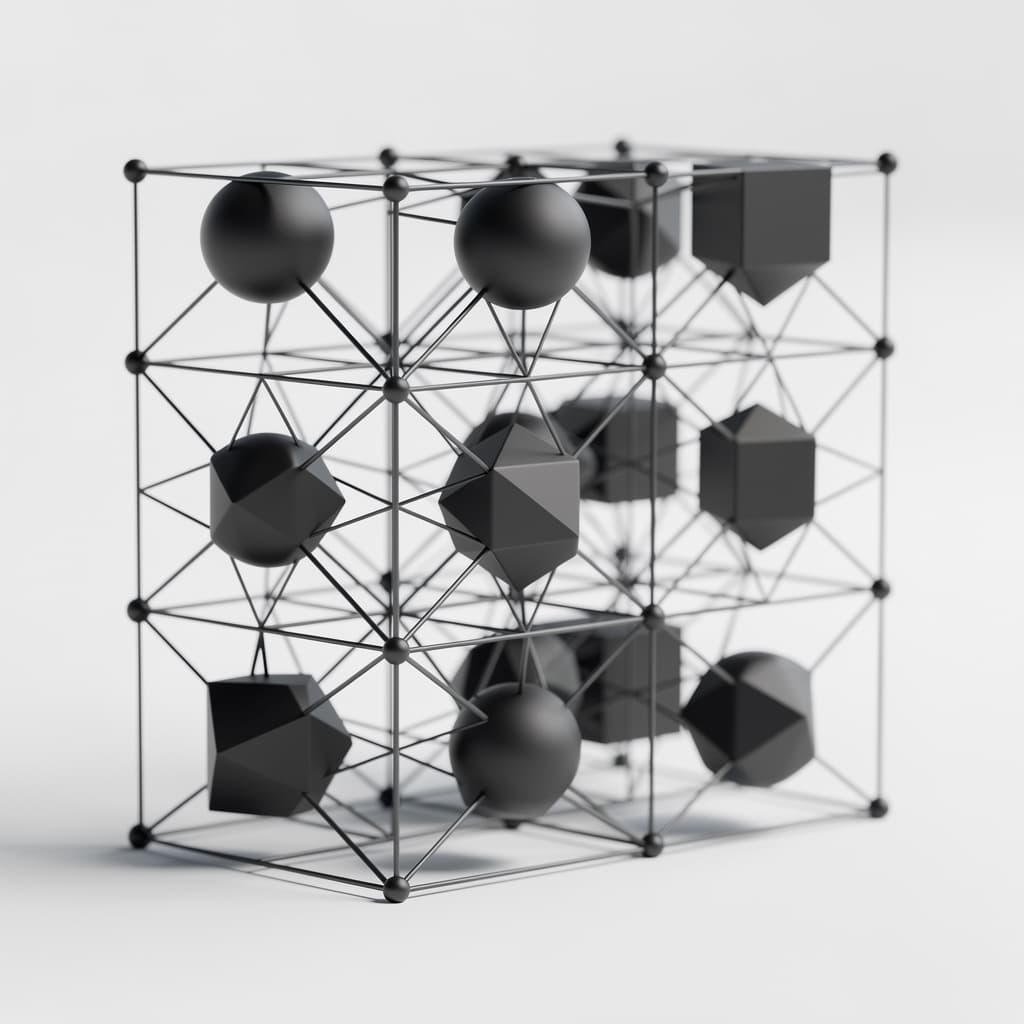

The macroscopic world we perceive—the fluidity of water, the rigidity of plastic, and the volatile scent of perfume—is governed not just by the atoms within a molecule, but by the subtle and diverse interactions between those molecules. These intermolecular forces (IMFs) represent the structural logic that dictates how matter transitions between phases and how biological systems maintain their integrity. While chemical bonds, such as covalent and ionic bonds, hold atoms together to form discrete units, intermolecular forces determine how those units congregate, repel, or slide past one another. Understanding these forces requires a journey into the behavior of electron clouds and the fundamental principles of electrostatics that operate at the nanometer scale.
Defining the Bounds of Molecular Interaction
Intermolecular vs Intramolecular Forces
To grasp the logic of molecular behavior, one must first distinguish between the internal forces that define a molecule and the external forces that define a substance's state. Intramolecular forces are the high-energy chemical bonds—ionic, covalent, or metallic—that keep atoms together; for instance, the covalent bond between hydrogen and oxygen in a water molecule requires approximately 464 kJ/mol to break. In contrast, intermolecular forces are the much weaker attractions between separate molecules, typically ranging from 1 to 50 kJ/mol. This difference in magnitude explains why heating water to 100 degrees Celsius provides enough energy to overcome intermolecular attractions and create steam, yet it does not possess nearly enough energy to rip the water molecules apart into hydrogen and oxygen gas.
The distinction is central to the study of thermodynamics and phase changes, as the "boiling" or "melting" of a substance is strictly a physical process of overcoming IMFs. When a solid melts into a liquid, the molecules gain enough kinetic energy to break the rigid lattice held together by these forces, yet the molecules themselves remain chemically identical. If intermolecular forces were as strong as intramolecular ones, the energy required to melt an ice cube would be comparable to the energy released in a high-intensity chemical reaction. By maintaining this hierarchy of energy scales, nature allows for the existence of stable molecular "building blocks" that can interact dynamically without losing their fundamental identity.
The Role of Electronegativity and Polarity
The primary driver of intermolecular logic is the uneven distribution of electrons, a phenomenon rooted in the concept of electronegativity. Proposed by Linus Pauling in 1932, electronegativity is a measure of an atom's tendency to attract a shared pair of electrons within a chemical bond. When two atoms with significantly different electronegativities form a covalent bond, the electrons spend more time near the more electronegative atom, creating a polar covalent bond. This results in a partial negative charge () at one end of the bond and a partial positive charge () at the other, effectively turning the bond into a tiny electrical vector known as a dipole moment.
However, a molecule's overall polarity is not merely the sum of its bonds but is also dependent on its three-dimensional geometry. A molecule like carbon dioxide () contains two polar bonds, but because the molecule is linear, the two dipole moments point in opposite directions and cancel each other out, resulting in a nonpolar molecule. Conversely, the bent shape of a water molecule () ensures that the bond dipoles do not cancel, leading to a strong net molecular dipole. This geometric nuance is crucial because it dictates whether a molecule will engage in simple dispersion interactions or more complex, stronger dipole-driven attractions with its neighbors.
Coulombic Foundations of Attraction
At their core, all intermolecular forces are Coulombic in nature, meaning they arise from the electrostatic attraction between opposite charges and the repulsion between like charges. The strength of these interactions is governed by Coulomb's Law, which states that the force between two charges is proportional to the product of the charges and inversely proportional to the square of the distance between them. In a mathematical sense, the potential energy of the interaction is represented as: where is a proportionality constant, and are the magnitudes of the charges, and is the distance between them. In the context of IMFs, these "charges" are usually partial charges () rather than full integer charges found in ions.
Because these partial charges are small and the distances between molecules in condensed phases are relatively large compared to bond lengths, IMFs are significantly weaker than ionic bonds. Furthermore, as molecules move and rotate, the effective distance and the orientation of the dipoles constantly change, leading to a complex landscape of attractive and repulsive potentials. The structural logic of chemistry emerges from the balance of these Coulombic interactions, determining whether a substance will exist as a gas, a liquid, or a solid at a given temperature and pressure. As temperature increases, the kinetic energy of the molecules eventually exceeds the Coulombic potential energy, leading to the breakdown of the structured liquid or solid phase.
London Dispersion Forces and Instantaneous Dipoles
Polarizability and Electron Cloud Distortion
Even in perfectly nonpolar molecules like methane () or noble gases like Neon, attractive forces must exist; otherwise, these substances would never condense into liquids or solids. These forces are known as London dispersion forces, named after the physicist Fritz London who provided their quantum mechanical explanation in 1930. The logic behind dispersion forces lies in the constant, random motion of electrons within their orbitals, which can create a temporary, instantaneous dipole at any given moment. For a fraction of a nanosecond, more electrons may reside on one side of an atom than the other, creating a fleeting partial negative charge that induces a corresponding dipole in a neighboring atom.
The ease with which an electron cloud can be distorted to create these dipoles is known as polarizability. Atoms or molecules with larger, more expansive electron clouds—typically those with higher atomic numbers—are more polarizable because the outer electrons are farther from the nucleus and less tightly held. Consequently, larger atoms experience stronger London dispersion forces. This explains why the noble gases show a clear trend in boiling points: Helium, with its tiny, tightly bound electron cloud, boils at 4 Kelvin, while Radon, with its large and highly polarizable cloud, boils at 211 Kelvin. This "squishiness" of the electron cloud is the fundamental mechanic that allows even the most inert matter to cohere.
Influence of Molecular Weight and Surface Area
While atomic size is a major factor, the molecular weight and surface area of a molecule also play decisive roles in the strength of London dispersion forces. Heavier molecules generally have more electrons, which naturally increases the total potential for instantaneous dipoles to form. However, the shape of the molecule is equally important because dispersion forces require close proximity to be effective. A long, linear molecule like pentane () has a larger surface area than its branched isomer, neopentane, which is more spherical. The larger surface area of pentane allows more points of contact for dispersion forces to act, resulting in a higher boiling point (36 degrees Celsius) compared to neopentane (9 degrees Celsius).
This relationship between shape and force is a cornerstone of organic chemistry and material science. It demonstrates that the physical properties of a substance are not just a function of what atoms are present, but how those atoms are arranged in space. In the industrial world, this logic is applied to the design of lubricants and polymers, where molecular "tangling" and surface-to-surface contact are optimized to achieve specific viscosities or tensile strengths. The macroscopic "stickiness" of a substance is, in many ways, the sum of billions of tiny, transient electronic distortions occurring across the surface of its constituent molecules.
The Presence of Dispersion in All Matter
It is a common misconception in introductory chemistry that London dispersion forces only occur in nonpolar molecules. In reality, dispersion forces are universal and exist between all molecules, whether polar or nonpolar, because all molecules possess electron clouds. In many cases, dispersion forces are actually the dominant contributor to the total intermolecular attraction, even in polar substances. For example, in large polar molecules, the sheer volume of the electron cloud and the resulting dispersion can outweigh the contributions of permanent dipole-dipole interactions.
This universality makes London dispersion the "background radiation" of molecular physics. It ensures that every piece of matter in the universe has some inherent attraction to every other piece of matter at short distances. Without London forces, the diverse chemistry of hydrocarbons—the backbone of fuels, plastics, and life itself—would be impossible, as these nonpolar molecules would have no mechanism to stick together. By understanding dispersion as a fundamental property of electron clouds, we recognize that the "logic" of attraction is built into the very nature of electronic structure.
Studying this for an exam?
Noesis builds the syllabus, notes and tests for you, and you study them with a tutor that knows your material.
Permanent Dipole-Dipole Interactions in Polar Matter
Electrostatic Attraction Between Stable Dipoles
When molecules possess a permanent dipole moment due to an asymmetric distribution of electronegative atoms, they engage in dipole-dipole interactions. Unlike the fleeting London forces, these are stable, persistent attractions where the partial positive end of one polar molecule aligns with the partial negative end of another. This alignment creates a network of attraction that is generally stronger than dispersion forces for molecules of similar size. For example, while nonpolar (molecular weight 32) boils at -183 degrees Celsius, the polar molecule formaldehyde (, molecular weight 30) boils at -19 degrees Celsius, illustrating the dramatic impact of permanent dipoles on thermal stability.
The energy of these interactions depends heavily on the orientation of the molecules. In a solid, polar molecules are locked into a lattice that maximizes these alignments. In a liquid, however, the molecules are in constant motion, and the dipole-dipole forces must constantly compete with kinetic energy. This leads to a statistical preference for attractive orientations, but the force is less "efficient" than in the solid state. This dynamic competition is why polar liquids often have higher heat capacities than nonpolar ones; significant energy must be spent simply to disrupt the preferred orientations of the dipoles before the temperature can rise.
Orientation Effects and Molecular Geometry
The structural logic of dipole interactions is deeply influenced by molecular geometry and the distance between the dipoles. Because the strength of the interaction falls off rapidly with distance—specifically, the potential energy between two rotating dipoles in a liquid is proportional to —the way molecules "pack" together is vital. Molecules with high dipole moments that can get very close to one another will exhibit much stronger interactions than those where bulky side-groups prevent the dipoles from approaching. This explains why small, highly polar molecules like acetonitrile () have disproportionately high boiling points.
Furthermore, the Keesom effect describes how the temperature of a system affects these orientations. At high temperatures, the rapid rotation of molecules tends to average out the dipole-dipole attractions, making them less effective. This creates a feedback loop: as a substance is heated, the very forces keeping it in the liquid phase become weaker not just because of kinetic energy, but because the "order" of the dipole alignments is being lost. This temperature-dependent decay of force is a key reason why polar gases deviate significantly from ideal gas behavior at lower temperatures.
Energy Scales of Permanent Dipoles
In the hierarchy of intermolecular forces, permanent dipole-dipole interactions sit comfortably in the middle, typically ranging from 5 to 25 kJ/mol. While this is stronger than the dispersion forces of small molecules, it is still orders of magnitude weaker than a full chemical bond. This "Goldilocks" strength is essential for many chemical processes, particularly in the solvent properties of polar liquids. Water, although its primary force is hydrogen bonding, also relies on its permanent dipole to interact with a wide variety of solutes.
The following table compares different substances to illustrate the impact of permanent dipoles on physical properties, keeping molecular weights relatively similar to isolate the effect of polarity:
| Substance | Molecular Weight | Dipole Moment (D) | Boiling Point (°C) |
|---|---|---|---|
| Propane () | 44 | 0.08 | -42.1 |
| Dimethyl Ether () | 46 | 1.30 | -24.8 |
| Acetaldehyde () | 44 | 2.70 | 20.2 |
| Acetonitrile () | 41 | 3.90 | 82.0 |
As the table demonstrates, as the dipole moment increases while the molecular weight remains nearly constant, the boiling point rises sharply. This is the structural logic of polar matter: the more "magnetic" the molecules are, the more energy is required to tear them apart into the gas phase. This principle allows chemists to predict the volatility and solubility of compounds simply by examining their Lewis structures and calculating their net dipoles.
Hydrogen Bonding as a Unique Chemical Bridge
The High Electronegativity of Nitrogen, Oxygen, and Fluorine
Perhaps the most famous of all intermolecular forces is the hydrogen bond. Despite its name, it is not a formal chemical bond but an exceptionally strong type of dipole-dipole interaction. It occurs specifically when a hydrogen atom is covalently bonded to a highly electronegative atom—namely Nitrogen (N), Oxygen (O), or Fluorine (F). Because these three elements are so electronegative and relatively small, they pull the shared electron pair away from the hydrogen atom with such intensity that the hydrogen is left as a nearly "naked" proton. This creates a concentrated positive charge that can get extremely close to the lone pair of electrons on a neighboring N, O, or F atom.
The small size of the hydrogen atom is the "secret" to the bond's strength. According to Coulomb's Law, as the distance decreases, the force of attraction increases exponentially. Because hydrogen has no inner-shell electrons to shield its nucleus, it can approach the lone pairs of an adjacent molecule much more closely than any other element. This results in an interaction energy between 10 and 40 kJ/mol, which is roughly ten times stronger than a typical dispersion force and significantly stronger than standard dipole-dipole interactions. This unique "bridge" is responsible for the anomalous properties of the most important substances on Earth.
Structural Consequences for Water and Ice
The structural logic of hydrogen bonding is nowhere more apparent than in water (). Each water molecule can form up to four hydrogen bonds: two through its hydrogen atoms and two through the lone pairs on its oxygen atom. This creates a highly interconnected, three-dimensional "flickering cluster" in the liquid state. When water freezes, the molecules are forced into a rigid hexagonal lattice to maximize these hydrogen bonds. This lattice structure contains significant empty space, which is why ice is less dense than liquid water—a rare property that allows ice to float, insulating the liquid water below and making aquatic life possible in winter.
Furthermore, hydrogen bonding gives water an incredibly high specific heat capacity and an unusually high boiling point for its mass. If water followed the trends of its neighbors on the periodic table (like or ), it would be a gas at room temperature, boiling at roughly -80 degrees Celsius. The fact that water is a liquid is entirely due to the persistent "stickiness" provided by the hydrogen bond network. This network also explains water's high surface tension, which allows insects to walk on its surface and enables the capillary action that pulls water up to the tops of tall trees.
The Stabilization of Biological Macromolecules
In the realm of biology, the hydrogen bond is the master architect of form and function. It is the primary force responsible for the secondary structure of proteins, specifically the -helices and -pleated sheets. These structures are held together by hydrogen bonds between the carbonyl oxygen and the amide hydrogen of the protein backbone. If these bonds were stronger (like covalent bonds), proteins would be too rigid to function as dynamic enzymes; if they were weaker (like dispersion forces), they would collapse under the thermal energy of the body.
Even more critically, hydrogen bonding is the logic behind the storage of genetic information in DNA. The two strands of the double helix are held together by hydrogen bonds between complementary base pairs: Adenine (A) pairs with Thymine (T) via two hydrogen bonds, while Cytosine (C) pairs with Guanine (G) via three. This interaction is strong enough to keep the helix stable at body temperature, yet weak enough to be "unzipped" by enzymes during DNA replication and transcription. This balance of stability and reversibility is perhaps the most sophisticated application of intermolecular logic in the known universe.
Revisiting the Van der Waals Forces Taxonomy
Classifying Keesom, Debye, and London Forces
In many textbooks, the term Van der Waals forces is used as a catch-all for all intermolecular forces. However, a more rigorous taxonomy divides these into three specific categories named after the scientists who described them. First are the Keesom forces, which are the permanent dipole-dipole interactions described previously. Second are the Debye forces, which occur when a permanent dipole induces a temporary dipole in a neighboring nonpolar molecule. Finally, there are the London forces, which involve two induced (instantaneous) dipoles. Together, these three forces represent the attractive component of the Van der Waals equation of state.
The distinction is important for precision in chemical modeling. Debye forces, for instance, explain why nonpolar oxygen gas can dissolve in polar water to a small extent; the water's permanent dipole slightly distorts the oxygen's electron cloud, creating a weak attraction. While these "dipole-induced dipole" interactions are generally the weakest of the trio, they are essential for understanding the solubility of nonpolar gases in polar solvents. By categorizing these forces, scientists can build more accurate mathematical models of how real gases and liquids behave under varying conditions.
Distinguishing Long-Range and Short-Range Effects
Intermolecular forces are also categorized by their range and the rate at which they decay as molecules move apart. All Van der Waals forces are considered short-range forces because their strength diminishes rapidly—typically as . This is in contrast to "long-range" forces like the attraction between full ions, which decays much more slowly at . The logical consequence of this decay is that molecules essentially do not "see" each other until they are nearly touching. This creates a distinct "boundary" for a molecule, often referred to as its Van der Waals radius.
At extremely close distances, another force comes into play: Pauli repulsion. When the electron clouds of two molecules begin to overlap, the Pauli Exclusion Principle dictates that the electrons cannot occupy the same space, leading to a massive spike in repulsive energy. The balance between the attraction and this extremely short-range repulsion is famously modeled by the Lennard-Jones Potential. This mathematical curve shows that there is an "optimal" distance for every pair of molecules—a sweet spot where attraction is maximized before repulsion takes over, which defines the equilibrium distance in liquids and solids.
Relationship to Gas Deviations and Virial Coefficients
The Ideal Gas Law () assumes that gas molecules have no volume and exert no forces on each other. In reality, no gas is truly ideal. Johannes Diderik van der Waals was the first to account for these deviations by introducing two constants into the equation: for the attractive forces and for the volume occupied by the molecules. The Van der Waals Equation is written as: The term corrects for the fact that intermolecular attractions pull molecules together, effectively reducing the pressure they exert on the walls of the container.
The value of the constant provides a direct quantitative measure of a substance's intermolecular force strength. For example, the value for Helium is very low (0.034 L²·atm/mol²), reflecting its weak London dispersion forces, while the value for water vapor is much higher (5.46 L²·atm/mol²), reflecting its strong hydrogen bonding. Higher-order corrections to gas behavior are often expressed through virial coefficients, which account for interactions between two, three, or more molecules simultaneously. This statistical mechanics approach allows engineers to predict the behavior of high-pressure industrial gases where intermolecular logic becomes the dominant factor.
Intermolecular Logic in Physical State Transitions
Boiling Point Elevation and Vapor Pressure
The boiling point of a liquid is the temperature at which its vapor pressure equals the external atmospheric pressure. Vapor pressure itself is a measure of the tendency of molecules to escape from the liquid phase into the gas phase. Molecules in a liquid are held back by intermolecular forces; therefore, the stronger the IMFs, the fewer molecules have enough kinetic energy to escape at a given temperature. This results in a lower vapor pressure for substances with strong forces, like glycerol, and a high vapor pressure for substances with weak forces, like diethyl ether.
The structural logic here is straightforward: higher IMFs require higher temperatures to reach the necessary vapor pressure for boiling. This relationship is quantified by the Clausius-Clapeyron equation, which relates the vapor pressure of a substance to its temperature and its enthalpy of vaporization (). The enthalpy of vaporization is essentially the total energy required to overcome the intermolecular "glue" of one mole of a liquid. By measuring boiling points, chemists can rank the relative strengths of the forces at play within different molecular systems, providing a window into the invisible world of molecular attraction.
Viscosity and Surface Tension Dynamics
Two other macroscopic properties—viscosity and surface tension—are direct manifestations of intermolecular logic. Viscosity is a fluid's resistance to flow, often described as "internal friction." It arises because molecules must slide past one another to move; if the intermolecular forces are strong or if the molecules are long and "tangled," the fluid will flow slowly. Honey and motor oil are viscous because their large molecules engage in extensive dispersion forces and, in the case of honey, significant hydrogen bonding through sugar hydroxyl groups.
Surface tension, on the other hand, is the energy required to increase the surface area of a liquid. Molecules in the bulk of a liquid are pulled in all directions by their neighbors, but molecules at the surface are only pulled inward and sideways. This creates a "net inward pull" that makes the surface act like an elastic membrane. Water has an exceptionally high surface tension (72.8 mN/m at 20 degrees Celsius) because of its strong hydrogen bonds. This logic explains why water forms spherical droplets—the sphere is the shape with the minimum surface area for a given volume, thus minimizing the number of "unhappy" surface molecules that lack a full set of neighbors.
The Thermodynamics of Phase Changes
The transition between solid, liquid, and gas is a thermodynamic "tug-of-war" between enthalpy () and entropy (). Enthalpy represents the "bond energy" or the favorability of staying together in a structured state, while entropy represents the drive toward disorder and freedom of movement. The Gibbs Free Energy equation, , dictates that at low temperatures, the enthalpy of intermolecular attraction wins, favoring solids and liquids. As the temperature () increases, the term becomes larger, eventually making the disordered gas phase the most stable state.
This explains why even the strongest intermolecular forces eventually fail at high temperatures. Even the rigid lattice of a diamond or the strong hydrogen-bonded network of water will eventually succumb to the sheer chaotic motion of high-energy molecules. The critical point of a substance is the temperature above which the liquid and gas phases become indistinguishable; at this point, the kinetic energy is so high that no amount of pressure can force the molecules to stay "latched" together in a liquid state. This thermodynamic limit marks the ultimate boundary of intermolecular logic.
Solvations and Ion-Dipole Attractions
The Energetics of Dissolution and Hydration Shells
When an ionic solid like table salt () dissolves in water, a new and powerful force comes into play: the ion-dipole attraction. This occurs between a fully charged ion and the partial charge of a polar molecule. As the salt crystal enters the water, the positive sodium ions () are swarmed by the oxygen ends () of water molecules, while the negative chloride ions () are surrounded by the hydrogen ends (). This process, known as hydration, releases a significant amount of energy called the enthalpy of hydration.
The structural logic of dissolution depends on whether the energy released by these new ion-dipole interactions is sufficient to overcome the lattice energy (the forces holding the salt crystal together) and the hydrogen bonds between the water molecules. This is why some salts dissolve readily while others are insoluble; if the lattice energy of the crystal is too high, the water molecules cannot "compensate" for the energy required to break the ion-ion bonds. The formation of a hydration shell—a structured layer of water molecules around an ion—is a masterclass in electrostatic optimization, effectively "shielding" the ion's charge and allowing it to move freely through the liquid.
Miscibility and the Like Dissolves Like Principle
The phrase "like dissolves like" is a simplified summary of the logic governing miscibility—the ability of two liquids to mix in all proportions. Polar liquids like water and ethanol mix because they can both engage in hydrogen bonding, creating a new network of interactions that is energetically similar to their original states. Conversely, water and oil do not mix because the weak dispersion forces between oil molecules cannot replace the strong hydrogen bonds that water would have to break to let the oil in. The water molecules "choose" to stay bonded to each other, effectively squeezing the oil out into a separate layer.
This principle is not just about attraction; it is also about the entropy of mixing. For two substances to mix, the total energy of the system must decrease, or the disorder must increase enough to offset any energy cost. In the case of oil and water, the water molecules around the oil droplets would have to form highly structured "cages" (clathrates) to maintain their hydrogen bonds, which actually decreases entropy. Therefore, both enthalpy and entropy conspire to keep oil and water separate. This logic is fundamental to everything from the structure of cell membranes (the lipid bilayer) to the way soap removes grease from a surface.
Interactions Between Ions and Neutral Polar Molecules
Ion-dipole interactions are significantly stronger than dipole-dipole interactions because one of the participants carries a full integer charge. This makes them crucial in the chemistry of electrolytes and the behavior of batteries. In a lithium-ion battery, for example, the movement of ions through a polar organic solvent is governed by how tightly the solvent molecules "cling" to the ion. If the ion-dipole interaction is too strong, the ion becomes "bulky" and moves slowly; if it is too weak, the salt may not dissolve at all.
The logic of these interactions also extends to the chelation of metal ions by larger molecules. In medicine, chelating agents are used to bind and remove toxic heavy metals like lead or mercury from the bloodstream. These agents contain multiple polar groups that "wrap around" the metal ion, forming multiple ion-dipole or coordinate covalent bonds. By maximizing these interactions, the chelator effectively traps the ion in a molecular cage, demonstrating how the fundamental principles of intermolecular attraction can be harnessed for practical, life-saving applications.
References
- Atkins, P., & de Paula, J., "Atkins' Physical Chemistry", Oxford University Press, 2017.
- Israelachvili, J. N., "Intermolecular and Surface Forces", Academic Press, 2011.
- Pauling, L., "The Nature of the Chemical Bond", Cornell University Press, 1960.
- Stone, A. J., "The Theory of Intermolecular Forces", Oxford University Press, 2013.
Recommended Readings
- The Forces of Nature by P.C.W. Davies — An accessible dive into the fundamental forces that govern everything from subatomic particles to the macro-scale behavior of liquids and solids.
- Water: A Very Short Introduction by John Finney — A concise yet deep exploration of how the specific intermolecular logic of water molecules shapes our planet and our bodies.
- Molecules by P.W. Atkins — A beautifully written book that bridges the gap between chemical structure and the physical properties we experience in daily life.
Turn this topic into a full course
Noesis builds the syllabus, notes and tests for you, and you study them with a tutor that knows your material.