The Rotational Logic of Moment of Inertia
The concept of rotational inertia, commonly referred to as the moment of inertia , serves as the angular counterpart to mass in linear dynamics. Just as mass quantifies an object's resistance to...
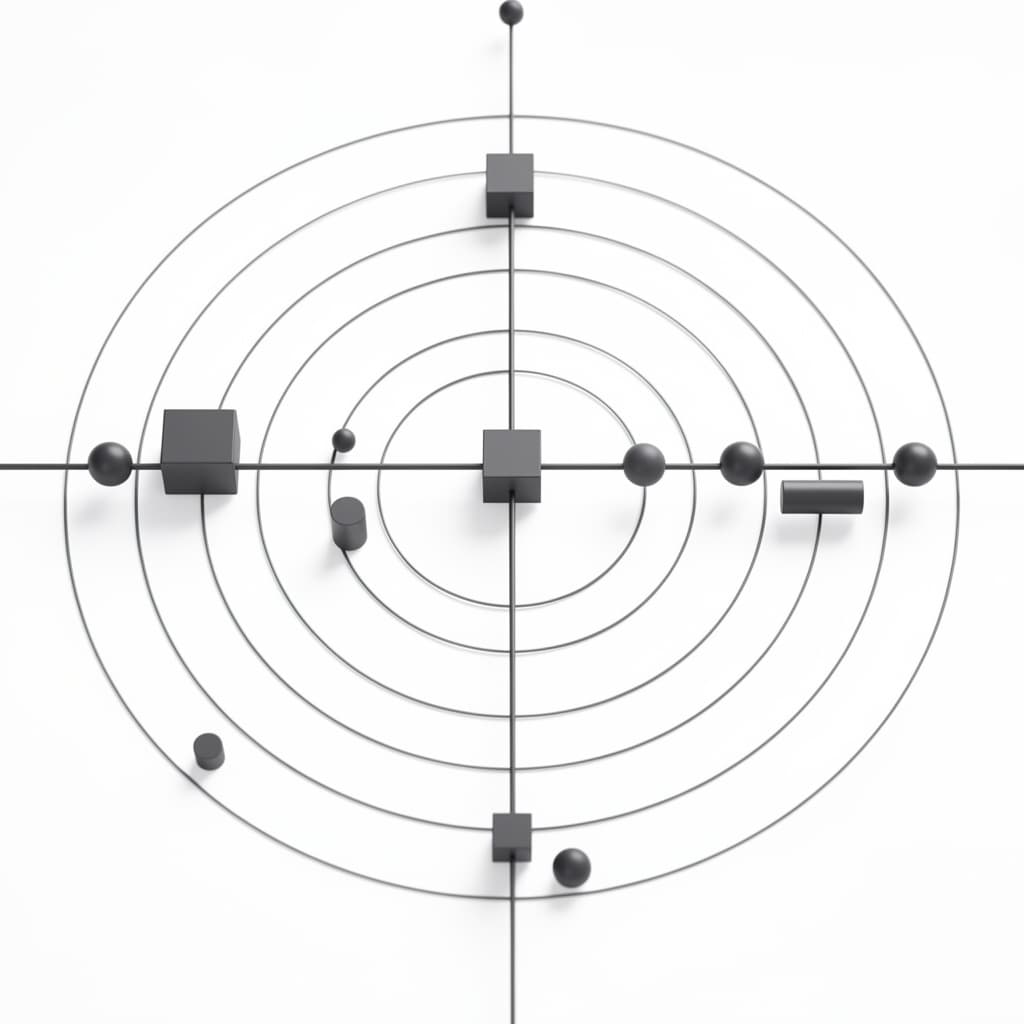
The concept of rotational inertia, commonly referred to as the moment of inertia, serves as the angular counterpart to mass in linear dynamics. Just as mass quantifies an object's resistance to changes in linear velocity, the moment of inertia measures the extent to which a body resists rotational acceleration about a specific axis. This physical quantity is not a fixed property of an object like its mass, but rather a function of how that mass is distributed relative to the axis of rotation. Consequently, a single object can possess infinitely many moments of inertia depending on the chosen pivot point, making it a critical parameter in the design of everything from microscopic sensors to massive structural flywheels. Understanding the moment of inertia formula and its underlying logic is essential for engineers and physicists who must predict the behavior of systems in motion.
Defining the Resistance to Angular Acceleration
Mass Distribution and Rotational Inertia
In the study of classical mechanics, the distribution of mass is often more important than the total mass itself when rotation is involved. Consider a figure skater spinning on ice; by pulling their arms closer to their body, they reduce their rotational inertia and increase their angular velocity without any external torque. This phenomenon occurs because mass located further from the center of rotation contributes disproportionately to the resistance against acceleration. The physical intuition suggests that it is "harder" to move mass that is far away from the axis because it must travel a longer arc distance for a given angular displacement. This geometric dependence differentiates rotational dynamics from linear dynamics, where the location of mass within a rigid body is irrelevant to its translational acceleration.
The resistance encountered during rotation is fundamentally tied to the square of the distance from the axis, which explains why even small changes in geometry can lead to significant changes in performance. In engineering applications, such as the design of turbine blades or vehicle wheels, minimizing the mass at the outer perimeter is a common strategy to allow for rapid changes in speed. Conversely, devices intended to maintain a constant speed, such as flywheels, are designed with the majority of their mass concentrated at the rim to maximize their inertia. This strategic placement of matter allows engineers to tune the responsiveness of a system to meet specific operational requirements. By manipulating the distribution of mass, designers can control the stability and energy storage capacity of rotating machinery.
The Fundamental Moment of Inertia Formula
To quantify this resistance mathematically, we rely on the moment of inertia formula, which relates the mass of individual particles to their respective distances from the rotation axis. For a system consisting of discrete point masses, the total moment of inertia ($I$) is the sum of the products of each mass ($m_i$) and the square of its perpendicular distance ($r_i$) from the axis. This relationship is expressed as: $$I = \sum_{i=1}^{n} m_i r_i^2$$ The square of the radius is the defining feature of this equation, indicating that doubling the distance of a mass from the axis quadruples its contribution to the total inertia. This quadratic scaling is the reason why long, slender objects like vaulting poles or tightrope walkers' balance bars provide such immense stability despite having relatively low total weight.
For rigid bodies where mass is distributed continuously throughout a volume, the summation is replaced by an integral over the entire mass of the object. In this context, the formula becomes $I = \int r^2 dm$, where $dm$ represents an infinitesimal mass element. This integral approach allows for the calculation of inertia for complex geometries, such as spheres, cones, and irregular machine parts, by considering the density and volume of the object. It serves as the bridge between idealized physics problems and real-world engineering challenges where components are rarely simple point masses. Mastery of this formula is the first step in analyzing any system that involves rotational motion, providing the numerical basis for Newton's second law in its angular form, $\tau = I\alpha$.
Understanding Moment of Inertia Units
Because the moment of inertia is the product of mass and the square of a distance, its units in the International System of Units (SI) are expressed as kilogram-square meters ($kg \cdot m^2$). In the United States Customary System, it is often measured in $slug \cdot ft^2$ or $lb \cdot ft \cdot s^2$. It is crucial to distinguish between mass moment of inertia and area moment of inertia, as they are used in different contexts and carry different units. While mass moment of inertia ($kg \cdot m^2$) deals with the dynamics of moving bodies, the area moment of inertia is a purely geometric property measured in $m^4$ or $in^4$. Misunderstanding these units can lead to catastrophic errors in structural calculations, particularly when transitioning between dynamic simulations and static stress analysis.
The units themselves tell a story about the physical nature of the quantity: it is a measure of "weighted" mass. When looking at the unit $kg \cdot m^2$, one can visualize a one-kilogram mass held at the end of a one-meter rod; this configuration represents one unit of inertia. If the mass remains the same but the rod length is doubled to two meters, the inertia increases to four units ($1 kg \times (2m)^2$). This sensitivity to scale is why large-scale industrial equipment requires massive torques to initiate motion, even if the materials used are relatively lightweight. Engineers must be meticulous in unit conversion, especially when working with legacy data or international projects where metric and imperial units may be mixed in the same design documentation.
The Mathematical Foundation of Mass Moment of Inertia
Point Masses versus Continuous Bodies
The transition from point mass calculations to continuous body analysis marks a significant leap in the sophistication of rotational mechanics. In elementary physics, we often assume that an object's mass is concentrated at a single point to simplify our initial understanding of motion. However, a real-world object like a baseball bat or a car engine's crankshaft has mass spread throughout its entire structure. To account for this, we treat the object as a collection of infinite infinitesimal points, each contributing to the total inertia based on its specific location. This shift allows us to move beyond simple approximations and develop precise models for how real objects behave when subjected to rotational forces.
When calculating the inertia of continuous bodies, we often assume the material is homogeneous, meaning its density ($\rho$) is constant throughout the volume. This allows us to relate the mass element ($dm$) to a volume element ($dV$) through the relationship $dm = \rho dV$. Substituting this into the integral $I = \int r^2 dm$ results in $I = \int \rho r^2 dV$. If the density is indeed uniform, it can be pulled outside the integral, leaving a purely geometric calculation that is then scaled by the material's mass density. This mathematical framework is the cornerstone of rigid body dynamics, enabling the derivation of standard formulas for common shapes used in construction and manufacturing.
Integral Calculus in Rigid Body Dynamics
The use of integral calculus to determine how to calculate moment of inertia is particularly powerful when dealing with objects that exhibit symmetry. For instance, calculating the inertia of a thin rod rotating about its end involves integrating across its length $L$ from zero to $L$, resulting in the well-known formula $I = \frac{1}{3} ML^2$. For more complex shapes like a solid cylinder, engineers often use cylindrical coordinates to simplify the integration process, focusing on the radial distance from the central axis. These derivations are not merely academic; they are the source of the lookup tables found in engineering handbooks that list the inertial properties of rods, disks, and spheres. Without the precision of calculus, the modern aerospace and automotive industries would struggle to balance the high-speed rotating components essential for flight and propulsion.
Furthermore, calculus allows for the analysis of non-homogeneous objects where the density varies as a function of position. This is common in composite materials or planetary science, where the core of a planet is much denser than its outer crust. By defining density as a function $\rho(r, \theta, z)$, the integral can account for internal variations in mass distribution that simple algebraic formulas cannot. This level of detail is necessary for high-precision applications, such as the calibration of gyroscopes or the stabilization of satellites in orbit. The mathematical rigor of the integral approach ensures that the resulting moments of inertia are accurate reflections of the physical reality of the object.
Radius of Gyration as a Geometric Simplification
While the integral definition of inertia is mathematically complete, engineers often use a simplified concept known as the radius of gyration ($k$) to describe mass distribution. The radius of gyration is defined as the distance from the axis at which the entire mass of the body could be concentrated as a single point mass to produce the same moment of inertia as the actual body. It is calculated using the formula $k = \sqrt{I/m}$, or rearranged as $I = mk^2$. This parameter provides a convenient way to compare the rotational characteristics of different shapes regardless of their total mass. It essentially collapses the complexity of a 3D distribution into a single linear dimension that represents the "average" distance of the mass from the pivot.
In structural engineering, the radius of gyration is a critical factor in determining the resistance of columns to buckling. A column with a larger radius of gyration is more resistant to bending and buckling under a compressive load because its material is distributed further from its central axis. This is why hollow tubes are often used in bicycle frames and scaffolding; they have a larger radius of gyration for the same amount of material compared to solid rods, leading to higher strength-to-weight ratios. By focusing on $k$, designers can quickly assess the efficiency of a shape's cross-section and make informed decisions about material usage. It serves as a shorthand for the geometric "stiffness" of a body in rotation or bending.
Geometric Properties and Area Moment of Inertia
Second Moment of Area in Structural Engineering
The area moment of inertia, also known as the second moment of area, is a property used to predict how a cross-section will resist bending and deflection. While the mass moment of inertia is concerned with dynamics (movement), the area moment of inertia is concerned with statics (stability and strength). It is calculated relative to an axis passing through the centroid of the shape and is defined by the integral $I = \int y^2 dA$, where $y$ is the distance from the axis to an elemental area $dA$. This property is a fundamental component of the Euler-Bernoulli beam theory, which is used to calculate the stresses and deflections in beams subjected to external loads. In this context, the shape of a beam is just as important as the material it is made of.
The logic behind the area moment of inertia is identical to its mass-based counterpart: material placed further from the neutral axis (the center of bending) is more effective at resisting the internal forces generated during bending. This is why structural "I-beams" are designed with large flanges at the top and bottom connected by a thin web. The flanges provide a high area moment of inertia by placing a significant portion of the cross-sectional area far from the center, where the bending stress is highest. By optimizing the second moment of area, engineers can create structures that are both incredibly strong and remarkably lightweight. This concept is the bedrock of civil engineering, from the construction of skyscrapers to the design of long-span bridges.
Common Area Moment of Inertia Examples
Engineers frequently work with standardized shapes, and having a list of area moment of inertia examples for these shapes is essential for rapid design. For a rectangular cross-section of width $b$ and height $h$, the area moment of inertia about its horizontal centroidal axis is given by the formula $I = \frac{bh^3}{12}$. Note that the height is cubed, meaning that doubling the depth of a beam increases its stiffness by a factor of eight. This is why floor joists in houses are always oriented vertically; their resistance to bending is significantly higher when the load is applied parallel to their longer dimension. If the same joist were laid flat, its second moment of area would be much lower, leading to excessive sagging and potential structural failure.
Other common shapes include solid circular sections, which have an area moment of inertia of $I = \frac{\pi r^4}{4}$, and hollow circular sections (tubes), which follow $I = \frac{\pi (D^4 - d^4)}{64}$. These formulas demonstrate the efficiency of hollow sections in resisting bending and torsion. In automotive design, for example, sway bars and drive shafts are often hollow to save weight while maintaining high rotational and bending stiffness. By selecting the appropriate cross-section and orientation, engineers can tailor the mechanical properties of a component to the specific loads it will encounter in service. These geometric constants are tabulated in standard design manuals and are integrated into modern CAD (Computer-Aided Design) software for automated analysis.
Impact on Bending Stress and Beam Stiffness
The relationship between the area moment of inertia and physical performance is most clearly seen in the flexure formula, which relates bending stress ($\sigma$) to the applied moment ($M$) and the distance from the neutral axis ($y$): $\sigma = \frac{My}{I}$. This formula shows that as the area moment of inertia ($I$) increases, the internal stress within the material decreases for a given load. This is why larger beams are safer; they distribute the force across a geometry that inherently resists deformation. Additionally, the deflection of a beam is inversely proportional to the product of the material's Young's Modulus ($E$) and the area moment of inertia ($I$), a term known as flexural rigidity ($EI$).
In practice, this means that if a designer wants to reduce the "bounciness" of a floor or the sag in a shelf, they have two primary options: choose a stiffer material (increase $E$) or change the shape (increase $I$). Because $I$ typically scales with the cube of the dimensions, changing the shape is often much more cost-effective and efficient than switching to a more expensive, high-modulus material. This principle guides the manufacturing of everything from aircraft wings, which must resist massive lift forces, to the tiny silicon beams in micro-electromechanical systems (MEMS) sensors. The area moment of inertia is the primary tool that allows engineers to turn abstract material properties into functional, reliable hardware.
Shifting the Rotation Axis
The Mechanics of the Parallel Axis Theorem
In many practical engineering scenarios, an object does not rotate about its center of mass. For instance, a pendulum swings about a pivot point at its top, and a door rotates about hinges located at its edge. To find the moment of inertia about these off-center axes, we use the parallel axis theorem (also known as the Huygens-Steiner theorem). This theorem states that the moment of inertia about any axis ($I$) is equal to the moment of inertia about a parallel axis passing through the center of mass ($I_{cm}$) plus the product of the object's mass ($M$) and the square of the distance ($d$) between the two axes. Mathematically, this is expressed as: $$I = I_{cm} + Md^2$$ This formula reveals that the moment of inertia is at its absolute minimum when the axis passes through the center of mass. Any shift away from this central point will always increase the resistance to rotation.
The beauty of the parallel axis theorem lies in its ability to simplify complex problems into two manageable parts: the inherent rotational property of the shape and the contribution of its displacement. It is used extensively when analyzing composite systems, such as a robotic arm where each segment rotates about a joint rather than its own center. By calculating the local $I_{cm}$ for each link and then "shifting" it to the joint axis using $Md^2$, engineers can determine the total torque required for the motor to move the arm. This theorem is a vital link between the idealized properties of basic shapes and the reality of assembled machinery.
Perpendicular Axis Theorem for Planar Objects
Another powerful tool in rotational logic is the perpendicular axis theorem, which applies specifically to "lamina" or thin, flat objects that lie entirely in a single plane. The theorem states that the moment of inertia about an axis perpendicular to the plane ($I_z$) is equal to the sum of the moments of inertia about two mutually perpendicular axes lying within the plane ($I_x$ and $I_y$). This is written as $I_z = I_x + I_y$. This theorem is exceptionally useful for calculating the polar moment of inertia for flat plates, disks, and other two-dimensional geometries. It allows designers to easily determine how an object will resist twisting (torsion) based on its resistance to bending in two directions.
A classic application of this theorem is finding the inertia of a thin circular disk. If we know that the inertia about any diameter is $I_x = I_y = \frac{1}{4} MR^2$, then the inertia about the central axis perpendicular to the disk is simply the sum of the two: $I_z = \frac{1}{4} MR^2 + \frac{1}{4} MR^2 = \frac{1}{2} MR^2$. This relationship simplifies what would otherwise be a more difficult 3D integration problem into a simple addition. While the perpendicular axis theorem is limited to thin objects, it provides a crucial shortcut in the design of components like clutch plates, circular saws, and turbine discs, where axial rotation is the primary mode of movement.
Calculating Inertia Relative to New Reference Points
When engineers must calculate moment of inertia for systems with multiple components, they often use a combination of these theorems to find a total value relative to a single global reference point. This process is common in vehicle dynamics, where the inertia of the entire car must be determined relative to its center of gravity to predict its handling and roll characteristics. Each component—the engine, the transmission, the fuel tank—has its own local inertia, which is then translated to the vehicle's central axis. This summation allows for the creation of mathematical models that can simulate crashes, sharp turns, and emergency braking with high fidelity.
Furthermore, these shifting theorems are used in "Inertia Tensors," which are 3x3 matrices that describe an object's rotational inertia in three-dimensional space. While a simple moment of inertia formula might suffice for a wheel spinning on an axle, an object like a tumbling satellite requires a tensor to account for rotation about arbitrary axes. The parallel and perpendicular axis theorems provide the foundational rules for transforming these tensors as the coordinate system moves or rotates. Understanding how to shift reference points is not just a mathematical trick; it is the key to managing the complexity of dynamic systems in three-dimensional space.
How to Calculate Moment of Inertia for Standard Shapes
Cylinders, Spheres, and Rectangular Prisms
Standard geometric shapes form the building blocks of most engineering designs, and their inertial formulas are essential knowledge for any practitioner. For a solid cylinder of mass $M$ and radius $R$ rotating about its central longitudinal axis, the inertia is $I = \frac{1}{2} MR^2$. This formula shows that a solid cylinder is easier to rotate than a thin hoop of the same mass and radius ($I = MR^2$), because more of the cylinder's mass is located closer to the axis. For a solid sphere, the distribution is even more centralized, resulting in an even lower inertia of $I = \frac{2}{5} MR^2$. These ratios are fundamental to the physics of rolling objects; for instance, a sphere will always win a race down an incline against a cylinder of the same mass because it "wastes" less potential energy on rotational kinetic energy.
Rectangular prisms also have standard formulas that depend on which axis the object is rotating around. For a prism with mass $M$, width $w$, and height $h$ rotating about an axis passing through its center perpendicular to the $w-h$ face, the formula is $I = \frac{1}{12} M(w^2 + h^2)$. This formula is frequently used in the design of structural beams and rectangular machinery housings. By having these standard values readily available, engineers can perform "back-of-the-envelope" calculations to verify the feasibility of a design before committing to detailed computer simulations. The table below summarizes some of the most common mass moment of inertia formulas for quick reference:
| Object Shape | Axis of Rotation | Moment of Inertia Formula |
|---|---|---|
| Thin Hoop/Ring | Central axis | $MR^2$ |
| Solid Cylinder/Disk | Central axis | $\frac{1}{2} MR^2$ |
| Solid Sphere | Any diameter | $\frac{2}{5} MR^2$ |
| Thin Rod (Length $L$) | Center | $\frac{1}{12} ML^2$ |
| Thin Rod (Length $L$) | End | $\frac{1}{3} ML^2$ |
Thin Shells versus Solid Volumes
A significant distinction in rotational logic is the difference between thin-walled "shells" and solid volumes. A thin spherical shell of mass $M$ and radius $R$ has a moment of inertia of $I = \frac{2}{3} MR^2$, which is significantly higher than the solid sphere's $\frac{2}{5} MR^2$. This is because in a shell, all the mass is concentrated at the maximum possible distance from the center. This principle is utilized in the design of protective casings and containers where high rotational stability is required but internal space must be preserved. Understanding the "hollow vs. solid" trade-off allows engineers to optimize for both weight and inertial performance simultaneously.
In industrial applications, this logic is applied to the design of large rollers used in paper mills or steel plants. These rollers are often manufactured as thick-walled tubes rather than solid cylinders. This design choice reduces the overall mass of the system (lowering material costs and bearing loads) while maintaining most of the rotational inertia needed to keep the process running smoothly at constant speeds. By adjusting the inner and outer radii, engineers can fine-tune the inertia to match the power characteristics of the driving motors. This balance of mass and geometry is a hallmark of efficient mechanical design.
Determining the Moment of Inertia for Composite Sections
Most real-world components are "composite sections," meaning they are made up of several simpler shapes joined together. To find the moment of inertia for a complex part, such as a T-beam or a crankshaft, engineers use the principle of superposition. This involves breaking the object down into basic shapes (rectangles, circles, triangles), calculating the inertia of each part about its own center of mass, and then using the parallel axis theorem to shift those values to a common global axis. The total moment of inertia is the sum of these individual contributions. If the object contains holes or cutouts, those areas are treated as "negative" inertia and are subtracted from the total.
Consider a simple wheel made of a heavy outer rim and several thin spokes. To calculate its inertia, one would find the $I$ of the rim (a thin hoop) and add it to the $I$ of each spoke (thin rods rotating about their ends). This modular approach allows for the analysis of incredibly complex systems using basic algebraic steps. It is the same logic used by modern FEA (Finite Element Analysis) software, which divides a complex 3D model into thousands of tiny "elements" and sums their properties to provide an exact inertial value. Whether done by hand or by computer, the logic remains the same: the whole is the sum of its geometrically-weighted parts.
Dynamics of Rotating Systems in Engineering
Kinetic Energy in Rotational Motion
The moment of inertia is the primary coefficient in the calculation of rotational kinetic energy. While translational kinetic energy is $K_{trans} = \frac{1}{2} mv^2$, the energy stored in a rotating body is given by: $$K_{rot} = \frac{1}{2} I\omega^2$$ where $\omega$ is the angular velocity in radians per second. This relationship highlights why high-inertia objects like flywheels are so effective at energy storage. Because the energy increases with the square of the angular velocity, spinning an object faster is generally more efficient for energy storage than making it heavier. However, the material limits of the object (its tensile strength) define how fast it can spin before the centrifugal forces cause it to shatter.
In modern green technology, flywheel energy storage systems (FESS) are used as an alternative to chemical batteries for short-term power stabilization. These systems use a high-inertia rotor spinning in a vacuum on magnetic bearings to minimize friction. By precisely controlling the moment of inertia and the rotation speed, these devices can absorb excess energy from the power grid and release it almost instantaneously when demand spikes. The efficiency of these systems is a direct result of the quadratic relationship between velocity and energy, mediated by the moment of inertia of the rotor. This is rotational logic at its most practical and impactful.
Angular Momentum and Torque Interactions
The interaction between torque and moment of inertia is governed by the angular version of Newton's second law: $\tau = I\alpha$, where $\tau$ is the torque and $\alpha$ is the angular acceleration. This equation shows that for a constant applied torque, an object with a higher moment of inertia will accelerate more slowly. This is analogous to how a heavy truck takes longer to reach highway speeds than a light motorcycle. In precision machinery, such as robotic arms or CNC mills, low inertia is often preferred because it allows the system to start, stop, and change direction with minimal delay and lower energy consumption.
Angular momentum ($L$) is also a function of inertia, defined as $L = I\omega$. In a closed system where no external torques are applied, angular momentum is conserved. This principle explains why a collapsing star spins faster as it becomes a pulsar; its mass is the same, but its radius (and thus its $I$) decreases dramatically, forcing $\omega$ to increase to keep $L$ constant. In engineering, this principle is used in gyroscopes for navigation and stabilization. A rapidly spinning disk with high inertia will resist changes to its orientation, providing a stable reference point for ships, aircraft, and spacecraft. The "rigidity in space" provided by a high-$I$ rotor is what makes modern autonomous navigation possible.
Balancing Flywheels and Rotating Machinery
One of the most critical engineering challenges involving the moment of inertia is the balancing of high-speed rotating machinery. If an object is not perfectly symmetrical about its axis of rotation, its "principal axes of inertia" will not align with the actual axis of rotation. This imbalance creates oscillating centrifugal forces that lead to vibration, noise, and eventual mechanical failure. This is why car tires must be balanced with small lead weights; the weights are strategically placed to adjust the mass distribution so that the center of mass lies exactly on the rotation axis and the inertia is distributed evenly.
In large-scale industrial equipment, such as steam turbines in power plants, even a few grams of imbalance can lead to forces equivalent to thousands of kilograms at high RPMs. Engineers use dynamic balancing machines to measure these imbalances and then either remove material (by drilling) or add material (by welding) to correct the moment of inertia relative to the rotation axis. This process ensures that the machine runs smoothly, extending the life of bearings and reducing the risk of catastrophic failure. The rotational logic of inertia is therefore not just a design tool, but a maintenance and safety requirement in any industry that relies on spinning components. Proper management of these properties is what allows our modern mechanical world to operate with precision and reliability.
References
- Hibbeler, R. C., "Engineering Mechanics: Dynamics", Pearson, 2022.
- Beer, F. P., Johnston, E. R., & Mazurek, D. F., "Vector Mechanics for Engineers: Statics and Dynamics", McGraw-Hill Education, 2018.
- Young, H. D., & Freedman, R. A., "University Physics with Modern Physics", Pearson, 2019.
- Taylor, J. R., "Classical Mechanics", University Science Books, 2005.
Recommended Readings
- The Feynman Lectures on Physics, Vol. 1 by Richard Feynman — An unparalleled deep dive into the conceptual roots of rotational motion and the conservation of angular momentum.
- Structures: Or Why Things Don't Fall Down by J.E. Gordon — An engaging and accessible look at how the area moment of inertia and material science shape the world around us.
- Mechanics of Materials by James M. Gere — A classic textbook that provides extensive detail on the application of area moments of inertia in structural engineering.
- Rotating Machinery Dynamics by Maurice L. Adams — For readers interested in the advanced application of inertia in industrial balancing and vibration control.