The Molecular Architecture of Chemical Bonding
Explore the core differences between ionic vs covalent bonds. Learn how electronegativity and electron sharing define the structure of the physical world.
In this articleThe Nature of Chemical Forces

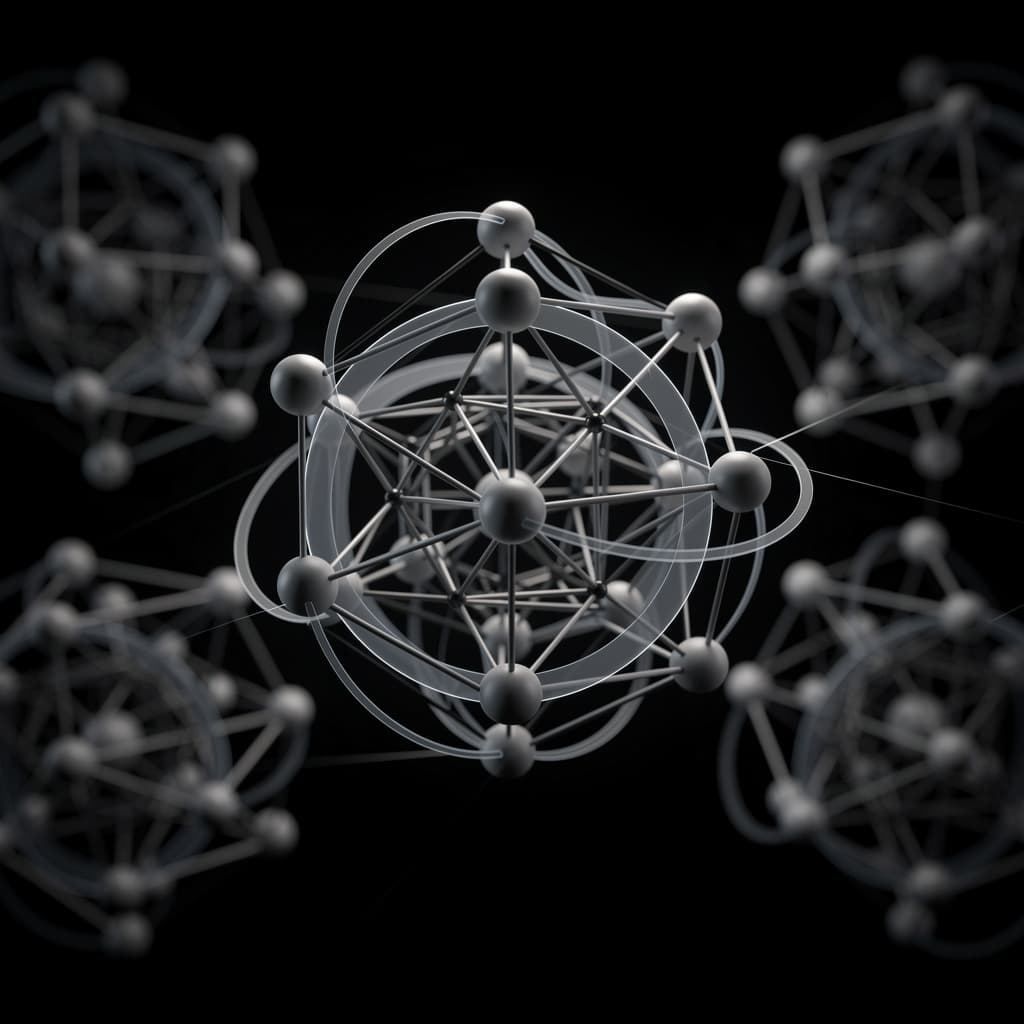
The molecular architecture of chemical bonding represents the fundamental blueprint of the material universe, dictating how a finite number of elements combine to form the infinite complexity of matter. At its core, chemical bonding is an energetic phenomenon driven by the electrostatic interactions between the nuclei and electrons of constituent atoms. Whether it is the rigid structure of a diamond, the fluid vitality of water, or the conductive pathways within a copper wire, the macro-scale properties of any substance are a direct manifestation of the microscopic forces holding its atoms together. By understanding the distinction between ionic vs covalent bonds and the unique nature of metallic interactions, we can predict the behavior of materials and engineer new substances with tailored functionalities. This article explores the intricate rules governing atomic attraction, from the primary electronic configurations to the advanced intermolecular forces that sustain biological life.
The Nature of Chemical Forces
Valence Shells and the Octet Rule
The quest for chemical stability begins within the electronic structure of the atom, specifically the outermost layer known as the valence shell. Early 20th-century chemist G.N. Lewis observed that atoms with complete outer shells, such as the noble gases, exhibit remarkable chemical inertness and stability. This observation led to the formulation of the Octet Rule, which suggests that atoms are most stable when they possess eight electrons in their valence shell, mirroring the configuration of neon or argon. To achieve this state of lower potential energy, atoms will undergo a variety of rearrangements—losing, gaining, or sharing electrons—which fundamentally defines the types of chemical bonds they form. While there are notable exceptions to this rule, such as hydrogen seeking a duet or expanded octets in heavier elements like sulfur, it remains a robust predictive tool for basic molecular architecture.
The drive toward an octet is not merely a numerical preference but is rooted in quantum mechanics and the filling of and orbitals. When an atom achieves a full valence shell, the resulting electronic configuration represents a local minimum in potential energy, making the atom less likely to react further. This energetic "sweet spot" is the primary motivator for chemical reactions, as atoms move from high-energy, unstable configurations to low-energy, stable arrangements. In this context, a chemical bond is not a physical object like a tether, but rather an energetic state where the forces of attraction between protons and electrons outweigh the repulsive forces between like-charged particles. Consequently, the study of bonding is essentially the study of how systems of particles achieve the most favorable energy balance possible.
Potential Energy Wells in Bonding
To visualize the formation of a bond, scientists often use the concept of a potential energy well, which illustrates how the energy of a system changes as two atoms approach one another. At infinite separation, the atoms exert no force on each other, and the potential energy is defined as zero. As they move closer, the positively charged nucleus of one atom begins to attract the electron cloud of the other, causing the potential energy to decrease. This attractive force continues to dominate until the atoms reach an optimal distance, known as the bond length, where the system reaches its minimum potential energy. At this specific distance, the atoms are effectively bonded, and any further attempt to push them closer results in a sharp increase in energy due to the repulsion between the two nuclei.
The depth of this well represents the bond dissociation energy, or the amount of work required to pull the atoms apart once they have bonded. This energy is governed by Coulomb's Law, which states that the force between two charged particles is proportional to the product of their charges and inversely proportional to the square of the distance between them. Mathematically, the electrostatic potential energy can be expressed as: where is Coulomb's constant, and are the magnitudes of the charges, and is the separation distance. In the context of ionic vs covalent bonds, the magnitude of these charges and the resulting "depth" of the energy well play a critical role in determining the melting points, hardness, and thermal stability of the resulting substance.
Electronegativity and Bonding
The Pauling Scale of Atomic Attraction
While the Octet Rule explains why atoms bond, electronegativity explains how they bond. Formulated by Linus Pauling in 1932, electronegativity is a dimensionless quantity that measures the relative ability of an atom to attract shared electrons within a chemical bond. Pauling assigned values to the elements based on thermochemical data, with fluorine being the most electronegative element at 4.0 and cesium being among the least at 0.7. This scale provides a roadmap for understanding the distribution of charge within a molecule, as electrons will naturally gravitate toward the atom with the higher electronegativity value. Understanding this "tug-of-war" for electrons is essential for distinguishing between different types of chemical bonds and predicting molecular polarity.
Electronegativity is influenced by two primary factors: the atomic number and the distance at which the valence electrons reside from the charged nucleus. Elements with a high nuclear charge and a small atomic radius, such as oxygen and nitrogen, exert a powerful pull on electrons, making them highly electronegative. Conversely, large atoms with many inner electron shells experience "shielding," where the core electrons block the nucleus's pull on the valence electrons, resulting in low electronegativity. This periodic trend—increasing across a period and decreasing down a group—creates a gradient that dictates how atoms will interact when they encounter one another. By analyzing the difference in electronegativity between two bonding partners, chemists can classify the bond's character with high precision.
Determining Bond Character Through Delta EN
The difference in electronegativity, denoted as , is the definitive metric used to predict whether a bond will be nonpolar covalent, polar covalent, or ionic. When the is very small (typically less than 0.5), the electrons are shared almost equally, resulting in a nonpolar covalent bond. This is common in homonuclear diatomic molecules like or bonds between carbon and hydrogen. As the difference increases (between 0.5 and 1.7), the more electronegative atom pulls the electron density toward itself, creating a polar covalent bond with distinct partial charges. These partial charges, denoted by and , create a molecular dipole that influences how the molecule interacts with its neighbors.
When the electronegativity difference exceeds approximately 1.7 to 2.0, the "tug-of-war" becomes entirely one-sided. At this point, the more electronegative atom essentially "steals" the electron from its partner rather than sharing it, leading to the sharing vs transferring electrons dichotomy. This transfer results in the formation of ions: a positively charged cation and a negatively charged anion. The resulting ionic bond is not a localized link between two specific atoms but an omnidirectional electrostatic attraction that extends through space. Thus, the value acts as a spectrum rather than a set of rigid boxes, with many bonds exhibiting a "percent ionic character" that falls somewhere between the idealized extremes of pure sharing and pure transfer.
Studying this for an exam?
Noesis builds the syllabus, notes and tests for you, and you study them with a tutor that knows your material.
Sharing vs Transferring Electrons
Polar and Nonpolar Covalent Structures
Covalent bonding is defined by the sharing vs transferring electrons paradigm, where atoms cooperate to reach a stable configuration. In a nonpolar covalent bond, the distribution of electron density is symmetrical, meaning there is no permanent dipole moment. These molecules, such as methane () or nitrogen gas (), tend to be chemically stable and often exist as gases or low-boiling-point liquids because their intermolecular attractions are relatively weak. Because the electrons spend equal time around both nuclei, there is no concentration of charge that would allow the molecules to stick together strongly. This lack of polarity makes nonpolar substances generally insoluble in water, which is a highly polar solvent.
In contrast, polar covalent bonds occur when one atom's higher electronegativity creates an asymmetrical electron cloud. A classic example is the water molecule (), where oxygen's high electronegativity pulls electrons away from the hydrogen atoms. This creates a permanent dipole, with the oxygen end being slightly negative and the hydrogen ends being slightly positive. This polarity is responsible for many of water's unique properties, including its high surface tension and its ability to dissolve a wide range of salts. The degree of polarity in a covalent bond significantly affects the physical state of the substance, as stronger dipoles lead to stronger attractions between adjacent molecules, thereby increasing the energy required to change phases.
Molecular Geometry and Orbital Overlap
The three-dimensional shape of a covalent molecule is determined by how its atomic orbitals overlap to share electrons. According to Valence Bond Theory, a covalent bond forms when half-filled orbitals from two different atoms overlap in space, allowing the electrons to pair up. The geometry of these overlaps is further refined by VSEPR Theory (Valence Shell Electron Pair Repulsion), which posits that electron pairs—whether in bonds or as "lone pairs"—will arrange themselves as far apart as possible to minimize electrostatic repulsion. This results in standard geometric shapes such as linear, trigonal planar, tetrahedral, and octahedral, which are fundamental to the molecule's chemical identity and reactivity.
To explain complex bonding patterns, such as the four equivalent bonds in carbon, chemists use the concept of hybridization. In a methane molecule, carbon's and orbitals mix to form four identical hybrid orbitals, each pointing toward the corners of a tetrahedron. This allows for maximum separation and the most stable configuration. Furthermore, we distinguish between sigma () bonds, which result from head-on orbital overlap and allow for free rotation, and pi () bonds, which result from side-on overlap of orbitals and are found in double and triple bonds. These orbital interactions provide the rigid "architecture" that allows for the vast diversity of organic and inorganic covalent structures.
Properties of Ionic Compounds
The Formation of Cations and Anions
Ionic bonding arises from the complete transfer of one or more electrons from a metal atom to a nonmetal atom. Metals, which have low ionization energies, easily lose their valence electrons to become cations, which are positively charged ions. Nonmetals, characterized by high electron affinities, readily accept these electrons to become anions, or negatively charged ions. For example, in the formation of sodium chloride (), a sodium atom () transfers its single valence electron to a chlorine atom (), resulting in and ions. This transfer is energetically favorable because both resulting ions achieve a stable noble gas configuration, satisfying the Octet Rule through total relocation rather than sharing.
Once these ions are formed, they do not exist as isolated pairs but are drawn together by powerful, non-directional electrostatic forces. Unlike covalent bonds, which have a specific orientation in space based on orbital overlap, ionic bonds act in all directions simultaneously. Every cation attracts every neighboring anion, and every anion attracts every neighboring cation. This results in the formation of a macroscopic solid where millions of ions are locked into a repeating pattern. The strength of this attraction is the defining characteristic of ionic vs covalent bonds in the solid state, leading to materials that are typically hard, brittle, and possess extremely high melting and boiling points.
Crystal Lattice Energetics
The structural hallmark of an ionic compound is the crystal lattice, a highly ordered, three-dimensional array of ions. The specific arrangement of the lattice—whether it is simple cubic, face-centered cubic, or another geometry—is determined by the relative sizes of the cations and anions and their respective charges. This arrangement maximizes the attractive forces between oppositely charged ions while minimizing the repulsive forces between ions of the same charge. The stability of this structure is quantified by the lattice energy, which is the energy released when gaseous ions combine to form a solid ionic crystal. A higher lattice energy correlates with a more stable compound and higher melting points.
Lattice energy is governed by the charges of the ions and the distance between them, expressed conceptually by the equation: where is the lattice energy, and are the ionic charges, and is the sum of the ionic radii. Compounds composed of ions with higher charges, such as magnesium oxide ( and ), exhibit significantly higher lattice energies and melting points than those with single charges like . This immense internal energy also explains the properties of ionic compounds such as brittleness; when a force is applied to the crystal, it shifts the layers of ions. If ions of the same charge are forced to align, the resulting repulsion causes the crystal to shatter along a smooth plane, a process known as cleavage.
Metallic Bonding and the Electron Sea
Delocalization Across Metallic Lattices
Metallic bonding represents a unique third category in the types of chemical bonds, characterized by a "communal" approach to valence electrons. In a metal, the atoms are packed closely together in a lattice, but unlike ionic or covalent bonding, the valence electrons are not bound to any specific nucleus or shared between a specific pair of atoms. Instead, the valence electrons are delocalized, meaning they are free to move throughout the entire structure. This creates what is often described as a "sea of electrons" surrounding an array of stationary, positively charged metal cations. This delocalization is possible because metals have low ionization energies and vacant outer orbitals that allow electrons to transition easily between adjacent atoms.
The strength of a metallic bond depends on the number of delocalized electrons and the charge of the metal cations. Transition metals like iron or tungsten, which have many delocalized -orbital electrons, form very strong metallic bonds, resulting in high melting points and great mechanical strength. In contrast, alkali metals like sodium have only one valence electron to contribute to the sea, leading to relatively weak bonds and soft textures (sodium can be cut with a knife). This electron-sea model provides a cohesive force that holds the metal together while allowing for the extreme flexibility that distinguishes metals from the rigid, brittle structures found in ionic crystals.
Malleability and Electrical Conductivity
The mobile nature of delocalized electrons is directly responsible for the characteristic physical properties of metallic bonding, specifically malleability and ductility. Because the "sea" of electrons is fluid, the metal cations can slide past one another when subjected to mechanical stress without breaking the bond. The electron sea simply reshapes itself to maintain the attraction between the cations, preventing the catastrophic repulsion that occurs in ionic lattices. This allows metals to be hammered into thin sheets or drawn into fine wires, making them indispensable for construction and manufacturing. In a covalent network like diamond, such a shift would require breaking specific localized bonds, leading to a fracture rather than deformation.
Furthermore, the delocalized electrons act as charge carriers, giving metals their superior electrical and thermal conductivity. When an electric potential is applied to a metal wire, the electrons flow easily from the negative terminal to the positive terminal, creating an electric current. Similarly, thermal energy is conducted rapidly as the high-velocity electrons transfer kinetic energy through the lattice via collisions. Because the electrons are not "locked" into position, they can also absorb and re-emit light across a wide spectrum, which accounts for the characteristic luster and opacity of metallic surfaces. This unique electronic architecture makes metals fundamentally different from the insulators typically formed by ionic vs covalent bonds.
Contrasting Ionic vs Covalent Bonds
Comparison of Melting and Boiling Points
When comparing ionic vs covalent bonds, one of the most visible differences lies in their thermal properties. Ionic compounds almost always exist as crystalline solids at room temperature because the entire macroscopic structure is held together by strong, primary chemical bonds. To melt an ionic solid like salt, one must provide enough thermal energy to overcome the collective lattice energy of the entire crystal, which typically requires temperatures exceeding 800 degrees Celsius. Consequently, ionic substances have high melting and boiling points and low volatility. They do not evaporate easily, and they do not "melt" in the traditional sense of molecular substances; rather, they undergo a phase change from a rigid lattice to a fluid of moving ions.
In contrast, most covalent substances consist of discrete molecules held together by relatively weak intermolecular forces (IMFs), such as London dispersion forces or dipole-dipole interactions. While the covalent bonds within the molecule (intramolecular) are very strong, the forces between the molecules are weak. Therefore, melting a covalent substance like ice or sugar does not require breaking chemical bonds, but only overcoming the weak IMFs. This is why many covalent compounds are gases (), liquids (), or low-melting solids (paraffin wax) at room temperature. The exception to this rule is covalent network solids, such as diamond or quartz, where the entire structure is one giant molecule held by covalent bonds, resulting in melting points even higher than those of ionic compounds.
Solvating Bonds in Polar Solvents
The behavior of ionic vs covalent bonds in water reveals much about their underlying electrostatic nature. Ionic compounds are often soluble in polar solvents because the partial charges of the water molecules can compete with the lattice energy of the crystal. This process, known as solvation (or hydration in water), involves water molecules surrounding individual ions—orienting their positive hydrogen ends toward anions and their negative oxygen ends toward cations. If the energy released by these new ion-dipole interactions exceeds the lattice energy, the crystal dissolves, and the ions become mobile. This mobility allows aqueous ionic solutions to conduct electricity, earning them the name electrolytes.
Covalent compounds follow the "like-dissolves-like" rule. Polar covalent molecules, such as glucose or ethanol, dissolve well in water because they can form hydrogen bonds or dipole-dipole attractions with the solvent. However, they do not dissociate into ions; they remain as intact, neutral molecules floating in the solution. Nonpolar covalent substances, such as oil or grease, are insoluble in water because they cannot offer the attractive forces necessary to break the hydrogen-bonded structure of the water. Below is a summary comparison of these two primary bonding types:
| Property | Ionic Bonds | Covalent Bonds |
|---|---|---|
| Mechanism | Electron transfer (Cation/Anion) | Electron sharing |
| Structure | Crystalline lattice | Discrete molecules (usually) |
| Melting Point | High (e.g., NaCl = 801°C) | Low to Moderate (e.g., Ice = 0°C) |
| Conductivity | Conducts when molten or dissolved | Generally non-conductive |
| Electronegativity Diff () | Large (> 1.7) | Small to Moderate (< 1.7) |
Advanced Perspectives on Types of Chemical Bonds
The Influence of Dipole-Dipole Forces
Beyond the primary types of chemical bonds, a secondary layer of "intermolecular forces" dictates the behavior of complex systems. Even in molecules with polar covalent bonds, the overall interaction between separate molecules is governed by dipole-dipole forces. These forces occur when the positive end of one polar molecule is attracted to the negative end of a neighbor. While significantly weaker than the covalent bonds holding the atoms together—typically only 1% to 5% of the strength—they are responsible for the existence of liquids and solids in the molecular world. Without these forces, substances like hydrogen chloride () would remain gases at much lower temperatures, as there would be nothing to "stick" the molecules together.
The cumulative effect of these dipoles is also seen in the Van der Waals forces, which include London dispersion forces found even in nonpolar molecules. These arise from temporary, fluctuating dipoles caused by the constant motion of electrons. In large molecules with many electrons, these temporary dipoles can become quite significant, explaining why heavier molecules like iodine () are solids at room temperature while lighter ones like fluorine () are gases. Understanding these nuances allows chemists to transition from a simple view of sharing vs transferring electrons to a more sophisticated understanding of how complex molecular "landscapes" interact through varying degrees of attraction.
Hydrogen Bonding in Biological Systems
Perhaps the most famous and biologically critical "advanced" bond is the hydrogen bond. This is a special, exceptionally strong type of dipole-dipole attraction that occurs when hydrogen is covalently bonded to a highly electronegative atom (specifically nitrogen, oxygen, or fluorine). Because hydrogen is small and has no inner electrons to shield its nucleus, the resulting dipole is intensely concentrated. This allows the hydrogen atom to come very close to the lone pair of electrons on a neighboring molecule, creating a bridge that is stronger than a typical dipole-dipole force but weaker than a true covalent bond. This unique strength-to-flexibility ratio is what makes hydrogen bonding the "master architect" of life.
In the double helix of DNA, hydrogen bonds hold the two strands together. They are strong enough to maintain the structural integrity of the genetic code, yet weak enough to be "unzipped" by enzymes during replication and transcription. Similarly, the folding of proteins into functional shapes is dictated by hydrogen bonding between amino acid residues. If the primary ionic vs covalent bonds provide the skeleton of biological molecules, hydrogen bonds provide the dynamic muscle and joints that allow them to function. From the way water moves through a plant to the way our own cells replicate, the subtle interplay of these chemical forces demonstrates the profound elegance of molecular architecture.
References
- Pauling, L., "The Nature of the Chemical Bond", Cornell University Press, 1960.
- Gillespie, R. J., and Popelier, P. L. A., "Chemical Bonding and Molecular Geometry", Oxford University Press, 2001.
- Lewis, G. N., "The Atom and the Molecule", Journal of the American Chemical Society, 1916.
- Atkins, P., and de Paula, J., "Physical Chemistry", W. H. Freeman and Company, 2014.
Recommended Readings
- The Periodic Kingdom by P.W. Atkins — A metaphorical journey through the periodic table that brings the concepts of electronegativity and bonding to life.
- Molecules by Theodore Gray — A visually stunning and narrative-driven exploration of how chemical bonds create the physical world around us.
- Linus Pauling and the Nature of the Chemical Bond by various authors (Chemical Heritage Foundation) — An excellent historical overview of how our modern understanding of bonding was developed through Pauling’s revolutionary work.
Turn this topic into a full course
Noesis builds the syllabus, notes and tests for you, and you study them with a tutor that knows your material.