The Eternal Motion of the Water Cycle
The water cycle , scientifically known as the hydrologic cycle, represents the continuous, closed-loop movement of water throughout the Earth’s atmosphere, surface, and subsurface. Unlike many...
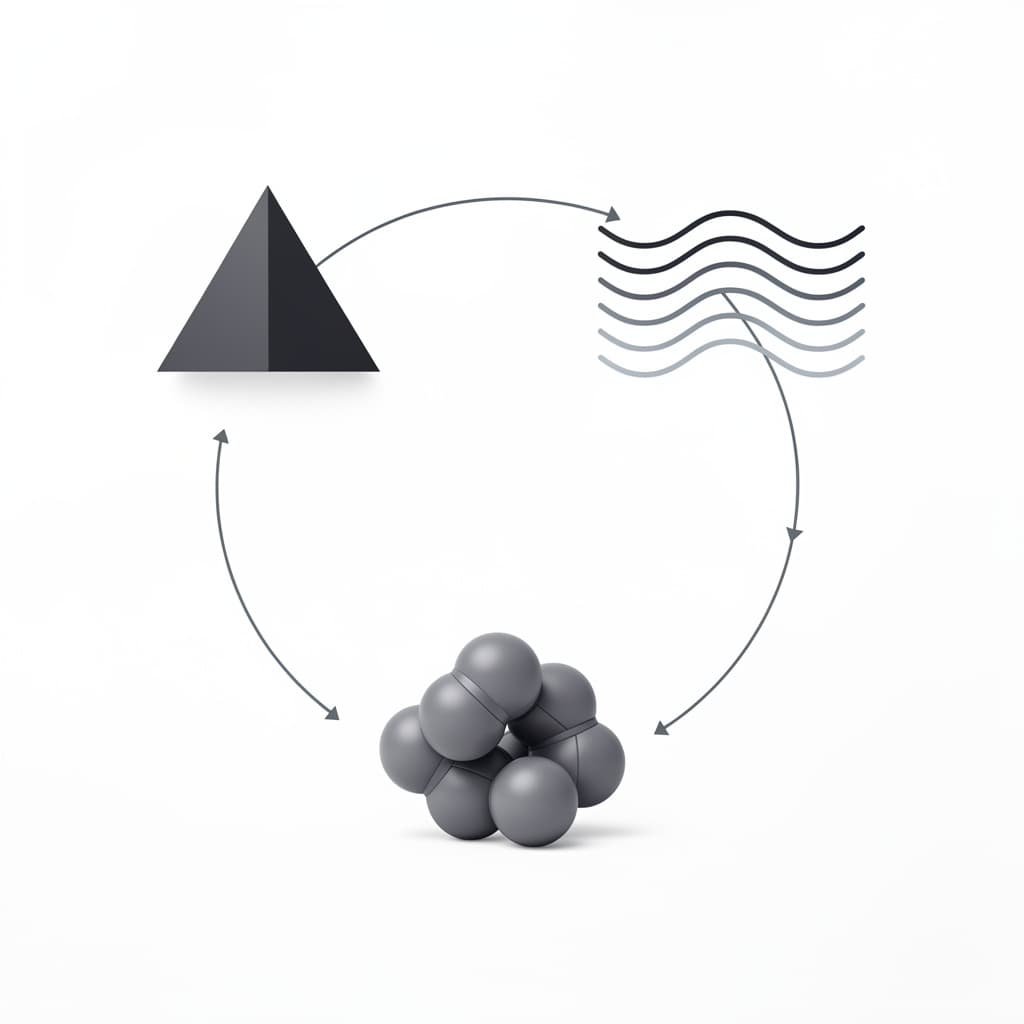
The water cycle, scientifically known as the hydrologic cycle, represents the continuous, closed-loop movement of water throughout the Earth’s atmosphere, surface, and subsurface. Unlike many geological processes that operate over millions of years, the water cycle is a dynamic, ever-present system that functions on timescales ranging from seconds to millennia. It serves as the primary mechanism for distributing thermal energy across the globe, regulating climate, and sustaining the biological requirements of every living organism. By understanding this cycle, we gain insight into the fundamental logic of our planet's life-support system and the delicate balance that maintains the availability of freshwater.
The Engine of Terrestrial Life
The concept of the water cycle is rooted in the principle of mass conservation within a closed system. While water frequently changes its physical state—transitioning between liquid, solid (ice), and gas (water vapor)—the total mass of water within the Earth’s planetary boundaries remains remarkably constant. It is estimated that Earth contains approximately 1.386 billion cubic kilometers of water, an immense volume that has persisted with minimal loss to outer space for billions of years. This constancy ensures that the water molecules modern humans consume are the same ones that once flowed through prehistoric ecosystems, recycled through the relentless machinery of hydrology.
The planetary balance of water is characterized by a sophisticated distribution between various reservoirs, including oceans, ice caps, groundwater, and the atmosphere. Although 97 percent of Earth's water is saline and stored in the oceans, the remaining 3 percent of freshwater is what drives terrestrial life. This freshwater is not equally accessible; much of it is locked in polar ice sheets or deep subterranean aquifers. The movement of water between these reservoirs is governed by the laws of thermodynamics and gravity, creating a global circulatory system that prevents water from becoming stagnant or permanently trapped in a single location.
In a closed system, the logic of the hydrologic cycle dictates that the rate of evaporation must, on a global and long-term average, equal the rate of precipitation. If this balance were disrupted, the atmosphere would either dehydrate or become oversaturated, leading to catastrophic shifts in planetary pressure and temperature. This equilibrium is maintained through a series of feedback loops where the excess water on land—delivered via precipitation—returns to the oceans through surface runoff and groundwater discharge. This continuous "bookkeeping" of water molecules ensures that the terrestrial environment receives the moisture necessary for soil chemistry and biological metabolism.
The Solar Influence on Hydrology
The role of the sun in the water cycle cannot be overstated; it is the primary thermal engine that initiates the movement of water against the force of gravity. Solar radiation reaches the Earth's surface and provides the necessary energy to break the hydrogen bonds between liquid water molecules, a process known as phase change. This energy, referred to as the latent heat of vaporization, allows water to transition into a gaseous state and rise into the atmosphere. Without this constant influx of electromagnetic energy, the water cycle would grind to a halt, leaving the world’s water frozen or pooled in the lowest topographical basins.
Thermal energy from the sun does more than just facilitate evaporation; it drives the atmospheric circulation patterns that transport moisture across vast distances. Because the sun heats the Earth unevenly—concentrating more energy at the equator than at the poles—it creates temperature and pressure gradients. These gradients generate wind belts, such as the trade winds and westerlies, which act as "conveyor belts" for atmospheric water vapor. As warm, moist air rises at the equator, it cools and travels toward the poles, distributing freshwater to regions far removed from the primary oceanic sources of evaporation.
The relationship between solar intensity and the water cycle is quantitatively expressed through the energy balance equation at the Earth's surface. A significant portion of the net radiation ($R_n$) received by the planet is consumed by the latent heat flux ($LE$), which is the energy used for evapotranspiration. This relationship can be simplified as: $$R_n = G + H + LE$$ where $G$ is the ground heat flux and $H$ is the sensible heat flux. By converting sensible heat (which we feel as temperature) into latent heat (which is stored in vapor), the water cycle effectively acts as a planetary air conditioning system, preventing the Earth's surface from reaching lethal temperatures during peak solar exposure.
Primary Stages of the Water Cycle
The stages of the water cycle begin with the dual processes of evaporation and transpiration, collectively referred to as evapotranspiration. Evaporation occurs primarily over the oceans, where solar energy excites water molecules until they escape into the air. Transpiration is the biological equivalent, where plants absorb water through their roots and release it as vapor through microscopic pores in their leaves called stomata. This "biological pump" is so powerful that a single large oak tree can transpire over 150,000 liters of water in a year, significantly contributing to the local atmospheric humidity and cloud formation.
As water vapor ascends into the cooler regions of the troposphere, it undergoes condensation, the transition back from a gas to a liquid. This process requires the presence of cloud condensation nuclei (CCN)—tiny particles of dust, salt, or smoke around which water molecules can cluster. When billions of these microscopic droplets coalesce, they form clouds. Condensation is an exothermic process, meaning it releases the latent heat originally absorbed during evaporation back into the atmosphere. This release of energy provides the fuel for storm systems and helps drive the upward motion of air, further intensifying the cycle of moisture transport.
The final phase of atmospheric water transport is precipitation, which occurs when cloud droplets or ice crystals grow large enough to overcome atmospheric updrafts and fall to the Earth under the influence of gravity. Depending on the vertical temperature profile of the atmosphere, this may take the form of rain, snow, sleet, or hail. Precipitation is the primary delivery mechanism of freshwater to the continents, recharging the rivers, lakes, and soils that sustain terrestrial life. The spatial and temporal distribution of precipitation is the most critical factor in determining whether a region becomes a lush rainforest or a barren desert.
A Visual Framework for Flow
To conceptualize the water cycle diagram explained in scientific literature, one must view it as a network of reservoirs and fluxes. Fluxes represent the movement of water between reservoirs, such as the flux of vapor from the ocean to the atmosphere. While diagrams often simplify the cycle into a circular path, the reality is a complex web of "short-circuits" and "long-term detours." For example, a raindrop may fall directly back into the ocean (a short-circuit), or it may be sequestered in a deep glacial ice sheet for 100,000 years before returning to the liquid phase.
Vertical transport, driven by evaporation and precipitation, is balanced by horizontal transport, often called advection. While water moves vertically through phase changes, it moves horizontally across the globe as atmospheric vapor or as surface liquid in rivers and ocean currents. This horizontal movement is what allows the "export" of freshwater from the oceans to the land. Interestingly, the atmosphere holds only a tiny fraction of Earth’s total water (about 0.001 percent), yet it is the most active component of the cycle, completely replacing its water content every 8 to 10 days.
The efficiency of the water cycle is often measured by the "residence time" of a water molecule in a specific reservoir. Residence time is calculated by dividing the total volume of the reservoir by the rate of flow into or out of it. As shown in the data below, the difference in residence times across various stages of the cycle is staggering, highlighting the varying speeds at which water is recycled.
| Reservoir | Average Residence Time |
|---|---|
| Atmosphere | 8 to 10 days |
| Rivers | 2 weeks to 6 months |
| Seasonal Snow Cover | 2 to 6 months |
| Glaciers and Permafrost | 10 to 10,000 years |
| Oceans | 3,000 to 3,200 years |
| Deep Groundwater | Up to 10,000 years |
Subsurface and Surface Dynamics
Once precipitation reaches the land surface, it follows two primary pathways: runoff or infiltration. Runoff occurs when the rate of precipitation exceeds the soil's ability to absorb water, leading to gravity-driven flow across the land surface into stream channels and eventually larger river systems. This surface flow is the primary architect of the Earth’s landscape, carving valleys and transporting sediments and nutrients from the mountains to the coastal plains. The mechanics of streamflow are governed by topography and the Manning's roughness coefficient of the channel, which determines how quickly water returns to the sea.
Infiltration, the alternative pathway, involves water seeping into the soil and moving downward through the pore spaces of rocks and sediment. This process, known as percolation, recharges groundwater reservoirs or aquifers. Unlike surface water, groundwater moves incredibly slowly—often only a few centimeters or meters per year—due to the friction of the material it passes through. This movement is described by Darcy’s Law, which states that the flow rate ($Q$) is proportional to the hydraulic gradient ($i$) and the permeability of the material ($K$): $$Q = K \cdot A \cdot i$$ where $A$ is the cross-sectional area of the flow.
Aquifers act as the Earth’s natural sponges, storing vast quantities of freshwater that are protected from evaporation. There are two main types: unconfined aquifers, which are in direct contact with the surface, and confined aquifers, which are trapped between impermeable layers of rock. When the water table (the upper limit of saturated soil) intersects with the land surface, groundwater discharges into springs, lakes, or "baseflow" for rivers. This discharge ensures that many rivers continue to flow even during long periods without rain, acting as a critical buffer for ecosystems during seasonal droughts.
The Logic of Global Feedback Loops
The evaporation condensation precipitation rhythm functions as a self-regulating feedback loop that stabilizes global climate. When the Earth warms, the rate of evaporation increases, which in turn leads to higher concentrations of water vapor in the air. Since water vapor is a potent greenhouse gas, this can lead to further warming—a positive feedback loop. However, increased vapor also leads to more cloud cover, which reflects incoming solar radiation back into space (the albedo effect), potentially cooling the surface—a negative feedback loop. The complex interaction between these two forces determines the climate sensitivity of our planet.
Regional climate patterns are heavily influenced by where the hydrologic cycle steps are most intense. For instance, the "Intertropical Convergence Zone" (ITCZ) near the equator is a region of intense solar heating and high evaporation, leading to almost daily heavy rainfall and the world's most productive rainforests. Conversely, the descending air at 30 degrees latitude (the Horse Latitudes) is dry and inhibits precipitation, resulting in the world’s major deserts. The water cycle thus acts as a geographical architect, defining the biomes and the carrying capacity of different regions based on their position within the global flow.
Energy transfer within the cycle also dictates the severity of weather events. When water vapor condenses into rain, it releases a tremendous amount of energy—approximately 2.5 million Joules per kilogram of water. In the case of tropical cyclones or massive thunderstorms, this latent heat release provides the kinetic energy that drives high wind speeds. This means the water cycle is not just moving mass; it is moving energy. The logic is simple but profound: the more water that evaporates due to heat, the more energy is stored in the atmosphere, and the more powerful the subsequent release of that energy becomes through precipitation and wind.
Human Alteration of Natural Flow
Human civilization has become a major geological force, significantly altering the water cycle through land-use changes and infrastructure. Urbanization, for instance, replaces porous soil with impervious surfaces like concrete and asphalt. This prevents infiltration and drastically increases surface runoff, leading to more frequent and severe "flash floods" in city environments. Furthermore, the removal of forests for agriculture reduces the rate of transpiration, which can lead to a decrease in local rainfall and the "drying out" of entire regions, a phenomenon observed in parts of the Amazon basin.
Climate change is perhaps the most significant human influence, as it accelerates the entire hydrologic cycle. As the global average temperature rises, the atmosphere can hold more moisture—roughly 7 percent more for every 1 degree Celsius of warming, according to the Clausius-Clapeyron relation. This intensification means that wet regions are likely to experience more intense downpours, while arid regions see increased evaporation rates, leading to more severe droughts. This "acceleration" makes water management increasingly difficult, as historical weather patterns no longer serve as reliable predictors for future water availability.
Managing our global "liquid assets" requires a deep respect for the interconnectedness of the cycle. When we over-extract groundwater for irrigation, we are not just depleting a reservoir; we are often reducing the baseflow of distant rivers and causing land subsidence. Effective water management must treat the hydrologic cycle steps as a single, integrated system rather than a series of disconnected parts. As we move into an era of climatic uncertainty, protecting the natural mechanisms of the water cycle—from mountain headwaters to coastal wetlands—remains the most effective strategy for ensuring a water-secure future for all life on Earth.
References
- Chahine, M. T., "The hydrological cycle and its influence on climate", Nature, 1992.
- Dingman, S. L., "Physical Hydrology", Waveland Press, 2015.
- Oki, T. and Kanae, S., "Global Hydrological Cycles and World Water Resources", Science, 2006.
- USGS (United States Geological Survey), "The Water Cycle (Hydrologic Cycle)", Official Government Hydrology Documentation, 2023.
Recommended Readings
- Water: A Natural History by Alice Outwater — A compelling look at how the transformation of the American landscape has altered the natural water cycle over centuries.
- The Big Thirst: The Secret Life and Turbulent Future of Water by Charles Fishman — An engaging exploration of our relationship with water, ranging from the molecular level to the global economy.
- Principles of Hydrology by R.C. Ward and M. Robinson — A foundational textbook that provides a rigorous scientific introduction to the processes governing the movement of water on Earth.