The Elegant Mechanics of Plate Tectonics
The theory of plate tectonics stands as the unifying paradigm of modern Earth science, providing a cohesive framework that explains the distribution of earthquakes, volcanoes, mountain ranges, and...
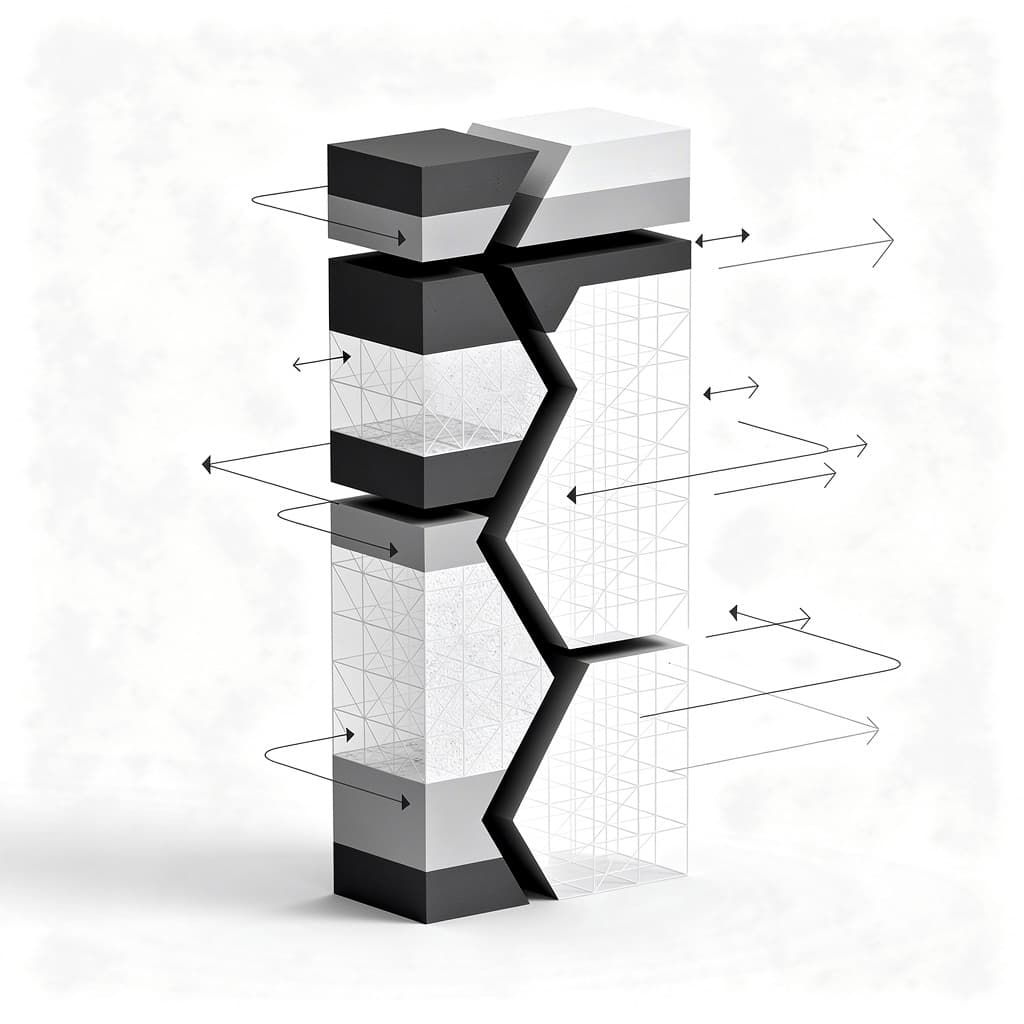
The theory of plate tectonics stands as the unifying paradigm of modern Earth science, providing a cohesive framework that explains the distribution of earthquakes, volcanoes, mountain ranges, and the very shape of the continents. At its core, the theory describes the Earth's outer shell—the lithosphere—as a jigsaw puzzle of massive, rigid slabs that glide over a semi-fluid layer of the mantle. This perpetual motion, while measured in mere centimeters per year, has radically reshaped the planet over billions of years, recycling the ocean floor and driving the evolution of the biosphere. By understanding the mechanics of these lithospheric plates, we gain insight into the violent forces of the deep Earth and the slow, elegant dance of the landmasses across the globe.
The Foundation of Continental Drift Theory
Wegener's Vision of Pangea
In the early 20th century, the German meteorologist Alfred Wegener proposed a revolutionary idea that challenged the prevailing view of a static Earth. He observed that the coastlines of South America and Africa fit together with startling precision, suggesting they were once part of a single, colossal landmass. In his 1915 work, The Origin of Continents and Oceans, Wegener named this supercontinent Pangea, which he believed began to break apart approximately 200 million years ago. Despite the visual logic of his "continental jigsaw," the scientific community initially met his ideas with skepticism, as they lacked a plausible physical mechanism to explain how solid continents could plow through the rigid sea floor.
Wegener's proposal was not merely based on coastal geometry but was supported by a diverse array of interdisciplinary evidence. He noted that identical mountain ranges, such as the Appalachians in North America and the Caledonides in Scotland, aligned perfectly when the Atlantic Ocean was removed from the map. Furthermore, Wegener identified patterns of ancient glacial deposits in tropical regions of India and Africa, which only made sense if those landmasses had once been located near the South Pole. This synthesis of geography, geology, and climatology laid the groundwork for what we now recognize as continental drift theory, even though Wegener would not live to see his ideas fully vindicated.
Evidence from Fossil Records
Some of the most compelling evidence for Wegener’s theory came from the fossil record, which revealed that identical species of plants and animals existed on continents now separated by thousands of miles of ocean. For instance, the remains of the Mesosaurus, a small freshwater reptile, were found only in eastern South America and western Africa. Given the animal's physiology, it was biologically impossible for it to have swum across the salt waters of the Atlantic. Similarly, the fossil fern Glossopteris was found distributed across South America, Africa, India, Antarctica, and Australia, suggesting these regions once shared a contiguous temperate climate.
The presence of these fossils created a significant dilemma for traditional geologists, who were forced to invent hypothetical, sunken "land bridges" to explain species migration. Wegener argued that his theory of moving continents was a much simpler and more elegant explanation than the disappearance of massive land bridges into the ocean depths. While his fossil evidence was robust, the scientific establishment remained unconvinced because Wegener could not explain the "engine" behind the movement. He erroneously suggested that centrifugal forces from Earth's rotation or tidal pull from the moon were responsible, forces that physicists quickly proved were far too weak to move continents.
The Mechanism of Seafloor Spreading
Mid-Ocean Ridges and Magnetic Stripes
The breakthrough that transformed continental drift into the modern theory of plate tectonics arrived in the 1960s with the discovery of seafloor spreading. Using sonar technology developed during World War II, researchers like Harry Hess mapped the ocean floor and discovered the Mid-Atlantic Ridge, a massive underwater mountain range. Hess hypothesized that new oceanic crust was being formed at these ridges as magma rose from the mantle, cooled, and pushed the existing seafloor outward. This "conveyor belt" mechanism provided the missing link: the continents were not plowing through the seafloor; they were being carried along by the growing oceanic crust.
Validation for Hess's hypothesis came from the study of paleomagnetism, specifically the discovery of magnetic stripes on the ocean floor. Earth's magnetic field periodically reverses its polarity, and as new basaltic rock cools at the ridge, it records the current magnetic orientation. Researchers Fred Vine and Drummond Matthews observed a symmetrical pattern of magnetic "stripes" on either side of the mid-ocean ridges, representing alternating periods of normal and reversed polarity. This symmetry proved that the seafloor was spreading away from the center at a consistent rate, effectively acting as a natural magnetic tape recorder of Earth's history.
Convection Currents in the Mantle
The primary driver of seafloor spreading and plate motion is the process of mantle convection. Heat generated by the radioactive decay of elements like uranium and thorium in the Earth's core creates buoyancy in the surrounding mantle rock. This heated material rises toward the surface, cools, and then sinks back down in a continuous cycle, forming massive convection cells. These cells exert a frictional drag on the underside of the lithospheric plates, a process known as basal drag, though modern geophysicists now believe that "slab pull" at subduction zones is an even more powerful force in plate movement.
The relationship between heat flow and plate motion can be modeled by looking at the thermal gradients within the Earth. As the oceanic lithosphere moves away from the ridge, it loses heat to the seawater above, becoming denser and thicker over time. The rate of spreading can be calculated using the simple formula for velocity: $$ v = \frac{d}{t} $$ where $v$ is the spreading rate, $d$ is the distance from the ridge, and $t$ is the age of the crust at that distance. On average, the Atlantic spreads at a rate of about 2 to 5 centimeters per year, while the East Pacific Rise spreads much faster, at rates exceeding 15 centimeters per year.
A Global Tectonic Plates Map
Delineating the Major Lithospheric Slabs
The surface of the Earth is divided into approximately seven or eight major tectonic plates and dozens of smaller microplates. A tectonic plates map reveals that these slabs do not correspond strictly to the outlines of continents; for example, the North American Plate includes both the North American continent and the western half of the North Atlantic Ocean floor. The major plates include the Pacific, North American, Eurasian, African, Indo-Australian, Antarctic, and South American plates. These plates are rigid, meaning they move as coherent units, and most of the geological activity—such as earthquakes and volcanism—is concentrated at their boundaries.
The behavior of these plates is dictated by the asthenosphere, a layer of the upper mantle located directly below the lithosphere. The asthenosphere is characterized by its plasticity; while it is solid rock, it exists under enough pressure and temperature to flow slowly over geological timescales. This "low-velocity zone" allows the brittle lithospheric plates to slide over the interior with relatively low friction. The interaction between the rigid lithosphere and the ductile asthenosphere is what defines the "tectonic" nature of our planet, differentiating it from geologically dead worlds like the Moon or Mars, which possess a single, unbroken lithospheric shell.
Microplates and Complex Boundaries
While the major plates dominate the global map, the Earth's surface also contains numerous microplates and complex deformation zones where plate boundaries are not clearly defined. The Juan de Fuca plate off the coast of the Pacific Northwest and the Caribbean Plate are examples of smaller slabs that play significant roles in regional tectonics. In areas like the Mediterranean or the Himalayas, the interaction of multiple small fragments of crust creates broad zones of deformation rather than a single neat line. These regions are often characterized by complex faulting and high seismic risk, as the crust is squeezed and twisted between much larger moving plates.
Understanding the precise geometry of plate movement requires the application of Euler's rotation theorem, which states that any motion of a rigid body on the surface of a sphere can be described as a rotation around a fixed axis. By identifying the "Euler pole" for a specific plate, scientists can calculate the relative velocity and direction of its movement at any point along its boundary. This mathematical approach allows for the reconstruction of past plate positions with high accuracy, enabling geologists to map the assembly and breakup of ancient supercontinents like Rodinia and Pangea over hundreds of millions of years.
The Dynamics of Divergent Boundaries
Rift Valleys and Continental Breakup
Divergent boundaries occur where two plates move away from each other, a process that can begin within a continent or in the middle of an ocean. When divergence occurs beneath a continental landmass, it creates a rift valley, such as the Great Rift Valley in East Africa. As the crust is pulled apart, it thins and fractures, creating a series of parallel faults and down-dropped blocks called grabens. This rifting is often accompanied by volcanic activity as the thinning crust allows magma to reach the surface, eventually leading to the formation of a new linear sea and, eventually, a full-blown ocean basin.
The transition from a continental rift to a mid-ocean ridge is a critical stage in the Wilson Cycle, the cyclical process of ocean basin opening and closing. As the continental crust completely separates, basaltic magma from the mantle fills the gap, creating the first segments of new oceanic crust. This process is currently visible in the Red Sea, where the Arabian Plate is pulling away from the African Plate. Over millions of years, if the divergence continues, the Red Sea will widen into an ocean as vast as the Atlantic, with a mature mid-ocean ridge system at its center.
Hydrothermal Vents and Oceanic Expansion
At the center of divergent boundaries in the deep ocean, the formation of new crustal material creates a unique and extreme environment. As magma rises and solidifies into basalt, it creates a rugged landscape of "pillow lavas" and deep fissures. Seawater penetrates these cracks, is heated by the underlying magma, and leaches minerals from the rock before erupting back into the ocean as hydrothermal vents, or "black smokers." These vents are not just geological curiosities; they support entire ecosystems of extremophiles that rely on chemosynthesis rather than photosynthesis, providing clues to the origins of life on Earth.
The expansion of the ocean floor at divergent boundaries is perfectly balanced by the destruction of crust elsewhere, maintaining the Earth's constant volume. Because oceanic crust is formed at high temperatures, it is initially less dense and sits higher in the mantle, creating the elevated topography of the mid-ocean ridges. As the crust moves away from the ridge, it cools, increases in density, and subsides. This relationship between age and depth is remarkably consistent across all ocean basins and can be described by the following square-root-of-age relationship for crust younger than 70 million years: $$ d(t) = 2500 + 350\sqrt{t} $$ where $d$ is the depth in meters and $t$ is the age in millions of years. This formula illustrates how the "elegant mechanics" of plate tectonics are governed by the fundamental laws of thermodynamics.
Collision and Convergent Boundaries
Subduction Zones and Oceanic Trenches
Convergent boundaries represent the destructive phase of the tectonic cycle, where plates collide and one is often forced deep into the mantle. When an oceanic plate meets a continental plate, the denser oceanic basalt is forced beneath the lighter continental granite in a process known as subduction. This creates a deep-sea trench, such as the Mariana Trench, which contains the deepest points in the world's oceans. As the subducting slab descends, it carries water-rich sediments into the hot mantle; this water lowers the melting point of the overlying mantle rock, triggering the formation of magma and a chain of volcanoes on the surface.
Subduction zones are the sites of the most powerful earthquakes on the planet, known as megathrust earthquakes. These occur along the interface between the two plates, where friction causes immense stress to build up over decades or centuries. When the frictional resistance is finally overcome, the plates slip violently, releasing energy that can trigger devastating tsunamis. The 2004 Indian Ocean tsunami and the 2011 Tohoku earthquake in Japan are harrowing examples of the energy stored at convergent boundaries. The angle of subduction varies depending on the age of the plate; older, colder plates sink more steeply, sometimes at nearly 90-degree angles, into the mantle.
Mountain Building at Continental Collisions
When two continental plates converge, neither is dense enough to be easily subducted into the mantle. Instead, the crust is buckled, folded, and thrust upward to form massive mountain ranges in a process known as orogeny. The most famous example is the collision between the Indo-Australian Plate and the Eurasian Plate, which began approximately 50 million years ago and continues today. This collision has produced the Himalayas and the Tibetan Plateau, the highest and most extensive mountain system on Earth. Because the continental crust is too buoyant to sink, the collision results in a "doubling" of the crustal thickness, which can reach up to 70 or 80 kilometers.
These convergent boundaries are also characterized by intense metamorphism, where heat and pressure transform existing rocks into new forms, such as limestone turning into marble. The geological structures found in these regions, such as anticlines, synclines, and overthrust faults, provide a record of the immense compressive forces at work. Interestingly, even in these high-altitude environments, marine fossils are often found near the peaks of mountains like Everest. This serves as a profound reminder that the rock making up the world's highest summits was once sediment at the bottom of an ancient ocean, squeezed upward by the relentless movement of tectonic plates.
Lateral Movement and Types of Plate Boundaries
San Andreas and Strike-Slip Motion
The third major type of plate boundary is the transform boundary, where two plates slide horizontally past one another. Unlike divergent and convergent boundaries, transform boundaries generally do not produce spectacular volcanoes or massive mountain ranges because crust is neither created nor destroyed. However, they are significant sources of seismic activity. The San Andreas Fault in California is the most well-known transform boundary, marking the interface between the Pacific Plate and the North American Plate. The Pacific Plate is moving northwest relative to the North American Plate, a motion that has displaced rock units by hundreds of kilometers over millions of years.
The motion along transform faults is rarely smooth; it is characterized by stick-slip behavior. Friction between the jagged edges of the plates causes them to lock in place while the underlying tectonic forces continue to push. This results in the accumulation of elastic strain energy in the surrounding rocks, much like a stretched rubber band. When the stress exceeds the strength of the rock, the fault "breaks," and the plates jump forward in a matter of seconds, releasing the stored energy as seismic waves. This mechanical process explains why transform boundaries are prone to frequent, shallow-focus earthquakes that can be highly destructive to nearby urban centers.
Fracture Zones in the Deep Sea
In the ocean basins, transform faults play a crucial role in connecting offset segments of mid-ocean ridges. Because the Earth is a sphere and the rate of spreading can vary along a ridge, the ridge cannot be a single continuous line. Instead, it is broken into segments by fracture zones. These fracture zones consist of an active transform fault between the ridge segments and inactive "scars" that extend far across the ocean floor. These scars are permanent features of the oceanic lithosphere, recording the past directions of plate motion and the history of how the ocean basin opened.
The study of these deep-sea fracture zones has been essential for refining the tectonic plates map. By tracing the orientation of these zones, geologists can determine the "flow lines" of plate movement. For example, the fracture zones in the Atlantic Ocean perfectly mirror the "S" shape of the continental margins of Africa and South America. This geometric alignment provides further proof that the ocean floor is not a random collection of features but a highly organized system governed by the principles of plate kinematics. Transform boundaries, therefore, act as the "sliding joints" that allow the rigid plates to navigate the curved surface of the Earth.
Mantle Plumes and Intraplate Activity
Hotspots and Volcanic Island Chains
While most geological activity occurs at plate boundaries, some of the world's most famous volcanic features occur in the middle of plates. These are known as hotspots, areas where exceptionally hot plumes of mantle material rise from deep near the core-mantle boundary. As a tectonic plate moves over a stationary hotspot, a sequence of volcanoes is created on the surface. The oldest volcanoes are carried away and become extinct and eroded, while new ones form directly over the plume. This process creates a linear chain of volcanic islands and seamounts that trace the direction and speed of the plate's motion over time.
The concept of hotspots was first proposed by J. Tuzo Wilson in 1963 to explain the origin of the Hawaiian Islands. He realized that the linear arrangement of the islands was not a coincidence but a record of the Pacific Plate's journey. Hotspots provide a "fixed" reference frame that allows scientists to calculate the absolute plate velocity, as opposed to the relative velocity measured at plate boundaries. By dating the basalt from various islands in a chain, geologists can determine exactly how fast the plate was moving at different points in geological history.
The Evolution of the Hawaiian Archipelago
The Hawaiian-Emperor seamount chain is the most spectacular example of hotspot activity. It stretches over 6,000 kilometers across the Pacific floor, starting from the currently active Big Island of Hawaii and extending all the way to the Aleutian Trench near Russia. Interestingly, the chain contains a prominent "bend" that occurred about 47 million years ago. For decades, this was interpreted as a sudden change in the direction of the Pacific Plate's motion, though recent research suggests the mantle plume itself may have been moving slowly southward before becoming relatively fixed.
Hotspots also play a role in continental geology. The Yellowstone hotspot, for instance, has left a trail of volcanic calderas across the Snake River Plain as the North American Plate moved southwest over it. These "supervolcanoes" are capable of eruptions thousands of times larger than that of Mount St. Helens. Whether in the ocean or on land, mantle plumes serve as a reminder that the "elegant mechanics" of plate tectonics are not limited to the surface. Instead, they are the surface expression of a vast, planet-wide heat engine that connects the deepest parts of the Earth's interior to the mountains and oceans we see today.
References
- Wegener, A., "The Origin of Continents and Oceans", Vieweg & Sohn, 1915.
- Hess, H. H., "History of Ocean Basins," Geological Society of America, 1962.
- Vine, F. J., and Matthews, D. H., "Magnetic Anomalies Over Oceanic Ridges", Nature, 1963.
- Turcotte, D. L., and Schubert, G., "Geodynamics," Cambridge University Press, 2014.
- Morgan, W. J., "Convection Plumes in the Lower Mantle," Nature, 1971.
Recommended Readings
- Annals of the Former World by John McPhee — A Pulitzer Prize-winning narrative that weaves together the geological history of North America with the human stories of the geologists who discovered plate tectonics.
- The Rejection of Continental Drift by Naomi Oreskes — A deep dive into the history and philosophy of science, exploring why it took decades for Wegener's revolutionary ideas to be accepted.
- The Fourth Phase of Water by Gerald Pollack — While seemingly focused on chemistry, this book explores the role of water in geological processes and the subtle mechanics of Earth's crust.
- Plate Tectonics: A Very Short Introduction by Peter Molnar — A concise yet authoritative technical summary of the physical processes that drive the movement of the Earth's lithosphere.