The Elegant Logic of Recursive Functions
Recursion is one of the most elegant yet potentially mind-bending concepts in computational logic and mathematics. At its core, determining what is recursion involves understanding a process where a...
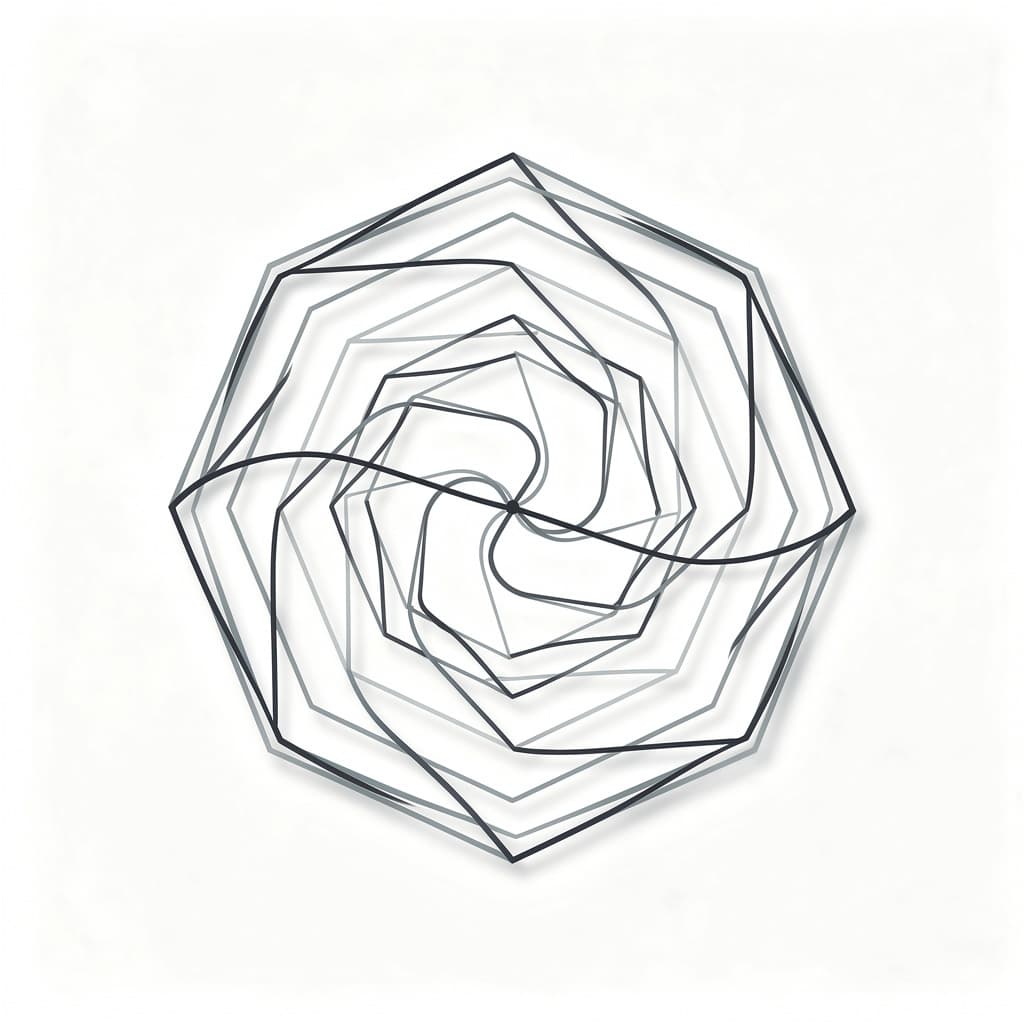
Recursion is one of the most elegant yet potentially mind-bending concepts in computational logic and mathematics. At its core, determining what is recursion involves understanding a process where a function calls itself as a subroutine, allowing a complex problem to be solved by breaking it down into smaller, more manageable versions of the same problem. This self-referential technique provides a powerful alternative to traditional iterative loops, often leading to code that is cleaner, more intuitive, and mathematically expressive. While it may initially seem circular or paradoxical, recursion is grounded in strict logical rules that ensure every process eventually reaches a conclusion. By mastering the relationship between the base case and the recursive step, programmers can leverage this paradigm to navigate sophisticated data structures and implement high-level algorithms with minimal syntactical overhead.
Defining the Recursive Paradigm
The Nature of Self-Reference
In the broadest sense, what is recursion can be defined as a method of problem-solving where the solution depends on solutions to smaller instances of the same problem. This concept is not limited to computer science; it appears frequently in mathematics, linguistics, and even nature, such as in the fractal patterns of a romanesco broccoli or the branching of a river system. In programming, a recursive function contains a call to itself within its own body, creating a temporary suspension of the current execution to resolve a nested layer of logic. This self-reference allows for a "top-down" approach to programming, where a high-level goal is continuously subdivided until it reaches a state of such simplicity that it can be solved directly. Understanding this paradigm requires a shift in perspective from linear execution to a layered, hierarchical approach where each function call represents a new context of the same logical pattern.
Primary Characteristics of Algorithms
For a recursive algorithm to be considered well-defined and functional, it must possess two critical components: the base case and the recursive case. Without these, a function would enter an infinite loop, consuming system resources until the program crashes. The recursive case is the part of the function where the "self-call" occurs, typically involving a modification of the input parameters to bring the state closer to the termination point. This ensures that each subsequent call operates on a smaller or simpler subset of the data, maintaining the forward momentum of the algorithm. Effective recursive design prioritizes the reduction of complexity at each step, ensuring that the problem-space shrinks consistently until the entire logic can be resolved and the results propagated back up through the layers of execution.
Establishing the Base Case
The base case acts as the anchor for the entire recursive structure, serving as the condition under which the function stops calling itself and begins returning values. It is the most elementary version of the problem, which can be solved without any further recursion, such as reaching the end of a list or reducing a numerical counter to zero. Establishing a clear and reachable base case is the most vital step in preventing infinite recursion and ensuring the reliability of the software. If the base case is omitted or logically flawed, the function will continue to spawn new instances of itself indefinitely, leading to memory exhaustion. Consequently, the logic of any recursive function must be designed such that every possible execution path eventually intersects with a base case, providing a definitive exit strategy for the computational process.
Mechanics of the Call Stack
Activation Records and Memory
To understand how recursion works at a hardware level, one must examine the call stack, a specialized memory structure that tracks active subroutines in a running program. Every time a function is invoked, the computer creates an activation record (or stack frame) that stores the function’s local variables, parameters, and the return address. In a recursive sequence, these frames are stacked on top of one another, with each new call adding a layer to the stack memory. This means that while the function is "self-calling," the computer sees it as a series of distinct instances, each with its own unique state and memory allocation. The management of these records is what allows the system to keep track of where it is in the middle of a complex, multi-layered calculation without losing data or context.
The Unwinding Process
Once the base case is finally reached, the recursive process transitions into what is known as the unwinding phase. At this point, the topmost activation record on the stack completes its execution and returns a value to the function that called it. This "Last In, First Out" (LIFO) mechanism ensures that the stack frames are cleared in the reverse order of their creation, passing the result of each subproblem back up the chain. As each frame is popped off the stack, the previous function call resumes its execution using the newly acquired data, eventually reaching the original, first call. This phase is where the actual synthesis of the solution occurs, as the fragmented results from various recursive levels are combined to produce the final output of the algorithm.
Understanding Stack Overflow Errors
While recursion is logically powerful, it is constrained by the physical limits of the computer's memory allocated for the call stack. If a recursive function calls itself too many times without reaching a base case—either due to a logical error or a problem size that is simply too large—the system will run out of stack space. This condition is known as a stack overflow, a common runtime error that causes the immediate termination of the program. Different programming languages and environments have varying limits on stack depth; for instance, some might allow only a few thousand calls, while others can be configured for more. Therefore, when developers consider what is recursion in a practical context, they must always weigh the elegance of the solution against the potential for memory exhaustion in high-scale environments.
Anatomy of a Recursive Call
The Base Case vs Recursive Case
The distinction between the base case vs recursive case is the fundamental blueprint of any recursive function. The base case handles the simplest possible input, providing a direct answer: for example, the factorial of 0 is defined as 1. In contrast, the recursive case defines the relationship between the current input and the next, smaller input, such as defining $n!$ as $n \times (n-1)!$. This structural duality ensures that the function has both a way to proceed and a way to stop. When designing these cases, the developer must ensure that the transition from the recursive case toward the base case is guaranteed. Without this "convergent" property, the logic remains stuck in a loop that never simplifies, failing the primary goal of the recursive paradigm.
Dividing Problems into Subproblems
At the heart of recursion in computer science is the strategy of "Divide and Conquer," where a monolithic task is split into independent sub-tasks. Each recursive call treats a portion of the data as a complete problem in its own right, which simplifies the cognitive load on the programmer. For example, when sorting a list, a recursive algorithm might split the list into two halves, sort each half independently, and then merge them back together. This approach is highly effective for problems that exhibit optimal substructure, meaning the solution to the whole can be constructed from the solutions to its parts. By focusing only on how to solve one small step and how to combine results, the developer can solve massive computational challenges through a series of very simple transformations.
Managing State Across Levels
One of the most nuanced aspects of how recursion works is the management of state—the values of variables at any given moment. In an iterative loop, state is usually managed through a single set of variables that are updated with each pass. In recursion, however, each level of the stack maintains its own private "snapshot" of the state within its activation record. This isolation prevents side effects and makes the code easier to reason about in a mathematical sense, as variables are typically immutable within a single call. However, if data needs to be shared across recursive levels, it must be passed forward as arguments or returned backward as results. Mastering this flow of information is essential for implementing recursive algorithms that do more than just simple calculations, such as those that build complex objects or perform exhaustive searches.
Recursion in Computer Science Data Structures
Traversing Binary Trees
Recursion is the natural language of binary trees and other hierarchical data structures because the structures themselves are recursive by definition. A binary tree consists of a root node and two child nodes, each of which is itself the root of a smaller binary tree. To perform an "In-order Traversal," a function simply calls itself on the left child, processes the current node, and then calls itself on the right child. This leads to incredibly concise code compared to iterative versions, which would require an explicit stack data structure to track the nodes. Because the tree's depth is often logarithmic relative to its size, recursion provides an efficient and intuitive way to search, insert, and delete elements within these non-linear collections.
Navigating Linked Lists
Although linked lists are often processed using iterative loops, they can also be understood and manipulated through recursive function examples. A linked list can be defined recursively as either an empty list or a node followed by another linked list. Reversing a linked list or searching for a specific value can be achieved by checking the current node and then passing the "rest" of the list to the next recursive call. This approach is particularly common in functional programming languages like Haskell or Lisp, where traditional loops are discouraged or non-existent. While potentially less memory-efficient in languages like C or Java, recursive list processing highlights the logical consistency of treating data as a series of nested containers rather than a flat array.
Depth-First Search Strategies
In graph theory, Depth-First Search (DFS) is a quintessential application of recursion used to explore nodes and edges. When the algorithm visits a node, it recursively calls itself for every unvisited neighbor, effectively "diving" as deep as possible into one branch of the graph before backtracking. This behavior is managed automatically by the call stack, which stores the "branching points" so the algorithm knows where to return after hitting a dead end. DFS is foundational for solving mazes, checking for connectivity in networks, and performing topological sorts in build systems. The recursive nature of the search allows the algorithm to maintain a memory of the path it has taken without the programmer having to manually manage a complex set of pointers or history logs.
Comparing Recursion vs Iteration
Time Complexity Trade-offs
When evaluating recursion vs iteration, the time complexity is often equivalent for simple tasks, but the constant factors can differ significantly. In many cases, a recursive function and an iterative loop both perform $O(n)$ operations to process $n$ elements. However, the overhead of managing function calls—allocating stack frames, pushing parameters, and jumping to different memory addresses—makes recursion slightly slower in many imperative languages. For some algorithms, like the naive calculation of Fibonacci numbers, recursion can even lead to exponential time complexity ($O(2^n)$) if not optimized, whereas an iterative approach would remain linear. Therefore, recursion is often chosen for its readability and the inherent structure of the problem rather than for raw execution speed.
Space Complexity and Memory Overhead
The most significant drawback in the recursion vs iteration debate is the space complexity associated with the call stack. An iterative loop typically uses a constant amount of space ($O(1)$), as it reuses the same variables for every iteration. In contrast, a recursive function requires $O(d)$ space, where $d$ is the depth of the recursion, because each call consumes a portion of the stack memory. For very deep trees or massive datasets, this linear growth in memory usage can lead to the aforementioned stack overflow errors. Modern systems are robust, but for embedded systems or high-frequency trading platforms where memory is at a premium, the overhead of recursion often makes iteration the more responsible choice.
When to Choose Iterative Loops
Choosing between these two paradigms often comes down to the specific nature of the problem and the constraints of the environment. Iteration is generally preferred for simple, linear tasks such as traversing an array, calculating a sum, or any process where performance and memory safety are the highest priorities. It is also the standard choice in languages that do not optimize recursive calls, as it provides more direct control over the hardware. As a rule of thumb, if the problem can be solved just as easily with a for or while loop, iteration is usually the better practical choice. However, if the problem involves branching, backtracking, or naturally recursive data structures, the clarity and reduced bug surface of recursion may outweigh the performance costs.
| Feature | Recursion | Iteration |
|---|---|---|
| Implementation | Function calls itself | Repetitive loop (for/while) |
| State Management | Stored in stack frames | Stored in local variables |
| Memory Usage | High (stack overhead) | Low (constant space) |
| Code Elegance | High (often more readable) | Moderate (can be verbose) |
| Risk | Stack Overflow | Infinite Loop |
Recursive Function Examples in Practice
Factorials and Mathematical Sequences
The classic introduction to what is recursion is the factorial function, which calculates the product of all positive integers up to a given number $n$. Mathematically, this is expressed as $n! = n \times (n-1)!$, with the base case being $0! = 1$. This example perfectly illustrates the recursive case reducing the problem size $(n-1)$ and the base case providing the terminal value. While factorials are easy to compute iteratively, the recursive version mirrors the mathematical definition exactly, making it a favorite for teaching the concept. Below is a standard implementation in Python to demonstrate this logic:
def factorial(n):
    # Base case: if n is 0, return 1
    if n == 0:
        return 1
    # Recursive case: n * factorial of (n-1)
    else:
        return n * factorial(n - 1)
The Fibonacci Sequence Efficiency
The Fibonacci sequence is another staple of recursive function examples, where each number is the sum of the two preceding ones. While a naive recursive implementation is elegant, it is notoriously inefficient because it recalculates the same values multiple times. For example, to find the 5th Fibonacci number, the function calculates the 3rd number several times across different branches of the recursive tree. This illustrates a critical lesson in recursion: without optimization, the "elegant" solution can become a performance bottleneck. To solve this, developers use techniques like memoization to store the results of previous calculations, blending the beauty of recursion with the efficiency of dynamic programming.
Divide and Conquer Algorithms
Many of the most efficient sorting algorithms, such as Mergesort and Quicksort, rely on recursion to achieve $O(n \log n)$ time complexity. In Mergesort, the array is recursively divided into halves until each subarray contains a single element (the base case), at which point they are merged back together in sorted order. This strategy is highly effective for large datasets because it limits the number of comparisons needed. These algorithms demonstrate that recursion is not just a stylistic choice but a fundamental component of high-performance computing. By breaking a problem into truly independent subproblems, recursion enables parallelization and sophisticated data management that would be far more complex to implement using only iterative loops.
Optimizing the Recursive Flow
Tail Call Optimization Explained
One of the most powerful optimizations for recursive functions is Tail Call Optimization (TCO). A "tail call" occurs when the recursive call is the very last action performed by the function, meaning there is no further work to do after the call returns. In environments that support TCO, the compiler can discard the current stack frame and reuse it for the next recursive call, effectively turning the recursion into a loop under the hood. This eliminates the risk of stack overflow and reduces the space complexity from $O(n)$ to $O(1)$. While not all languages (like Python or standard Java) support TCO, it is a staple of functional languages like Scheme and Elixir, allowing them to use recursion for virtually all repetitive tasks without performance penalties.
Memoization and Dynamic Programming
To overcome the inefficiencies found in recursive function examples like the Fibonacci sequence, programmers use a technique called memoization. Memoization involves caching the results of expensive function calls and returning the cached result when the same inputs occur again. This transforms a recursive algorithm with exponential time complexity into one with linear time complexity by ensuring that each subproblem is only solved once. This is the cornerstone of Dynamic Programming, a method for solving complex problems by breaking them down into overlapping subproblems. By adding a simple lookup table (often a dictionary or array) to a recursive function, one can maintain the clean logic of recursion while achieving the speed of the most optimized iterative solutions.
Transforming Recursion to Iteration
In scenarios where recursion is too risky or slow, any recursive algorithm can be manually transformed into an iterative one by using an explicit stack data structure. This involves using a loop to push and pop states onto a stack in the heap memory rather than relying on the system's call stack. This transformation is common when optimizing critical path code or when working in environments with very limited stack sizes. While the resulting code is often more complex and harder to read, it provides the developer with total control over memory allocation and prevents the program from crashing due to deep nesting. This process reinforces the idea that recursion is a logical abstraction over the fundamental way computers manage tasks and memory.
References
- Knuth, D. E., "The Art of Computer Programming, Volume 1: Fundamental Algorithms", Addison-Wesley, 1997.
- Abelson, H., & Sussman, G. J., "Structure and Interpretation of Computer Programs", MIT Press, 1996.
- Cormen, T. H., Leiserson, C. E., Rivest, R. L., & Stein, C., "Introduction to Algorithms", MIT Press, 2009.
- Graham, R. L., Knuth, D. E., & Patashnik, O., "Concrete Mathematics: A Foundation for Computer Science", Addison-Wesley, 1994.
Recommended Readings
- The Little Schemer by Daniel P. Friedman and Matthias Felleisen — A unique, dialogue-based book that builds a profound intuitive understanding of recursive thinking through simple examples.
- Algorithm Design Manual by Steven S. Skiena — Excellent for understanding the practical application of recursive strategies like backtracking and divide-and-conquer in real-world software.
- Gödel, Escher, Bach: An Eternal Golden Braid by Douglas Hofstadter — A Pulitzer Prize-winning exploration of self-reference and recursion across math, art, and music.
- Thinking Recursively by Eric Roberts — A classic text specifically focused on the transition from iterative to recursive problem-solving for students of computer science.