The Electrodynamic Logic of Ohm's Law
At the heart of modern electrical engineering and classical electrodynamics lies a deceptively simple relationship that governs the behavior of almost every electronic device in existence. This...
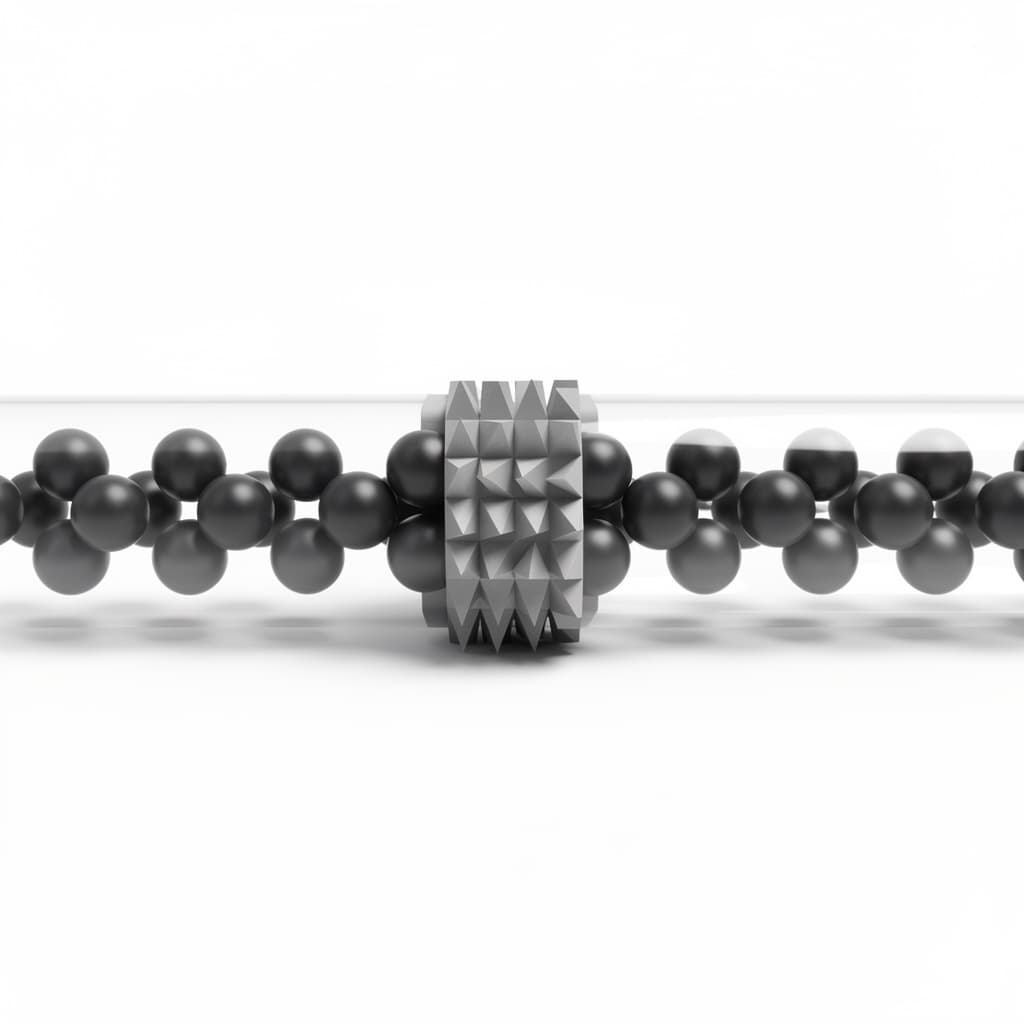
At the heart of modern electrical engineering and classical electrodynamics lies a deceptively simple relationship that governs the behavior of almost every electronic device in existence. This principle, known universally as Ohm's Law, provides the mathematical framework necessary to understand how energy is transported through conductive materials. By relating the driving force of an electric circuit to the resulting flow of charge and the inherent opposition of the medium, this law serves as the fundamental starting point for circuit analysis. Whether one is designing a complex microprocessor or simply changing a light bulb, the underlying physics remains rooted in the observations first formalized in the early 19th century. Understanding this law requires more than just memorizing a formula; it demands an appreciation for the interplay between microscopic particle motion and macroscopic measurable quantities.
Defining the Fundamental Law of Conduction
The Core Definition of Ohm's Law
The definition of Ohm's Law states that the current flowing through a conductor between two points is directly proportional to the voltage across those two points, provided that all physical conditions, such as temperature, remain constant. This relationship suggests that if you double the electrical pressure, or voltage, applied to a circuit, the resulting flow of electricity, or current, will also double. This linear dependency is the hallmark of what physicists call "Ohmic" behavior, characterizing materials that maintain a steady resistance regardless of the applied force. In the broader context of physics, this law describes the steady-state transport of charge carriers, typically electrons, through a solid-state lattice. By establishing this consistency, the law allows for the predictable control of electricity in diverse environments.
To grasp the Ohm's Law definition fully, one must view it as an empirical observation rather than a fundamental law of the universe, like gravity. It describes how most common conductors behave under standard operating conditions but does not apply to every material in every situation. In a standard conductive wire, the free electrons are constantly colliding with the atoms of the material, creating a form of internal friction. The law essentially quantifies this friction, allowing us to calculate exactly how much "push" is needed to achieve a specific "flow." Without this foundational rule, the systematic development of electrical grids and consumer electronics would have been relegated to mere trial and error.
Historical Context of Georg Ohm's Discovery
The discovery of this vital relationship is credited to the German physicist and mathematician Georg Simon Ohm, who published his findings in 1827 in his seminal work, Die galvanische Kette, mathematisch bearbeitet (The Galvanic Circuit Investigated Mathematically). At the time of his research, the tools for measuring electricity were primitive, and the concept of "potential" was poorly understood. Ohm conducted meticulous experiments using the recently invented thermo-electric pile to provide a stable voltage source, which was a significant improvement over the fluctuating chemical batteries of his era. Despite the monumental importance of his work, it was initially met with cold indifference and even hostility by the German scientific establishment, which favored a more philosophical rather than mathematical approach to nature. It took several decades for the international community to recognize that Ohm had uncovered the key to mastering electrical conduction.
Ohm’s persistence eventually led to the Ohm's Law formula becoming a cornerstone of pedagogical and practical physics. By the mid-19th century, his work was championed by British scientists like Michael Faraday and Claude Pouillet, who recognized its utility in the burgeoning telegraph industry. The recognition of his contributions culminated in the naming of the unit of electrical resistance, the "ohm," in his honor during the International Electrical Congress of 1881. Today, his legacy is felt every time an engineer calculates the necessary specifications for a power supply or a resistor. His journey from a humble schoolteacher to a world-renowned physicist serves as a testament to the power of rigorous experimental verification and mathematical clarity.
Identifying the Three Critical Variables
There are three primary variables that interact within any electrical circuit: voltage, current, and resistance. Voltage, measured in volts (V), represents the electrical potential difference between two points, acting as the "pressure" that encourages electrons to move. Current, measured in amperes (A), is the actual rate of flow of these electrons past a specific point in the circuit. Resistance, measured in ohms ($\Omega$), is the measure of the material's opposition to that flow, acting as a "constriction" in the path. These three components form the voltage current resistance relationship that defines the efficiency and safety of electrical systems.
Understanding these variables is easier when they are viewed through the lens of cause and effect. Voltage is the "cause" or the input energy, current is the "effect" or the resulting motion, and resistance is the "property" of the system that dictates the magnitude of the effect. For a fixed amount of resistance, an increase in voltage will always result in a corresponding increase in current. Conversely, if the resistance of a circuit increases while the voltage remains the same, the current will inevitably drop. This tripartite relationship ensures that if any two values are known, the third can be calculated with absolute certainty, assuming the conductor follows the linear logic of Ohm's Law.
Deciphering the Ohm's Law Formula
Understanding V=IR Explained Simply
The mathematical expression of this principle is incredibly concise: $$V = I \times R$$. In this Ohm's Law formula, $V$ stands for voltage, $I$ represents current, and $R$ denotes resistance. This equation tells us that the total electrical pressure is the product of the flow rate and the resistance encountered. If you have a circuit where 2 amperes of current are flowing through a 5-ohm resistor, the voltage drop across that resistor must be 10 volts. This simplicity is what makes v=ir explained so frequently in introductory science classes, as it provides an immediate way to quantify the invisible forces of electricity.
When we look at the formula $V=IR$, we are essentially looking at an energy balance equation for a single component. It tells us how much potential energy is "lost" or converted into heat as charges move through a resistive element. For instance, in a household toaster, the heating elements provide a specific resistance, and the wall outlet provides a standard voltage. By applying the formula, engineers can determine exactly how much current will flow, which in turn dictates how much heat the toaster will generate. This predictive power is essential for ensuring that devices operate within their design limits without overheating or failing.
Proportionality and Mathematical Linearity
The beauty of Ohm's Law lies in its linear nature, which can be visualized as a straight line on a graph where voltage is plotted against current. This linearity implies that the ratio of voltage to current is a constant value, which we define as the resistance. In mathematical terms, if $V / I = R$ and $R$ is a constant, the relationship is first-order, meaning there are no squared or cubic terms to complicate the behavior. This makes the calculation of circuit parameters straightforward and reliable for most metals and common conductors. Such materials are referred to as "linear conductors" because their behavior follows a predictable, straight-path trajectory on a graph.
Linearity also facilitates the use of superposition and other advanced circuit theorems, which allow engineers to analyze complex networks with multiple power sources. Because the relationship is proportional, we can assume that a 10 percent increase in voltage will result in exactly a 10 percent increase in current. This predictability is vital for the stability of power grids and the functionality of sensitive electronic components. However, it is important to remember that this linearity is often dependent on maintaining a constant temperature, as heat can change the physical properties of the conductor and warp the linear relationship. When the graph of $V$ vs $I$ starts to curve, we have moved into the realm of non-linear electrodynamics.
Manipulating the Equation for Different Variables
One of the most practical aspects of the Ohm's Law formula is its algebraic flexibility, allowing it to be rearranged to solve for any of the three variables. If a technician knows the voltage and the resistance but needs to find the current, the formula becomes $$I = \frac{V}{R}$$. This version of the equation highlights that current is inversely proportional to resistance; as resistance goes up, current goes down. This is why adding more components to a series circuit often dims the lights or slows down motors, as the total resistance increases and chokes the flow of electricity.
Similarly, if the goal is to determine the resistance of an unknown component, one can measure the voltage across it and the current passing through it, using the rearranged formula $$R = \frac{V}{I}$$. This is exactly how digital multimeters function; they apply a known small voltage, measure the resulting current, and then perform this internal calculation to display the resistance in ohms. By mastering these three variations of the same fundamental truth, one gains the ability to troubleshoot almost any basic electrical problem. Whether solving for $V$, $I$, or $R$, the logic remains consistent: the three variables are inextricably linked in a balanced mathematical dance.
The Interplay of Potential and Flow
How Voltage Drives the Current
To understand how Ohm's Law works in a physical sense, it is helpful to use the "water pipe" analogy, which is a staple of physics education. In this analogy, voltage is comparable to the water pressure provided by a pump or a reservoir at a high elevation. Just as higher pressure forces more water through a pipe, a higher voltage "pushes" more electrons through a wire. Without this potential difference, the electrons would move in random directions due to thermal energy, resulting in no net flow of charge. Voltage provides the direction and the motivation for the charge carriers to overcome the chaotic internal environment of the conductor.
This "push" is actually an electric field that propagates through the wire at nearly the speed of light when a circuit is closed. While individual electrons move quite slowly (a phenomenon known as drift velocity), the signal that tells them to move travels almost instantaneously. The magnitude of the voltage determines the strength of this electric field, which in turn determines the force exerted on each electron. Therefore, in any discussion of v=ir explained, it is crucial to emphasize that voltage is the active agent that initiates the current. In a circuit with zero voltage, there can be no current, regardless of how low the resistance might be.
Examining Direct and Inverse Relationships
The voltage current resistance relationship is defined by two distinct types of mathematical proportions: direct and inverse. The direct relationship exists between voltage and current; if the resistance is held constant, $V$ and $I$ move in tandem. This means that a graph of current versus voltage will be a straight line passing through the origin, with a slope equal to $1/R$. This direct proportionality is the reason why power companies increase voltage for long-distance transmission; it allows for the movement of energy with specific controlled current levels, though the actual mechanics of high-voltage transmission involve power considerations that go beyond simple Ohm's Law applications.
Conversely, there is an inverse relationship between current and resistance when voltage is held constant. This means that if you keep the same battery but swap a thick wire for a very thin one (increasing resistance), the current will decrease. Mathematically, this is expressed as $I \propto 1/R$. This inverse relationship is fundamental to safety in electrical systems. For example, a "short circuit" occurs when the resistance drops to near zero, causing the current to spike to dangerously high levels according to the inverse logic. This spike in current generates massive amounts of heat, which is why fuses and circuit breakers are designed to "break" the path when the resistance-to-current ratio becomes unsafe.
The Voltage Current Resistance Relationship in Depth
Delving deeper into the voltage current resistance relationship, we must consider the role of the medium through which the current travels. Every material has a specific "resistivity," which is an intrinsic property that determines how much it will oppose the flow of charge. When we talk about $R$ in the formula, we are looking at the macroscopic result of billions of microscopic collisions. In a conductor, these collisions transform electrical potential energy into thermal energy (heat). This is why wires get warm when they carry large currents; the "friction" of the resistance is literally vibrating the atoms of the wire more vigorously.
This relationship also explains why different materials are used for different electrical roles. Materials with extremely low resistance, like copper and aluminum, are used for wiring to ensure that the maximum amount of voltage is available to do useful work at the end of the line. Materials with high resistance, like nichrome, are used specifically when we want to convert electricity into heat, such as in space heaters or hair dryers. By manipulating the Ohm's Law variables, engineers can precisely control where energy is preserved and where it is dissipated. This control is the essence of electrical engineering, allowing us to harness a volatile force of nature for precise, domestic, and industrial tasks.
Physical Principles Governing Electrical Resistance
Material Properties and Resistivity
While Ohm's Law treats resistance as a single value ($R$), that value is actually determined by several physical factors summarized in the formula $$R = \rho \frac{L}{A}$$. In this equation, $\rho$ (rho) represents the resistivity of the material, a constant that depends on the chemical makeup and atomic structure of the substance. Metals generally have very low resistivity because their "sea of electrons" allows for easy movement of charge carriers. Insultors, on the other hand, have high resistivity because their electrons are tightly bound to their parent atoms. This intrinsic property is the first hurdle any electric current must overcome to flow through a material.
Resistivity is measured in ohm-meters ($\Omega \cdot m$) and varies wildly across the periodic table. For example, silver has the lowest resistivity of all metals, making it the best conductor, though its high cost makes copper the standard choice for most applications. Semiconductors like silicon have resistivity levels that can be "tuned" by adding impurities, a process called doping. This ability to change the resistive properties of a material is what allows for the creation of transistors and the entire modern computing industry. Without understanding the physical basis of $\rho$, the $R$ in the Ohm's Law formula would be nothing more than an arbitrary number.
Geometric Factors Affecting Electron Flow
The geometry of a conductor plays a massive role in how much resistance it offers to a current. As seen in the formula $R = \rho (L/A)$, the length ($L$) of the conductor is directly proportional to its resistance. If you double the length of a wire, you double the number of atoms the electrons must navigate through, effectively doubling the "friction." This is why long extension cords can cause a drop in performance for high-power tools; the increased resistance over the long distance results in a significant voltage drop before the electricity even reaches the tool. To minimize this, engineers must use thicker wires for longer distances.
The cross-sectional area ($A$) of the conductor has the opposite effect; it is inversely proportional to resistance. A wider wire provides more "lanes" for the electrons to travel through, reducing the frequency of collisions and thus lowering the resistance. Think of it like a multi-lane highway versus a narrow country road; the highway can accommodate a much higher flow of traffic with less congestion. This is why heavy appliances like air conditioners or electric ovens require thick, heavy-duty power cords. By increasing the area, the resistance is kept low enough to handle the high current demands without the wire overheating or causing a significant drop in voltage.
Temperature Dependence in Metallic Conductors
One of the most important caveats to Ohm's Law is that it only holds strictly true if the temperature of the conductor remains constant. As a metal heats up, its constituent atoms vibrate more aggressively around their fixed positions in the crystal lattice. These increased vibrations make it much more likely that a flowing electron will collide with an atom, effectively increasing the material's resistance. For most metals, there is a positive temperature coefficient, meaning that resistance increases as temperature rises. This is why a light bulb filament has a much lower resistance when it is cold than when it is glowing white-hot at thousands of degrees.
This temperature dependence is mathematically expressed as $$R = R_0 [1 + \alpha(T - T_0)]$$, where $\alpha$ is the temperature coefficient of resistance. In precision electronics, this effect can be a major nuisance, requiring "temperature compensation" circuits to ensure the device remains accurate as it warms up during use. Conversely, this property is used to our advantage in devices like thermistors, which are sensors that measure temperature by monitoring changes in electrical resistance. In extreme cases, such as in superconductors cooled to near absolute zero, the resistance can drop to exactly zero, allowing current to flow forever without any voltage being applied. This marks the ultimate boundary where the classical logic of Ohm's Law gives way to quantum mechanical phenomena.
Ohmic and Non-Ohmic Characteristics
Graphing Linear Current-Voltage Responses
In the study of electronics, components are categorized based on their "I-V characteristics," which are simply graphs showing how current ($I$) changes in response to voltage ($V$). An "Ohmic" device is one that produces a perfectly straight line passing through the origin of this graph. The constant slope of this line is equal to the conductance ($1/R$), and the fact that it is a straight line indicates that the resistance is constant regardless of the voltage or current applied. Most standard resistors, copper wires, and stable metallic conductors fall into this category under normal operating conditions. This linearity makes them easy to model in circuit simulations and predictable in real-world applications.
When an engineer looks at a linear I-V graph, they can immediately identify the resistance by picking any point on the line and dividing $V$ by $I$. This consistency is the reason why Ohm's Law examples often focus on these components first; they behave according to the simplest possible rules. However, it is a common misconception that all components follow this rule. In reality, "Ohmic" behavior is a specific subset of electrical phenomena. Many of the most interesting and useful devices in modern technology are explicitly designed to be non-Ohmic, meaning they do not follow a linear relationship between voltage and current.
Deviations in Semiconductors and Diodes
Non-Ohmic materials are those where the resistance changes as the voltage or current changes, resulting in a curved line on an I-V graph. The most famous example of a non-Ohmic component is the diode. A diode allows current to flow easily in one direction but blocks it almost entirely in the other. If you plot the I-V curve for a diode, you will see that for low voltages, the current is nearly zero. Once a certain "threshold voltage" is reached, the current suddenly spikes upward. In this scenario, the Ohm's Law formula $V=IR$ cannot be applied as a single constant; instead, the "dynamic resistance" changes at every point along the curve.
Other examples of non-Ohmic devices include transistors, light-emitting diodes (LEDs), and even the common incandescent light bulb. In the case of the light bulb, the resistance increases so dramatically as the filament heats up that the current does not increase proportionally with the voltage. Gas discharge tubes, like neon signs, also exhibit non-Ohmic behavior; they require a high voltage to "strike" and start the current flow, but once the gas is ionized, the resistance drops significantly. These non-linear characteristics are precisely what allow these devices to perform complex tasks like amplification, rectification, and light emission, which would be impossible with simple Ohmic resistors.
Limits of the Classical Electrodynamic Model
While Ohm's Law is incredibly useful, it is important to recognize its limits within the broader context of physics. The law assumes a "continuum" model where charge flows smoothly through a material, but at extremely small scales—such as inside a modern 3-nanometer transistor—the discrete nature of electrons and quantum mechanical effects become dominant. At these scales, electrons may "tunnel" through barriers or experience ballistic transport, where they travel without any collisions at all. In these cases, the classical concept of resistance breaks down, and Ohm's Law no longer accurately predicts the behavior of the system.
Furthermore, the law does not account for time-varying fields in its simplest form. When dealing with alternating current (AC) at high frequencies, effects like inductance and capacitance come into play, requiring the use of "impedance" ($Z$) rather than simple resistance ($R$). While the formula looks similar ($V = I \times Z$), the math involves complex numbers to account for the phase shifts between voltage and current. Despite these limitations, Ohm's Law remains the "gold standard" for DC circuit analysis and serves as the conceptual foundation upon which all more advanced theories of electrodynamics are built. It is the simplified map that allows us to navigate the majority of the electrical world.
Real World Ohm's Law Examples
Analyzing Simple DC Circuits
To see Ohm's Law in action, consider a basic flashlight circuit consisting of a 9-volt battery and a light bulb with a resistance of 3 ohms. Using the formula $I = V/R$, we can calculate that the current flowing through the circuit is exactly 3 amperes. If we were to add a second identical bulb in series, the total resistance would double to 6 ohms. According to the inverse relationship, the current would then drop to 1.5 amperes ($9 / 6$), resulting in both bulbs glowing much more dimly than the single bulb did. This simple calculation allows a designer to choose the right battery and bulb combination to achieve the desired brightness and battery life.
Another common example involves the use of "pull-up" resistors in digital electronics. In a computer circuit, we often want to ensure that a certain pin stays at a high voltage (5 volts) until a button is pressed. To do this without causing a short circuit, we connect the pin to the power supply through a 10,000-ohm (10k$\Omega$) resistor. When the pin is not connected to anything else, virtually no current flows, and the pin "sees" the full 5 volts. When the button is pressed and the pin is connected to ground, Ohm's Law tells us that a tiny current of 0.0005 amperes ($5 / 10,000$) will flow safely through the resistor, preventing the power supply from being damaged while successfully signaling a "low" state to the processor.
Power Dissipation and Heating Effects
Ohm's Law is inextricably linked to the concept of electrical power, which is the rate at which energy is consumed or dissipated. The formula for power is $P = V \times I$. By substituting the Ohm's Law formula ($V=IR$) into the power equation, we derive two other extremely useful forms: $P = I^2 \times R$ and $P = V^2 / R$. These formulas show that the heat generated by a component increases with the square of the current. If you double the current through a wire, you don't just double the heat; you quadruple it. This is why high-current applications require such careful thermal management and heavy-duty insulation.
Consider a household space heater designed to operate at 120 volts and draw 10 amperes of current. We can find its resistance using $R = V/I$, which equals 12 ohms. The power it dissipates is $P = V \times I$, or 1,200 watts. If this same heater were mistakenly plugged into a 240-volt outlet, the current would double to 20 amperes ($240 / 12$). According to the $P = I^2R$ formula, the power would quadruple to 4,800 watts ($20^2 \times 12$), almost certainly causing the heater to melt or catch fire. This demonstrates why understanding the voltage current resistance relationship is a matter of practical safety, not just theoretical interest.
Diagnostic Utility in Engineering and Troubleshooting
In the professional world, Ohm's Law is the most powerful diagnostic tool in an engineer's arsenal. When a piece of equipment fails, a technician often starts by checking the "continuity" and resistance of various paths. If a motor is supposed to have a resistance of 50 ohms but measures as 0 ohms, the technician knows there is a "short" where the current is bypassing the motor's coils. If the resistance measures as "infinite," there is an "open" circuit, such as a broken wire or a blown fuse, where the current cannot flow at all. These simple resistance checks can pinpoint failures in systems ranging from household appliances to industrial robotics.
Furthermore, the law allows for the calculation of "voltage drops" across different parts of a system. If a sensor at the end of a long wire is not receiving enough voltage to operate, an engineer can measure the current and the resistance of the wire to calculate exactly how much voltage is being "lost" to the wire itself ($V_{drop} = I \times R_{wire}$). They can then decide to use a thicker wire or a higher starting voltage to compensate. From the initial design phase to the final maintenance check, Ohm's Law provides the logical framework that keeps our modern world powered, connected, and safe. It is the language through which we communicate with the electrons that drive our civilization.
References
- Ohm, G. S., "The Galvanic Circuit Investigated Mathematically", Translation by William Francis, D. Van Nostrand Company, 1891 (Original work published 1827).
- Halliday, D., Resnick, R., and Walker, J., "Fundamentals of Physics", Wiley, 2018.
- Purcell, E. M., and Morin, D. J., "Electricity and Magnetism", Cambridge University Press, 2013.
- Brittanica, T. Editors of Encyclopaedia, "Ohm's law", Encyclopedia Britannica, 2023.
Recommended Readings
- The Art of Electronics by Paul Horowitz and Winfield Hill — Widely considered the "bible" of practical electronics, this book provides an intuitive and exhaustive look at how Ohm's Law and other principles are applied in circuit design.
- Matter and Interactions by Ruth Chabay and Bruce Sherwood — An innovative physics textbook that connects microscopic atomic behavior to macroscopic phenomena like resistance and current flow.
- A History of the Theories of Aether and Electricity by Edmund Whittaker — For those interested in the historical development of electrodynamics, this classic text provides deep context on how Ohm's discoveries fit into the broader evolution of scientific thought.