The Architecture of Human Cognitive Growth
Jean Piaget revolutionized the field of developmental psychology by proposing that children are not merely passive recipients of knowledge or "miniature adults" with less information, but active...
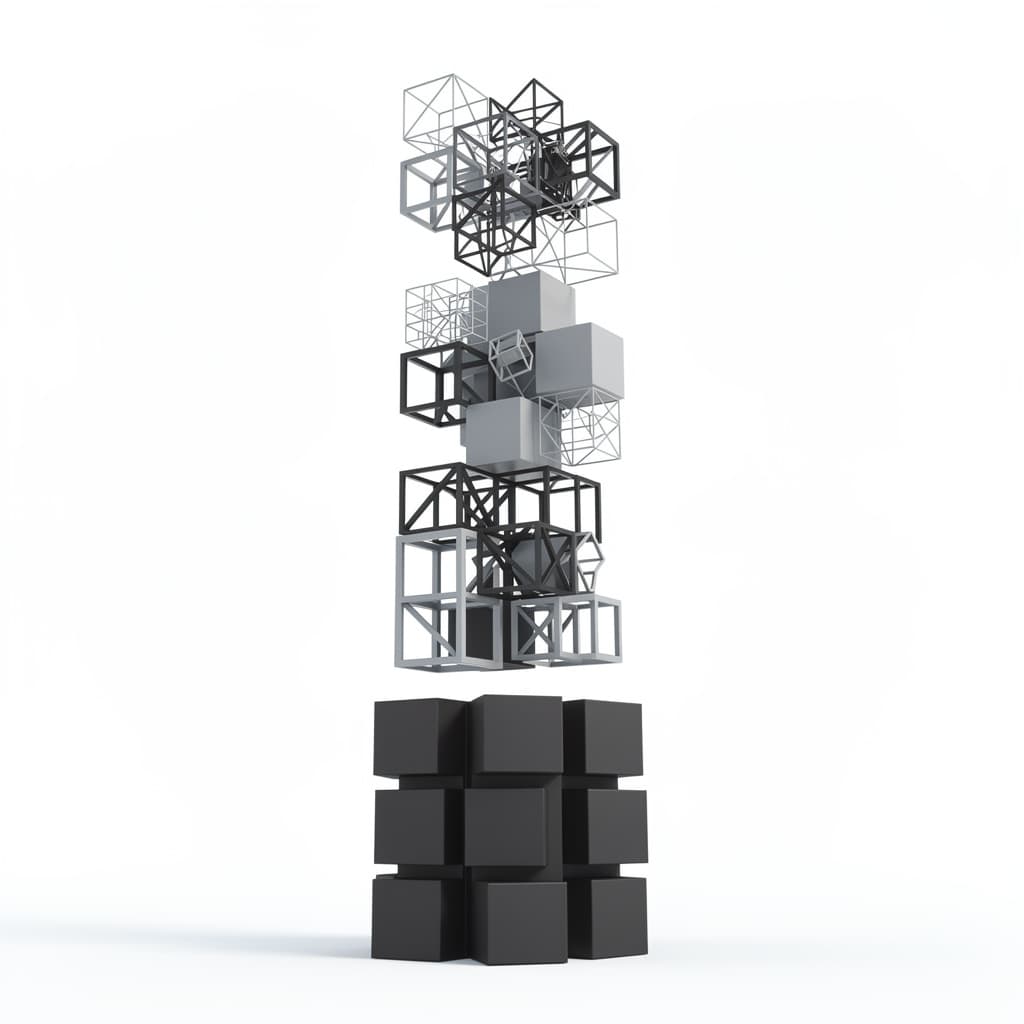
Jean Piaget revolutionized the field of developmental psychology by proposing that children are not merely passive recipients of knowledge or "miniature adults" with less information, but active "scientists" who construct their own understanding of the world. His theory of piaget's stages of cognitive development suggests that human intelligence is a dynamic system that evolves through a series of qualitatively different stages, driven by both biological maturation and environmental interaction. By shifting the focus from what children know to how they think, Piaget provided a framework for understanding the transition from basic sensory reflexes to complex abstract reasoning. This architectural view of cognitive growth emphasizes that mental development is a progressive reorganization of mental processes resulting from biological maturation and environmental experience.
Foundations and Schema Psychology Examples
At the heart of Piaget’s theory is the concept of a schema, which serves as the fundamental building block of intelligent behavior. A schema is a mental framework or "category" that helps an individual organize and interpret information based on previous experiences. For example, a young child may develop a schema for a "dog" that includes characteristics like four legs, fur, and a tail. When the child encounters new information that fits this existing framework, they engage in a process known as assimilation, such as identifying a different breed of dog and successfully labeling it as such. This allows the child to integrate new experiences into their current mental structures without needing to fundamentally alter them.
However, cognitive growth often requires more than just adding new data to old folders; it frequently necessitates the modification of the folders themselves through accommodation. If a child with a "dog" schema encounters a sheep, they might initially call it a dog because it shares four legs and fur, but through feedback, they learn that sheep bleat instead of bark and have different woolly textures. To resolve this discrepancy, the child must accommodate their mental structures by creating a new schema for "sheep" and refining their "dog" schema to be more specific. This constant dance between assimilation and accommodation is what drives the expansion of a child's cognitive map, allowing for increasingly sophisticated interactions with the world.
Piaget proposed that the ultimate goal of these processes is to achieve a state of cognitive equilibrium, a balance where a person’s mental schemas can explain most of what they perceive in their environment. When new information cannot be fitted into existing schemas, the individual experiences disequilibrium, a state of mental discomfort that motivates them to learn and adapt. Consider a student learning physics; they might have an intuitive schema that "heavier objects fall faster." When they observe a vacuum experiment showing a feather and a hammer falling at the same rate, the resulting disequilibrium forces them to accommodate their understanding of gravity. This movement from disequilibrium back to equilibrium is the primary engine of cognitive growth, ensuring that the mind remains an adaptive tool.
The Sensorimotor Stage of Development
The first phase of Piaget's model is the sensorimotor stage, spanning from birth to approximately two years of age. During this period, infants learn about the world primarily through their senses and motor activities, essentially "thinking" through their actions. Piaget divided this stage into six distinct substages, beginning with simple reflexes like sucking and rooting, and progressing to more complex "circular reactions." In these substages, infants move from accidental discoveries, such as finding their thumb and putting it in their mouth, to intentional, goal-directed behaviors like pulling a string to move a toy. This progression marks the earliest transition from biological instinct to cognitive agency.
One of the most significant milestones within this stage is the achievement of object permanence, typically occurring around eight months of age. Object permanence is the understanding that objects continue to exist even when they cannot be seen, heard, or touched. Before this realization, a baby might believe that a toy covered by a blanket has simply vanished from existence, leading to the "out of sight, out of mind" phenomenon. Once object permanence is established, the child will actively search for the hidden toy, indicating that they have formed a mental representation of the object. This is a crucial cognitive leap, as it suggests the beginning of memory and the ability to represent the world internally.
As the sensorimotor stage nears its end, the child moves toward the final substage of mental representation. This is the point where the child begins to use symbols—such as words or mental images—to represent objects and events that are not physically present. A child might now engage in "deferred imitation," such as mimicking a parent's gesture hours after they saw it, or use a block as a pretend telephone. This transition signifies the end of a purely physical relationship with the environment and sets the stage for the symbolic thought that defines early childhood. It represents a fundamental shift from reacting to the world to actively imagining it.
The Preoperational Stage of Symbolic Thought
Spanning from ages two to seven, the preoperational stage is characterized by a dramatic increase in symbolic activity and the rapid acquisition of language. Children in this stage are no longer limited to immediate physical actions; they can use words and play to represent their internal world. However, their logic is "pre-operational," meaning they cannot yet perform mental operations or follow strict logical rules. A hallmark of this period is symbolic play, where a cardboard box becomes a spaceship or a stick becomes a sword. This use of symbolism is not just a form of entertainment but a critical cognitive exercise that allows the child to manipulate concepts in their mind.
Despite these advances, preoperational thought is limited by egocentrism and centration. Egocentrism refers to the child's inability to see a situation from another person’s point of view; Piaget famously demonstrated this with the "Three Mountains Task," where children struggled to describe what a doll would see from a different side of a mountain model. Centration, on the other hand, is the tendency to focus on only one salient aspect of a stimulus while ignoring others. For example, if you show a child two identical rows of coins and then spread one row out, the child will often claim the spread-out row has "more" coins because it looks longer, failing to account for the actual number of items.
These limitations are most clearly seen in the child's struggle with conservation principles. Conservation is the understanding that the quantity, mass, or volume of an object remains the same even if its appearance changes. In a classic experiment, a child is shown two identical glasses of water; when one is poured into a tall, thin beaker, the preoperational child usually insists that the taller glass contains more water. Their thinking is "irreversible," meaning they cannot mentally reverse the action to see that the amount of liquid is unchanged. This stage is a period of transition where the child is gathering the symbolic tools needed for logic but has not yet mastered the rules of consistent reasoning.
The Concrete Operational Stage of Logic
The concrete operational stage, occurring between the ages of seven and eleven, marks a major turning point in cognitive development as thought becomes far more logical, flexible, and organized. Children now master the concept of reversibility, allowing them to understand that physical actions can be undone mentally. This enables them to pass conservation tasks with ease, recognizing that the amount of water in a tall glass is the same as it was in the short glass because it can be poured back. Their reasoning is "concrete" because it is best applied to information that is tangible and physically present, rather than abstract or hypothetical scenarios.
Beyond conservation, children in this stage develop sophisticated skills in taxonomic classification and seriation. Classification allows them to sort objects into hierarchies and sub-categories, such as understanding that a "poodle" is a type of "dog," which is in turn a type of "animal." Seriation is the ability to arrange items along a quantitative dimension, such as length or weight, in a consistent order. This period also sees the emergence of transitive inference, where a child can logically conclude that if Stick A is longer than Stick B, and Stick B is longer than Stick C, then Stick A must be longer than Stick C. These abilities are essential for success in school-based subjects like mathematics and science.
During the concrete operational stage, children primarily utilize inductive reasoning, which involves drawing a general conclusion from specific observations. For example, a child might notice that every time they drop a ball, it falls to the ground, leading them to the general principle that things fall when released. While this is a powerful form of logic, they still struggle with deductive reasoning that starts from an abstract premise. If asked to reason about a hypothetical rule—such as "if you hit a glass with a feather, the glass will break"—the concrete operational child may reject the premise because it contradicts their physical experience. Their logic is grounded in the "here and Now," providing a stable foundation for the eventual leap into abstraction.
The Formal Operational Stage of Abstraction
Starting at approximately age eleven and continuing into adulthood, the formal operational stage represents the pinnacle of Piaget's developmental sequence. At this level, individuals move beyond the need for concrete objects and can manipulate ideas entirely within their minds. The most significant development is hypothetico-deductive reasoning, the ability to develop hypotheses about how the world works and systematically test them. Unlike the younger child who uses trial and error, the formal operational thinker can isolate variables and think through the logical consequences of different possibilities before taking action. This is the foundation of the scientific method and advanced problem-solving.
Abstract thinking also allows for propositional logic, where the individual can evaluate the logic of verbal statements without referring to real-world circumstances. For instance, an adolescent can understand the validity of a syllogism even if the content is fantastical, such as "All Martians have three heads; Bob is a Martian; therefore, Bob has three heads." This stage also brings an increased capacity for metacognition, or "thinking about thinking." Adolescents become more aware of their own cognitive processes, allowing them to monitor their understanding, plan their learning strategies, and reflect on their own beliefs and values. This shift often leads to a new kind of idealism and an interest in social, political, and philosophical issues.
The transition to formal operations is not universal or immediate; it varies significantly based on education and cultural context. Many adults may only use formal operational thought in areas where they have high levels of expertise or interest. However, when fully developed, this stage allows for the consideration of "what might be" rather than just "what is." It enables complex planning, the understanding of metaphors and sarcasm, and the ability to grasp high-level mathematical concepts like calculus. By reaching this stage, the individual has moved from a reflexive infant to a sophisticated thinker capable of navigating the most complex aspects of human civilization.
Practical Lessons from the Operational Stages
Understanding piaget's stages of cognitive development has profound implications for pedagogy and instructional design. For educators working with children in the concrete operational stage, the focus should remain on hands-on, experiential learning. Because these students rely on physical reality to anchor their logic, using manipulatives like counting blocks, maps, and science experiments is far more effective than lecturing on abstract theories. Lessons should emphasize "learning by doing," allowing students to classify, order, and reverse operations physically before they are expected to do so purely symbolically. This approach respects the child's current cognitive architecture and builds the necessary "scaffolding" for future growth.
In contrast, designing for the formal operational stage requires a shift toward inquiry-based learning and the exploration of hypothetical scenarios. High school and college-level instruction should challenge students to engage in debates, analyze literature for hidden themes, and solve multi-variable problems. Educators should encourage students to think about global issues and ethical dilemmas that have no single "correct" answer, as this exercises their capacity for systematic abstraction. By providing a "discovery learning" environment where students are encouraged to ask "why" and "what if," teachers can help bridge the gap between simple factual recall and deep, conceptual understanding.
Regardless of the specific stage, a key takeaway from Piaget's work is the importance of matching the difficulty of the material to the child's developmental level. If a task is too far above a child's current stage, they will likely experience frustration or resort to rote memorization without true understanding. Conversely, if it is too simple, they will not experience the disequilibrium necessary for growth. Effective instruction involves creating "optimal mismatch"—presenting challenges that are just slightly beyond the child's current reach, thereby encouraging them to accommodate their schemas and reach a new level of cognitive equilibrium. This principle of "readiness" remains a cornerstone of modern educational theory.
Critiques of the Early Developmental Stages
While Piaget’s work remains foundational, contemporary developmental psychology has identified several areas where his theories may be incomplete or overly rigid. One major critique involves cultural variations in the timing and sequence of the sensorimotor and preoperational stages. Piaget’s research was largely based on a small sample of Western, middle-class children, leading him to potentially overestimate the universality of his stages. Research in different cultures suggests that while the general sequence may hold, the specific age milestones can vary significantly based on environmental demands and the types of tools or symbols a culture prioritizes.
Another common criticism is the phenomenon of horizontal decalage, which refers to the fact that children often master different types of conservation at different times. For example, a child might understand the conservation of mass but fail to understand the conservation of volume for another two years, even though both require the same "concrete operational" logic. Piaget's stage theory implies a more synchronized "leap" into new levels of thinking than what is often observed in practice. This suggest that cognitive growth might be more domain-specific and gradual rather than a sudden, across-the-board transition into a new stage of logic.
Finally, Neo-Piagetian research has integrated Piaget's insights with modern information-processing theories, suggesting that many of the limitations Piaget observed were actually due to constraints in working memory and processing speed rather than a lack of logical "structures." Modern experiments using simplified tasks have shown that even infants and toddlers possess some degree of object permanence and mathematical intuition much earlier than Piaget predicted. Despite these critiques, Piaget’s enduring legacy is his insistence that children are active participants in their own mental construction. His work continues to serve as the primary lens through which we view the magnificent, structured journey from a baby's first grasp to an adult's deepest thought.
References
- Piaget, J., "The Origins of Intelligence in Children", International Universities Press, 1952.
- Flavell, J. H., "The Developmental Psychology of Jean Piaget", D. Van Nostrand Company, 1963.
- Ginsburg, H. P., & Opper, S., "Piaget's Theory of Intellectual Development", Prentice Hall, 1988.
- Lourenço, O., & Machado, A., "In Defense of Piaget's Theory: A Reply to 10 Common Criticisms", Psychological Review, 1996.
Recommended Readings
- The Psychology of the Child by Jean Piaget and Bärbel Inhelder — A definitive summary of Piaget's life's work written by the author himself, offering a direct look at his core findings.
- The Language and Thought of the Child by Jean Piaget — An essential read for understanding how the development of speech reflects the transition through the preoperational stage.
- Mind in Society by L. S. Vygotsky — While Piaget focused on the individual child as a scientist, this book provides the necessary counter-perspective on how social interaction and culture drive cognitive growth.
- The Scientist in the Crib by Alison Gopnik, Andrew N. Meltzoff, and Patricia K. Kuhl — A modern, highly accessible exploration of how babies think, building on and updating Piaget’s sensorimotor observations.