Ser vs Estar in Spanish: Complete Guide to Rules, Uses, Conjugations, Examples &
What Are Ser and Estar? Definition and Basic Meaning of Ser Ser is one of the two Spanish verbs that translate to the English verb "to be," and it carries the sense of inherent, defining, or...
What Are Ser and Estar?
Definition and Basic Meaning of Ser
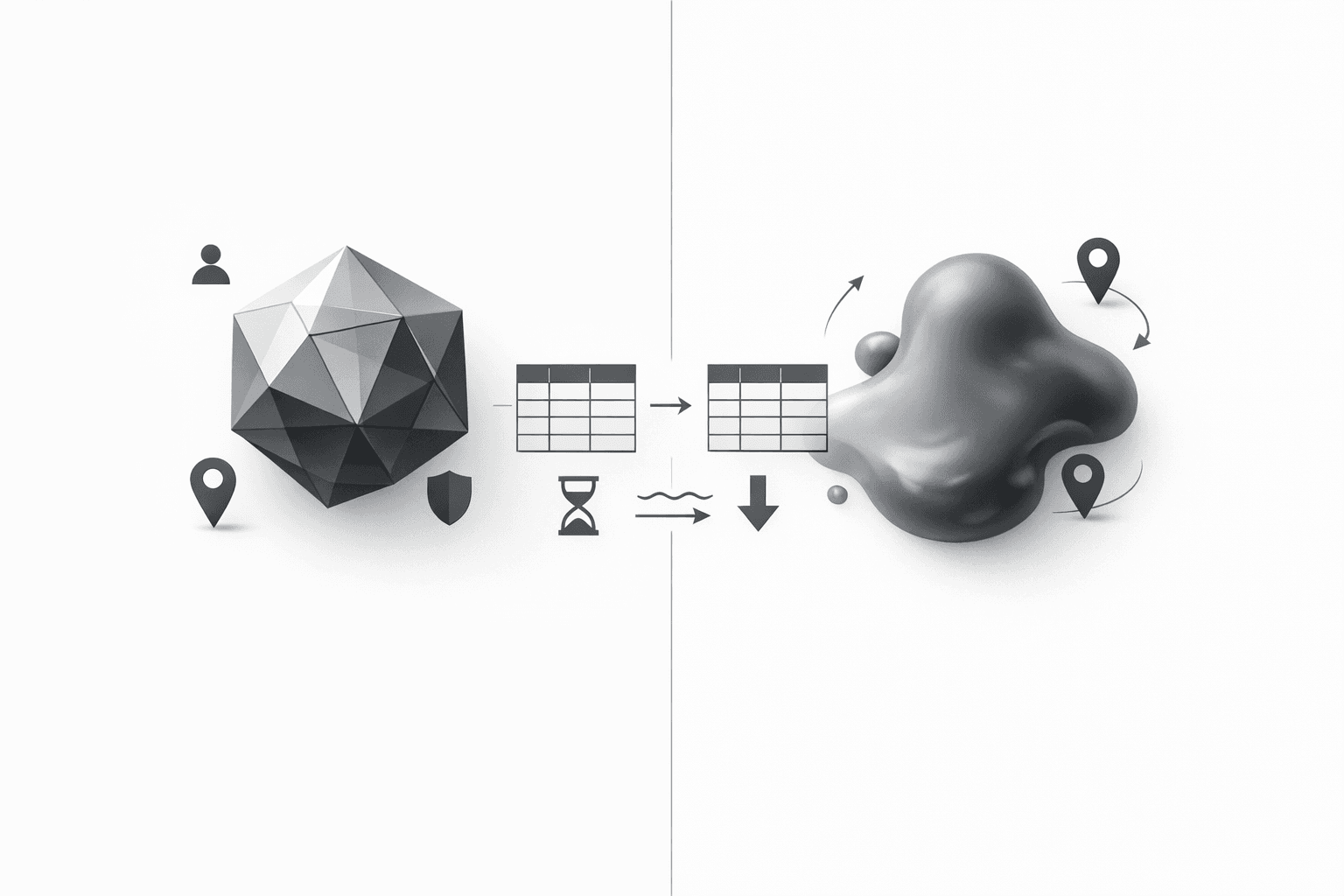
Ser is one of the two Spanish verbs that translate to the English verb "to be," and it carries the sense of inherent, defining, or essential existence. When a Spanish speaker uses ser, they are pointing to something that is fundamentally true about a person, place, or thing — qualities that belong to the very nature of the subject rather than to its current condition. Think of ser as the verb that answers the question "What is this thing, at its core?" A person's nationality, their profession, the material a table is made from, or the time shown on a clock are all expressed with ser because these facts define rather than describe a passing moment. The word itself derives from the Latin esse, the same root that gives English words like "essence" and "essential," and that etymological connection is a useful clue to its meaning.
Understanding ser requires letting go of the English reflex to use a single word for all forms of "to be." In English, you say both "She is a doctor" and "She is tired" with identical grammar, but Spanish treats these as fundamentally different kinds of statements. "She is a doctor" describes an identity — something that categorizes her in the world — while "She is tired" describes a state that will pass by morning. Spanish grammar encodes that philosophical distinction directly into verb choice, and ser is the verb assigned to the former category. Recognizing this early prevents the most common mistakes learners make and builds a more intuitive feel for the language overall.
Definition and Basic Meaning of Estar
Estar is the second Spanish verb meaning "to be," and it conveys the sense of a condition, location, or state that exists at a particular moment rather than as a permanent characteristic. Where ser asks "What is this at its core?", estar asks "How is this right now?" When you say a person is happy, angry, sick, or well-rested, you are describing how they are at this moment — states that are inherently temporary or changeable. Similarly, when you describe where something is physically located, you use estar, because location, even for buildings and mountains, is treated grammatically as a positional state rather than an identity in Spanish. The Latin root of estar is stare, meaning "to stand" or "to be in a position," which reinforces its association with stance, condition, and placement.
Estar is also the verb used to form the Spanish progressive tenses, such as estoy comiendo ("I am eating"), where it combines with a present participle to express ongoing action. This usage underscores its role as the verb of the moment: whatever is happening right now, whatever state currently exists, estar is the appropriate choice. Learning to feel the difference between ser and estar is arguably the single most transformative step in moving from beginner to intermediate Spanish, because it forces learners to think about the nature of existence in a way that English grammar never requires.
Initial Comparison of Ser vs Estar
The most useful initial frame for understanding ser vs estar is the contrast between essence and condition. Ser expresses what something is by nature; estar expresses how something is at a given time. A classic illustration uses the adjective aburrido (bored/boring): La clase es aburrida means "The class is boring" — a statement about the inherent quality of the class — while El estudiante está aburrido means "The student is bored" — a description of how the student feels right now. The adjective is identical, but the verb choice completely changes the meaning. This example alone demonstrates why mastering the difference between ser and estar is not a minor grammatical detail but a core element of communicating meaning accurately in Spanish.
It is worth noting that the boundary between the two verbs is not always as clean as textbook rules suggest. Native speakers sometimes use one where another might be expected, regional variation exists, and certain adjectives shift meaning dramatically depending on which verb accompanies them. A rigorous study of ser vs estar therefore involves not only memorizing rules but also developing a feel for the underlying logic, so that novel or ambiguous cases can be handled with confidence. The sections that follow build that understanding layer by layer, from conjugation tables through rules, examples, and practice exercises.
Ser and Estar Conjugation Chart
Present Tense Conjugations for Ser and Estar
Both ser and estar are highly irregular verbs, which means their conjugations must be memorized rather than derived from standard patterns. The present tense forms are the most frequently used and therefore the most critical to internalize. The table below presents the complete present tense conjugations for both verbs side by side, making it easy to compare their forms across all persons and numbers.
| Pronoun | Ser (to be — essence) | Estar (to be — condition) |
|---|---|---|
| yo | soy | estoy |
| tú | eres | estás |
| él/ella/usted | es | está |
| nosotros/nosotras | somos | estamos |
| vosotros/vosotras | sois | estáis |
| ellos/ellas/ustedes | son | están |
Notice that estar carries written accent marks on most of its forms (estás, está, estáis, están) while ser does not. These accents are not merely ornamental — they indicate stress placement and distinguish forms from other words. The first person singular forms, soy and estoy, are among the most used words in all of Spanish, appearing in introductions (Soy María — "I am María") and everyday expressions of feeling (Estoy bien — "I am fine") dozens of times a day. Beginning learners should prioritize these two forms above all others in the present tense.
Past and Future Tenses Overview
Both verbs conjugate through the full range of Spanish tenses, but their behavior in the past is especially instructive. In the simple past (the preterite), ser and estar share identical forms — fui, fuiste, fue, fuimos, fuisteis, fueron — which belong to both verbs. Context always clarifies which verb is intended: Fui médico means "I was a doctor" (ser, identity), while Fui al hospital means "I went to the hospital" (ir, not ser/estar, but demonstrating that fui serves multiple verbs). For estar in the preterite, the forms are estuve, estuviste, estuvo, estuvimos, estuvisteis, estuvieron. In the imperfect tense, which describes ongoing or habitual past states, ser becomes era, eras, era, éramos, erais, eran, and estar becomes estaba, estabas, estaba, estábamos, estabais, estaban. The choice between preterite and imperfect for both verbs follows the general rule: preterite for completed past events, imperfect for background conditions or habitual states.
In the future tense, both verbs follow the regular pattern applied to their infinitive forms: ser produces seré, serás, será, seremos, seréis, serán, and estar produces estaré, estarás, estará, estaremos, estaréis, estarán. The subjunctive mood, which is heavily used in Spanish for doubt, emotion, and hypotheticals, also has forms for both: present subjunctive of ser is sea, seas, sea, seamos, seáis, sean, while estar gives esté, estés, esté, estemos, estéis, estén. Mastery of these forms across tenses is a long-term project, but the present tense chart above provides the most immediate return on study time for learners at any level.
Key Irregularities in Ser and Estar
Ser is one of the most irregular verbs in the Spanish language, and its irregularity extends across multiple tenses. The present tense forms — soy, eres, es, somos, sois, son — bear almost no phonetic resemblance to the infinitive ser, a trait it shares with highly irregular English verbs like "to be" (am, is, are, was, were). The preterite forms of ser and ir (to go) are completely identical, which initially surprises learners but is explained historically: both verbs converged from different Latin roots, and context disambiguates them. The imperfect of ser, era, is a notable exception because the imperfect tense is otherwise almost entirely regular in Spanish, and ser is one of only three verbs (along with ir and ver) that deviate from the standard imperfect pattern.
Estar's irregularities are more predictable once the pattern is recognized. In the present tense, all forms except the first and second person plural carry stress on the final syllable, marked by accent marks. In the preterite, estar follows what grammarians call the "u-stem" pattern (estuve), which it shares with verbs like tener (tuve) and poder (pude). This grouping allows learners to transfer knowledge from one verb to another rather than memorizing each in isolation. The present participle of both verbs — siendo for ser and estando for estar — are formed regularly and appear in compound constructions and participial phrases, though less frequently than their finite forms.
Core Differences Between Ser and Estar
Permanent Characteristics vs Temporary States
The most widely taught rule distinguishing ser from estar is the permanent-versus-temporary contrast: use ser for permanent characteristics and estar for temporary states. While this rule captures the right intuition and is a good starting point, it requires refinement because "permanent" and "temporary" are relative and sometimes misleading categories. For example, death is permanent, yet Spanish uses estar muerto ("to be dead") rather than ser muerto, because death is treated as a resulting state — a condition that the body has entered — rather than an intrinsic defining property. This edge case reveals that the deeper distinction is not purely about duration but about whether the predicate describes the subject's nature or its condition at a point in time.
A more precise reformulation is to ask whether the predicate is characterizing or situational. Characterizing predicates — nationality, material composition, religious identity, mathematical truths — belong with ser regardless of their permanence. Situational predicates — emotional states, physical conditions, locations, results of actions — belong with estar. This framing handles the tricky cases more reliably: El café es caliente would describe a type of coffee that is inherently served hot (a characterizing statement about the category), while El café está caliente describes this particular cup as hot right now (a situational observation). Both sentences are grammatically valid; only the communicative intent differs, and Spanish grammar gives speakers a precise tool for expressing that difference.
Identity and Origin vs Location and Position
Identity statements — sentences that classify or categorize the subject — always require ser. This includes professions (Es ingeniera — "She is an engineer"), nationalities (Somos mexicanos — "We are Mexican"), religious affiliation (Es budista — "He is Buddhist"), and relationships (Son hermanos — "They are siblings"). These sentences answer the question "What is this person or thing categorized as?" and that categorization function belongs exclusively to ser. Origin, meaning where something or someone comes from, also uses ser: El vino es de Rioja ("The wine is from Rioja") and Ella es de Colombia ("She is from Colombia") both describe origin rather than current position, even though English might confuse them with location statements.
Location, by contrast, is a domain of estar — with one major and much-discussed exception. The location of people, animals, and objects uses estar: El libro está en la mesa ("The book is on the table"), Estamos en Madrid ("We are in Madrid"). However, the location of events uses ser: La fiesta es en mi casa ("The party is at my house"). This asymmetry surprises learners, but it follows logically from ser's role in describing scheduled, defined occurrences. An event's venue is part of its definition — where the concert is constitutes what the concert is — while the location of a person or object is situational, since they can move. Spanish grammar thus encodes a subtle but real distinction between "where this event takes place" (defining) and "where this thing currently is" (situational).
Time, Dates, and Professions
Telling time and stating dates in Spanish always use ser, which surprises English speakers who might expect the more "situational" estar since time is always changing. The logic is that clock time and calendar dates are definitional facts rather than descriptions of a condition: Son las tres de la tarde ("It is three in the afternoon") and Hoy es lunes ("Today is Monday") describe what the moment is, not how it is. The number on the clock defines the moment in the same way that a label defines a category. The formula for telling time is Es la una for one o'clock (singular) and Son las + number for all other hours (plural, because you are referring to a plural number of hours).
Professions and occupations use ser in most contexts because they classify the person: Mi padre es abogado ("My father is a lawyer") tells you what category your father belongs to professionally. However, when a profession is described as a temporary role or a job being performed in the moment rather than as a career identity, estar can sometimes appear in informal speech. More commonly, temporary work status uses constructions like estar trabajando de ("to be working as"). The important takeaway is that the default for professions is firmly ser, and learners should not second-guess that rule until they have a solid foundation and have encountered the rare exceptions in authentic Spanish context.
Ser vs Estar Rules Explained
Essential Rules for Using Ser
The core rules for ser can be organized around the acronym DOCTOR, a mnemonic widely used in Spanish pedagogy: Description (inherent qualities), Occupation, Characteristics (personality, physical traits), Time and dates, Origin, Relationships. Each category represents a semantic domain where ser is the correct choice. Inherent physical descriptions use ser: Es alto y delgado ("He is tall and thin") describes the person's characteristic physique. Personality traits also use ser: Es muy inteligente ("She is very intelligent"). Material composition follows the same logic: La mesa es de madera ("The table is made of wood"). These are all defining statements that go to the essence of what the subject is.
An important extension of the ser rules involves passive constructions. The passive voice in Spanish is formed with ser plus a past participle: El libro fue escrito por Cervantes ("The book was written by Cervantes"). This construction describes a completed action that defines the subject's history, using ser as the auxiliary. By contrast, a resultant state uses estar plus a past participle: La puerta está cerrada ("The door is closed") describes the current condition of the door — it has been closed and remains so. The distinction between passive action (ser + past participle) and resultant state (estar + past participle) is one of the finer points of Spanish grammar, but it follows naturally from the fundamental logic of each verb.
Essential Rules for Using Estar
The rules for estar can be organized around the acronym PLACE: Position (physical location), Location (where someone or something is), Action (progressive tenses), Condition (temporary states), Emotion (feelings at a given moment). Position and location together cover all uses of estar for physical placement: Estoy sentado ("I am seated"), El hospital está en el centro ("The hospital is in the center"). Action encompasses the entire progressive paradigm: Están comiendo ("They are eating"), Estaba lloviendo ("It was raining"). Every progressive construction in Spanish requires estar as the auxiliary verb, making it one of the highest-frequency uses of the verb.
Conditions and emotions are the domains where learners most often need to pause and think. Conditions include physical states like being sick, tired, awake, or dead: Estoy enfermo ("I am sick"), Estás cansado ("You are tired"). Emotions — even those that might feel permanent to the person experiencing them — use estar in Spanish because they are treated as states the person is currently in: Están contentos ("They are happy"), Estoy triste ("I am sad"). This does not mean emotions are trivial; it means that Spanish grammar categorizes emotional states the same way it categorizes physical conditions — as something you are experiencing rather than something you inherently are.
Tricks and Mnemonics for Ser vs Estar Rules
Beyond the DOCTOR and PLACE acronyms, experienced Spanish teachers offer several conceptual tricks for difficult cases. One highly reliable test is to ask whether the predicate could logically answer "What is this?" (use ser) or "How is this right now?" (use estar). Another trick applies specifically to adjectives: if the adjective describes something that would remain true regardless of circumstances or time, ser is likely correct; if the adjective describes something that could plausibly change — or that results from an event — estar is likely correct. The classic pair ser aburrido (to be a boring person, by nature) versus estar aburrido (to be bored, at the moment) illustrates this perfectly.
A narrative mnemonic that many learners find memorable is to think of ser as a birth certificate and estar as a doctor's report. A birth certificate records your name, date of birth, nationality, and parentage — fixed, defining facts that use ser. A doctor's report describes your current health, location, and condition — temporary, assessable states that use estar. When in doubt about which verb to use, imagining whether the information would appear on a birth certificate or a medical report often yields the correct answer. This heuristic is not foolproof — nothing in language ever is — but it resolves the majority of ambiguous cases and gives learners a concrete mental image to anchor the abstract grammatical rule.
When to Use Ser vs Estar
Using Ser for Descriptions and Identities
Whenever the goal is to categorize, classify, or assign an inherent characteristic to a subject, ser is the correct verb. This principle applies to all descriptive adjectives that point to baseline, defining qualities: Es inteligente (intelligent by nature), Es generosa (generous by character), Es rojo (it is red — the color of the object, not a temporary tint). It also applies to noun predicates that name a category: Es un estudiante brillante ("He is a brilliant student") classifies the person. Ownership and possession, while sometimes expressed differently, also relate to identity through ser de: Este coche es de mi hermana ("This car is my sister's") identifies the car as belonging to her.
Mathematical and definitional truths, which are perhaps the most permanent statements possible, use ser: Dos más dos son cuatro ("Two plus two is four"), El triángulo es una figura geométrica ("A triangle is a geometric figure"). Religious, political, and ideological identities use ser because they categorize the person's membership in a group: Es católica ("She is Catholic"), Son conservadores ("They are conservatives"). These usages reinforce the principle that ser is the verb of classification, definition, and essence across all domains of meaning.
Using Estar for Conditions and Locations
Estar governs any predicate that describes how a subject is at a specific moment — its physical condition, emotional state, or positional location. The range of adjectives that naturally pair with estar includes: cansado (tired), enfermo (sick), contento (content), nervioso (nervous), ocupado (busy), listo (ready), limpio (clean), sucio (dirty), abierto (open), cerrado (closed). These are all conditions that imply a state someone or something has entered, often as a result of a process or circumstance. Estar listo means "to be ready" (a current state), while ser listo means "to be clever" (an inherent trait) — another pair that shows how verb choice determines meaning.
For geographic and physical location, estar is used almost universally for people, animals, and objects, as discussed earlier. The verb also appears in expressions of availability and engagement: El médico no está ("The doctor is not in/available"), Estoy en una reunión ("I am in a meeting"). These expressions treat a person's availability or engagement as a situational state. Additionally, estar is used with past participles to describe the result of a completed action: La ventana está rota ("The window is broken") — the window has been broken and remains in that state — contrasting with La ventana fue rota, which would describe the act of breaking in the passive voice.
Choosing Ser or Estar in Complex Sentences
In longer, more complex sentences, the choice between ser and estar can involve multiple predicates that require different verbs, or relative clauses that shift the frame of reference. Consider: Mi abuela, que es muy activa, siempre está cansada después del yoga ("My grandmother, who is very active, is always tired after yoga"). Here, es muy activa describes her inherent personality and lifestyle (ser), while está cansada describes how she feels after a specific activity (estar). Keeping both verbs straight in a single sentence requires a clear mental separation between what is being defined and what is being observed. The more Spanish a learner reads and hears, the more this separation becomes automatic.
Subordinate clauses with the subjunctive mood add another layer: Espero que estés bien ("I hope you are well") uses estar in the subjunctive because well-being is a condition, while Es importante que seas honesto ("It is important that you be honest") uses ser because honesty is being invoked as a character trait. The subjunctive forms of both verbs must therefore be mastered alongside their indicative equivalents, and the same ser/estar distinction applies in subordinate clauses as in main clauses. There are no shortcuts in the subjunctive; the same underlying logic simply appears in a new grammatical context.
Ser vs Estar Examples in Context
Real-Life Sentence Examples with Ser
Authentic, real-world sentences ground the rules in actual language use. Here are representative examples of ser used correctly in everyday Spanish contexts:
- Soy de Argentina pero vivo en España. — "I am from Argentina but I live in Spain." (origin)
- Mi profesora es muy estricta pero justa. — "My teacher is very strict but fair." (personality trait)
- La ceremonia es a las seis de la tarde. — "The ceremony is at six in the evening." (event time)
- Este bolso es de cuero genuino. — "This bag is made of genuine leather." (material)
- Son las dos y media de la mañana. — "It is two thirty in the morning." (time)
- El examen fue diseñado por la universidad. — "The exam was designed by the university." (passive voice)
Each of these sentences uses ser to anchor a defining fact about the subject — whether that fact is origin, material, time, or authorship. The diversity of contexts illustrates why ser appears so frequently: it is the default tool for any statement that classifies, identifies, or defines. Learners will encounter all of these patterns within the first weeks of intermediate-level Spanish study, and recognizing the underlying logic behind each use prevents the need to memorize them as isolated exceptions.
Real-Life Sentence Examples with Estar
The following sentences demonstrate estar in natural, contextually realistic usage:
- Estoy muy emocionado por el viaje. — "I am very excited about the trip." (emotional state)
- El restaurante está cerrado los lunes. — "The restaurant is closed on Mondays." (condition/result of a policy)
- ¿Dónde está la farmacia más cercana? — "Where is the nearest pharmacy?" (location)
- Mis padres están hablando por teléfono. — "My parents are talking on the phone." (progressive action)
- La sopa está demasiado caliente para comer. — "The soup is too hot to eat." (current temperature)
- Estás muy guapa hoy. — "You look very beautiful today." (current appearance)
The final example, Estás muy guapa hoy, is particularly instructive: the word hoy ("today") signals that the observation applies to the present moment rather than to the person's general appearance. If the speaker intended to describe someone as inherently beautiful as a defining trait, eres muy guapa (with ser) would be the appropriate choice. The presence or absence of a time-anchoring word like hoy, ahora, or esta semana often signals which verb is appropriate, though context alone is sometimes sufficient.
Side-by-Side Ser vs Estar Examples
Some of the most powerful illustrations of the ser vs estar distinction come from minimal pairs — sentences that are identical except for the verb — where the meaning changes dramatically. The table below presents several such pairs to crystallize the contrast.
| With Ser | Meaning | With Estar | Meaning |
|---|---|---|---|
| Es malo. | He is a bad person. | Está malo. | He is sick / He doesn't taste good. |
| Es listo. | He is clever. | Está listo. | He is ready. |
| Es rico. | He is wealthy (by nature/status). | Está rico. | It tastes delicious. |
| Es seguro. | It is safe (inherently). | Está seguro. | He is sure/certain (about something). |
| Es aburrida. | She is boring (personality). | Está aburrida. | She is bored (right now). |
| Son vivos. | They are sharp/clever. | Están vivos. | They are alive. |
These minimal pairs demonstrate that the choice of verb is not merely a grammatical formality but a meaningful communicative decision. Saying es malo about a person makes a moral judgment about their character; saying está malo expresses concern about their health or an opinion about food. Using the wrong verb in these cases does not produce a grammatical error that a Spanish speaker would struggle to understand — they will understand — but it produces a different meaning from what was intended, sometimes with significant consequences for the conversation. This is why native-level fluency demands not just knowing the rules but having internalized them to the point of automatic, intuitive application.
Practice Exercises for Ser vs Estar
Fill-in-the-Blank Exercises
The following sentences require selecting the correct form of either ser or estar. In each case, think through the underlying semantic question — is this a defining characteristic or a current condition? — before selecting your answer. The answers appear in parentheses after each sentence.
- La reunión _______ a las diez de la mañana. (es — time of an event)
- Mi hermano _______ muy cansado después del partido. (está — temporary physical condition)
- ¿De dónde _______ tus padres? (son — origin)
- El agua _______ fría hoy. (está — current temperature)
- Ella _______ profesora de historia. (es — profession)
- Los niños _______ jugando en el parque. (están — progressive action)
- Este edificio _______ construido en 1890. (fue — passive voice with ser)
- La puerta _______ abierta. (está — resultant state)
- Nosotros _______ muy contentos con los resultados. (estamos — emotional state)
- La Tierra _______ el tercer planeta del sistema solar. (es — defining fact)
When reviewing these answers, pay particular attention to items 7 and 8, which illustrate the passive versus resultant-state distinction. Item 7 describes the act of construction (passive, ser), while item 8 describes the door's current condition as a result of being opened (estar). Confusion between these two patterns is common even among intermediate learners, and repeated exposure to both constructions in context is the most reliable way to internalize the difference. Working through fill-in-the-blank exercises daily with immediate feedback builds pattern recognition more efficiently than reading about the rules alone.
Translation Practice from English to Spanish
Translation exercises sharpen the ability to identify which type of "to be" is needed before reaching for a Spanish form. Try translating the following sentences before reading the suggested Spanish equivalents provided below each one. Focus not on literal word-for-word translation but on capturing the precise meaning with the correct verb choice.
- "The conference is in Paris next month." → La conferencia es en París el mes que viene. (event location: ser)
- "I am really nervous about the interview." → Estoy muy nervioso/a por la entrevista. (emotional state: estar)
- "They are Colombian but they live in Germany." → Son colombianos pero viven en Alemania. (nationality: ser)
- "The coffee is already cold." → El café ya está frío. (current condition: estar)
- "What time is it? It is quarter past nine." → ¿Qué hora es? Son las nueve y cuarto. (time: ser)
- "She was working late last night." → Ella estaba trabajando hasta tarde anoche. (progressive past: estar)
Notice that sentence 1, involving the location of a conference, uses ser rather than estar, which often surprises English speakers who associate all location statements with estar. Revisiting the principle that events use ser for location — because the venue is part of the event's definition — helps cement this exception. Translation practice also builds sensitivity to English phrasings that map onto different Spanish structures; for instance, "She was working" maps onto the imperfect progressive (estaba trabajando) rather than a simple past, because it describes an ongoing action at a past point in time rather than a completed event.
Sentence Correction Challenges
The following sentences each contain an incorrect use of ser or estar. Identify the error, explain why it is wrong using the rules covered in this guide, and write the corrected sentence. This exercise develops the critical editing eye that distinguishes intermediate from advanced Spanish learners.
- El concierto está en el teatro central mañana. — Error: events use ser for location. Correction: El concierto es en el teatro central mañana.
- Soy muy cansado después de trabajar todo el día. — Error: tiredness is a temporary physical state, requiring estar. Correction: Estoy muy cansado después de trabajar todo el día.
- ¿Dónde está la fiesta de cumpleaños? — Error: the location of an event uses ser. Correction: ¿Dónde es la fiesta de cumpleaños?
- Mi abuela es enferma desde la semana pasada. — Error: illness is a condition, not a defining characteristic. Correction: Mi abuela está enferma desde la semana pasada.
- Está muy tarde para llamar. — Error: time is expressed with ser. Correction: Es muy tarde para llamar.
Sentence correction exercises are particularly effective because they require learners to articulate the reasoning behind the rule, not merely apply it passively. When a learner can explain why soy cansado is wrong — not just that it feels wrong, but that tiredness is a temporary physical condition belonging to the estar domain — they have moved from rote knowledge to genuine grammatical competence. At that point, novel sentences and unusual constructions no longer require consulting a rule list; the underlying logic of ser vs estar has become a productive cognitive tool that generates correct answers independently. That level of internalization is the goal of all the practice in this guide, and reaching it is a genuine landmark in Spanish language acquisition.