history11 min read
Power and Ideology in the Early Cold War
The transition from the absolute carnage of the Second World War to the icy standoff of the Cold War represents one of the most complex shifts in global history. This period was not merely a dispute...
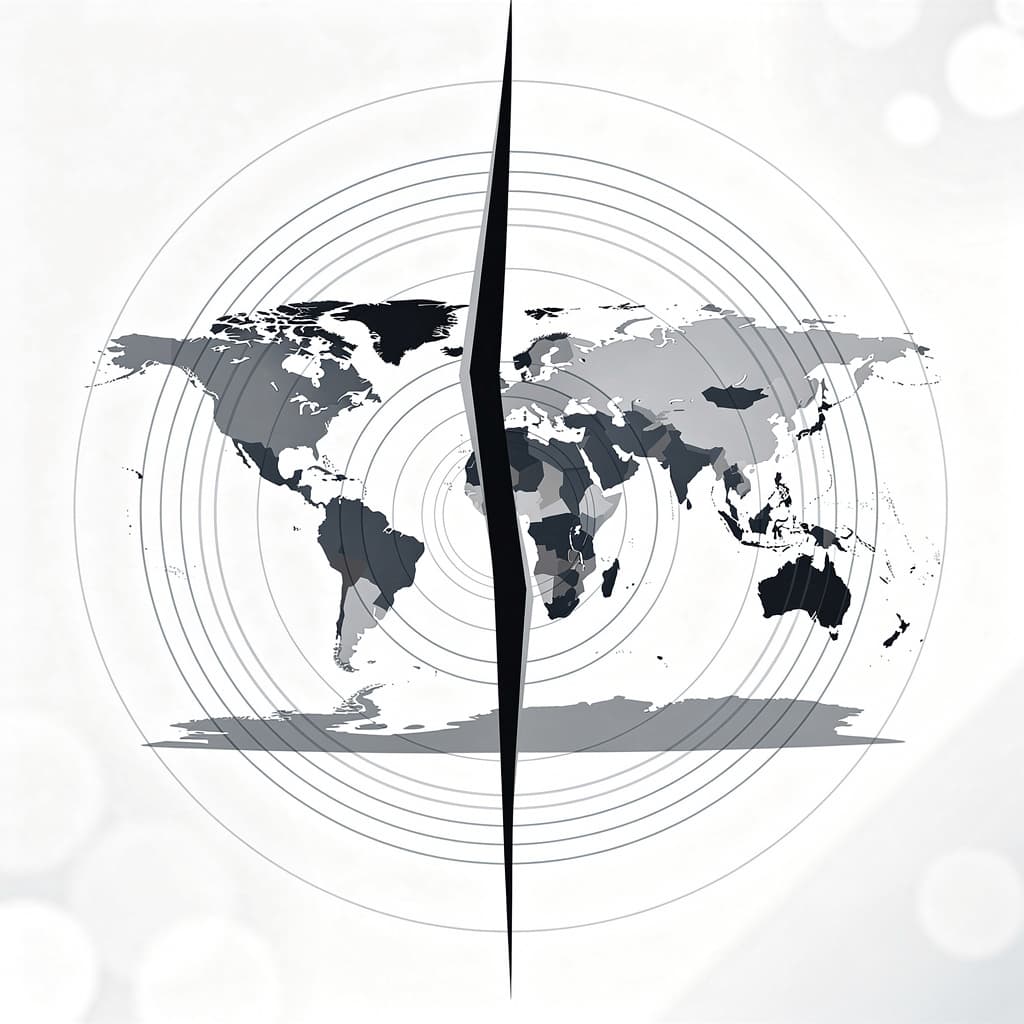
The transition from the absolute carnage of the Second World War to the icy standoff of the Cold War represents one of the most complex shifts in global history. This period was not merely a dispute over borders or resources, but a fundamental clash between two incompatible visions for the future of humanity. As the smoke cleared over a devastated Europe in 1945, the traditional centers of power—London, Paris, Berlin, and Tokyo—lay in ruins, leaving a vacuum that could only be filled by the world’s two remaining "superpowers." The primary causes of the Cold War emerged from a volatile cocktail of mutual suspicion, conflicting economic systems, and the relentless logic of geopolitical security. By examining the structural shifts in power and the rigid ideological frameworks of the era, we can understand how a wartime alliance of convenience transformed into a decades-long struggle for global hegemony.
The Vacuum of Post-War Power
Collapse of the European Center
The geopolitical landscape of 1945 was defined by the total exhaustion of the European continent. For centuries, the global order had been dictated by a multipolar balance of power maintained by European empires, but the Second World War effectively ended this era. France had been occupied and humiliated, while Great Britain, though victorious, was financially bankrupt and physically depleted, unable to maintain its vast colonial possessions. Germany, the former industrial and military powerhouse of Central Europe, was reduced to rubble and partitioned into zones of occupation. This collapse created a power vacuum in the heart of the continent, leaving a massive space where Western democratic traditions and Eastern revolutionary fervor would inevitably collide.Emergence of the Two Superpowers
With the traditional powers sidelined, the United States and the Soviet Union emerged as the only nations capable of exerting global influence. The United States possessed an intact industrial base, a massive navy, and the world’s only atomic weapons, granting it unprecedented economic and military leverage. Conversely, the Soviet Union, despite suffering staggering losses of over 25 million citizens, emerged with the largest land army in history and a deep-seated desire to ensure such an invasion could never happen again. This shift from a multipolar world to a bipolar world fundamentally altered the nature of international relations. Every local conflict now had the potential to become a proxy battle in the broader struggle between these two behemoths, as they sought to secure their respective spheres of influence across the globe.The Logic of Soviet Expansionism
Origins of the Cold War in Poland
If there was a single geographic point where the Cold War began, it was Poland. During the Yalta and Potsdam conferences, the status of Poland became the primary source of friction between the "Big Three" leaders: Roosevelt (later Truman), Churchill, and Stalin. For the Western Allies, Poland was the nation for which the war had originally been declared, and its independence was a matter of moral and political credibility. For Joseph Stalin, however, Poland was the "gateway" through which invaders had historically entered Russia, including the armies of Napoleon and Hitler. Stalin’s refusal to allow free and fair elections in Poland, opting instead to install a pro-Soviet puppet government, signaled to the West that the Soviet Union intended to dominate Eastern Europe through force and subversion rather than democratic consensus.The Search for Geographic Security
Soviet expansionism was driven as much by historical trauma as it was by communist ideology. The USSR had been invaded twice in thirty years through the flat plains of Eastern Europe, leading the Kremlin to prioritize the creation of a "buffer zone" of satellite states. This logic of geographic security demanded that nations like Romania, Bulgaria, Hungary, and Czechoslovakia be brought under Moscow's firm control to act as a shield against potential Western aggression. While the Soviet leadership viewed this as a defensive necessity, the United States and its allies interpreted these actions as the first steps of a global communist crusade. This fundamental "security dilemma"—where one side’s defensive measures are perceived as offensive threats by the other—is often cited by historians as one of the central causes of the Cold War.Ideological Realities of US-Soviet Relations
Capitalism versus Command Economies
At its core, the Cold War was an existential conflict between two diametrically opposed economic philosophies. The United States championed a system of liberal capitalism, emphasizing private property, free markets, and the integration of global trade as the best path toward prosperity and peace. American policymakers believed that economic instability was the breeding ground for totalitarianism, and thus sought to rebuild the world through the lens of democratic capitalism. In stark contrast, the Soviet Union adhered to a command economy model, where the state controlled all means of production and distribution. Stalinist ideology held that capitalism was inherently exploitative and destined to collapse through internal contradictions, making the eventual triumph of socialism an historical inevitability that the USSR was duty-bound to accelerate.Universalism and the Soviet Threat
Beyond economics, the two superpowers held conflicting "universalist" missions, believing that their specific way of life was the ideal model for all nations. The United States promoted the "American Dream" and the concepts of individual liberty and constitutional government as universal rights. Meanwhile, the Soviet Union promoted the "international proletarian revolution," positioning itself as the vanguard of the working class against imperialist oppression. This ideological rigidity made compromise nearly impossible, as each side viewed the other’s very existence as a threat to its core values. Consequently, US-Soviet relations were characterized by a "zero-sum" mentality, where any gain for one side was automatically viewed as a catastrophic loss for the other, fueling a cycle of escalation that defined the late 1940s.The Truman Doctrine and Global Influence
Stabilizing Greece and Turkey
The specific policy shift that formalized the American commitment to opposing Soviet influence occurred in 1947, triggered by crises in the Mediterranean. Great Britain, no longer able to afford the costs of supporting the Greek monarchy against a communist insurgency, informed the United States that it would be withdrawing its support. Simultaneously, the Soviet Union was pressuring Turkey for access to the Dardanelles straits, which would have given the Red Navy a strategic gateway to the Mediterranean. President Harry S. Truman recognized that if Greece and Turkey fell into the Soviet sphere, the entire Middle East and Southern Europe would be vulnerable to communist infiltration. In a historic speech to Congress, he requested 400 million dollars in aid, articulating a new vision of American responsibility that would come to be known as the Truman Doctrine.Formalizing the Containment Policy
The Truman Doctrine established the foundational principle of containment, a strategy designed to prevent the further spread of communism without necessarily engaging in a direct war with the Soviet Union. This policy was heavily influenced by George Kennan, a US diplomat whose "Long Telegram" argued that the Soviet leadership was inherently expansionist but also sensitive to the logic of force. By providing economic and military aid to nations threatened by communist subversion, the United States aimed to "contain" the Soviet virus within its existing borders. This marked the end of American isolationism and the beginning of a permanent global engagement. The Truman Doctrine effectively drew a line in the sand, signaling that the United States would use its vast resources to support "free peoples" resisting attempted subjugation by armed minorities or outside pressures.Dividing the World with the Iron Curtain
Churchill’s Fulton Speech Analysis
In March 1946, Winston Churchill delivered a speech in Fulton, Missouri, that provided the most enduring metaphor for the burgeoning conflict. He famously declared that "from Stettin in the Baltic to Trieste in the Adriatic, an Iron Curtain has descended across the Continent." This speech was a wake-up call to the Western public, who had largely viewed the Soviet Union as a heroic ally during the war against Hitler. Churchill argued that the Soviets did not desire war, but rather "the fruits of war and the indefinite expansion of their power and doctrines." By using the term "Iron Curtain," he vividly illustrated the physical and ideological barrier that was cutting off Eastern Europe from the rest of the civilized world, demanding a "fraternal association of the English-speaking peoples" to meet the challenge.The Consolidation of Satellite States
Following Churchill's warning, the Soviet Union moved rapidly to consolidate its grip on the nations behind the curtain. Through a process of "Salami Slicing" tactics, Stalinist agents systematically eliminated political opposition in countries like Hungary and Romania, replacing coalition governments with hardline communist regimes. The most dramatic example of this consolidation was the 1948 communist coup in Czechoslovakia, a nation with a strong democratic tradition. The sudden death of the popular foreign minister Jan Masaryk and the forced resignation of President Edvard Beneš shocked Western observers and solidified the perception of the USSR as a predatory state. This transformation of sovereign nations into satellite states meant that Eastern Europe was no longer a collection of independent actors, but a unified bloc serving the strategic interests of Moscow.Economic Architecture of the Cold War Summary
The Strategic Impact of the Marshall Plan
While the Truman Doctrine provided the military and political framework for containment, the Marshall Plan served as its economic engine. Formally known as the European Recovery Program, it funneled over 13 billion dollars (equivalent to over 150 billion in modern currency) into the rebuilding of Western Europe between 1948 and 1951. Secretary of State George Marshall understood that hungry and desperate populations were prone to the appeal of communist rhetoric, so the plan aimed to restore industrial production and financial stability. By tying the recovery of Europe to American trade and capital, the Marshall Plan not only thwarted communist parties in France and Italy but also integrated Western Europe into a cohesive economic unit. This "economic miracle" created a prosperous, stable West that served as a powerful counter-attraction to the drab austerity of the Eastern Bloc.COMECON and the Soviet Response
The Soviet Union viewed the Marshall Plan as a form of "dollar imperialism," designed to lure Eastern European nations into the American orbit through financial bribery. In response, Moscow forbade its satellite states from accepting Marshall Plan aid and established its own economic organization in 1949: the Council for Mutual Economic Assistance, or COMECON. Unlike the Marshall Plan, which focused on rebuilding diverse industrial sectors and fostering trade, COMECON was designed to facilitate the extraction of resources from Eastern Europe to rebuild the Soviet heartland. It forced satellite economies to specialize in specific industries that benefited the USSR, creating a system of economic dependency rather than mutual growth. This divergence in economic architecture ensured that Europe was not only politically divided but also economically bifurchanted for the next forty years.| Feature | Marshall Plan (Western Bloc) | COMECON (Eastern Bloc) |
|---|---|---|
| Primary Goal | Economic recovery and containment of communism | Economic integration and Soviet resource security |
| Funding Source | United States (Direct grants and loans) | Soviet Union (Internal trade agreements) |
| Economic Model | Regulated capitalism and free trade | Centralized planning and command economy |
| Outcome | Rapid growth and democratic stability | Stagnation and dependency on Moscow |
Militarization of the European Frontier
The Berlin Blockade and Airlift
The first major military confrontation of the Cold War occurred in 1948 over the status of Berlin. Although the city was located deep within the Soviet occupation zone of Germany, it was divided into four sectors, with the Western Allies controlling the western half. When the US, UK, and France introduced a new currency (the Deutsche Mark) to stabilize the German economy, Stalin responded by cutting off all land and water access to West Berlin. He hoped to starve the city into submission and force the Allies to abandon their foothold in the East. Instead, the Western powers launched the Berlin Airlift, a massive logistical operation that flew food, fuel, and supplies into the city for nearly a year. The failure of the blockade was a significant psychological victory for the West and demonstrated that the United States was willing to go to the brink of war to defend its commitments.Establishing NATO and the Warsaw Pact
The tension of the Berlin crisis accelerated the formal militarization of the Cold War. In 1949, the United States joined with Canada and ten Western European nations to form the North Atlantic Treaty Organization (NATO). This was a collective defense treaty, where an attack on one member was considered an attack on all—a direct departure from the US tradition of avoiding "entangling alliances." The Soviet Union eventually responded in 1955 by forming the Warsaw Pact, a military alliance of Eastern European communist states. The creation of these two opposing military blocs solidified the division of Europe into two armed camps, separated by a militarized border. This structural reality meant that any local spark in Europe could theoretically ignite a global thermonuclear war, ensuring that the "Cold" War remained cold through the mechanism of mutual deterrence. The origins of the Cold War can be traced to this convergence of geopolitical necessity and ideological fervor. What began as a dispute over the fate of Poland and the reconstruction of Germany evolved into a global competition that touched every aspect of human life, from science and technology to sports and the arts. The logic of power demanded that each superpower secure its borders, while the logic of ideology demanded that each expand its influence. By 1950, the lines were drawn, the institutions were built, and the world had settled into a precarious balance of terror that would last until the fall of the Berlin Wall. Understanding this era requires recognizing that both sides believed they were acting defensively to preserve their way of life against an existential threat, a dynamic that remains a cautionary tale for modern international relations.References
- Gaddis, J. L., "The Cold War: A New History", Penguin Books, 2005.
- Kennan, G. F., "The Sources of Soviet Conduct", Foreign Affairs, 1947.
- Zubok, V. M., "A Failed Empire: The Soviet Union in the Cold War from Stalin to Gorbachev", University of North Carolina Press, 2007.
- Leffler, M. P., "For the Soul of Mankind: The United States, the Soviet Union, and the Cold War", Hill and Wang, 2007.
Recommended Readings
- The Tragedy of American Diplomacy by William Appleman Williams — A seminal work of "revisionist" history that explores how American economic interests shaped the early Cold War.
- Iron Curtain: The Crushing of Eastern Europe, 1944-1956 by Anne Applebaum — A detailed account of how the Soviet Union systematically dismantled democratic institutions in the East.
- Postwar: A History of Europe Since 1945 by Tony Judt — An expansive and beautifully written history that contextualizes the Cold War within the broader recovery of the European continent.
causes of the Cold WarCold War summaryTruman DoctrineIron Curtainorigins of the Cold WarUS-Soviet relations