Plato's Allegory of the Cave: Summary, Meaning, and Symbolism Explained
The Allegory of the Cave , presented by the Greek philosopher Plato in his seminal work The Republic (c. 375 BCE), stands as one of the most enduring metaphors in the history of Western philosophy....
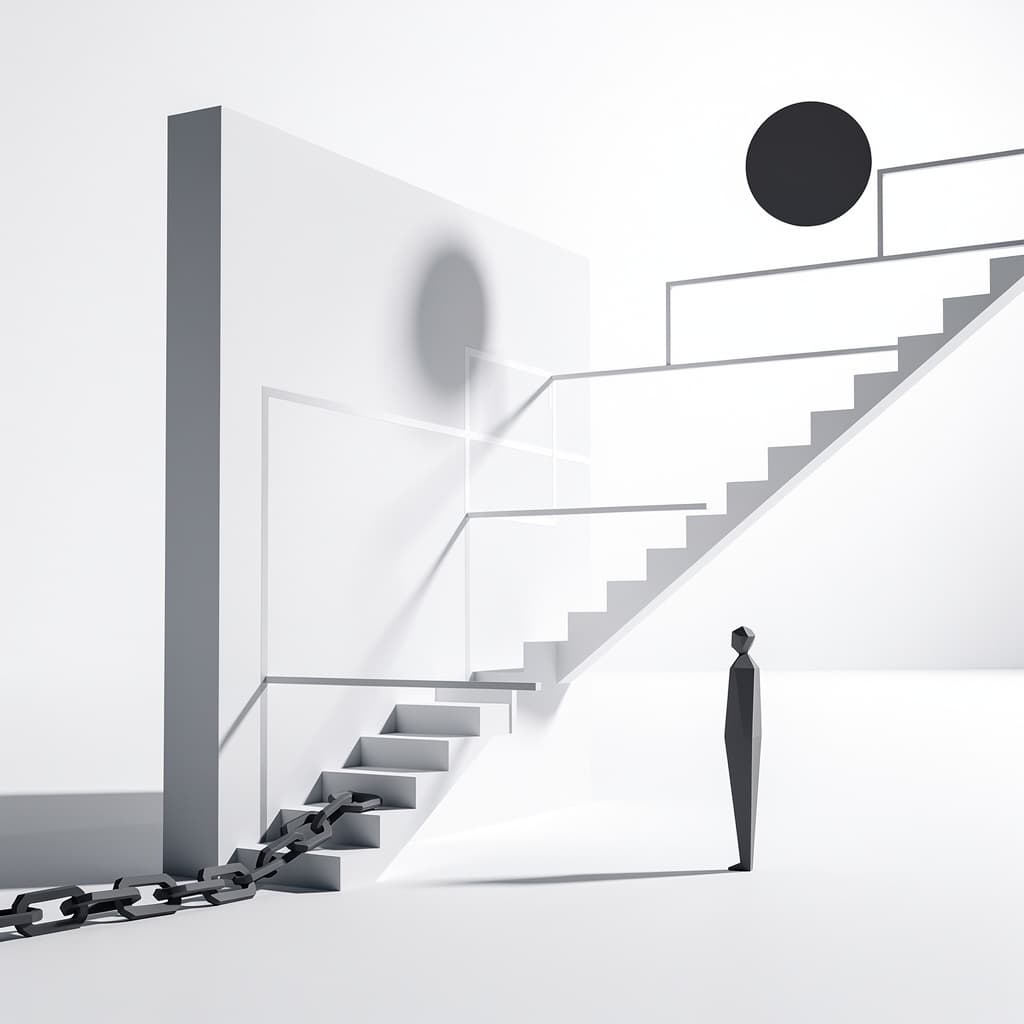
The Allegory of the Cave, presented by the Greek philosopher Plato in his seminal work The Republic (c. 375 BCE), stands as one of the most enduring metaphors in the history of Western philosophy. Written as a dialogue between Plato’s mentor, Socrates, and his brother, Glaucon, the allegory serves to illustrate the effects of education on the human soul and the nature of reality itself. It depicts a group of prisoners who have lived their entire lives in a dark cave, mistaking shadows on a wall for the ultimate truth. Through the narrative of a prisoner’s liberation and eventual ascent into the sunlight, Plato explores the difficult transition from ignorance to enlightenment, suggesting that what we perceive through our physical senses is often a mere shadow of a higher, more perfect reality. This profound narrative bridges the gap between Plato’s epistemological theories—how we know what we know—and his metaphysical theories regarding the structure of existence.
The Origin and Narrative Structure in Plato's Republic Book 7
The Allegory of the Cave appears at the beginning of Book 7 of The Republic, following the discussion of the "Sun" and the "Divided Line." Socrates introduces the allegory to Glaucon as a way to visualize the difference between the enlightened and the unenlightened mind. The setting is a subterranean, cave-like dwelling with a long entrance open to the light. Inside, prisoners have been held since childhood, their legs and necks chained so that they cannot move or turn their heads. They are forced to look only at the wall directly in front of them, never seeing themselves, each other, or the world behind them. This restrictive environment represents the initial state of human existence, where perceptions are limited by physical constraints and the absence of critical inquiry.
Behind the prisoners and at a higher elevation, a fire burns, providing a flickering light source. Between the fire and the prisoners, there is a raised walkway along which "puppeteers" carry various objects—statues of humans, animals, and other figures—made of wood, stone, and various materials. As these figures pass by the fire, they cast shadows onto the wall that the prisoners are facing. Because the prisoners have never seen the actual objects, they naturally attribute the sounds made by the puppeteers to the shadows themselves. In this closed system, the shadows become the prisoners' entire reality, and they develop a sophisticated culture of naming and ranking these illusions, believing that the person who can best predict the sequence of shadows possesses the greatest wisdom.
The dialogue between Socrates and Glaucon is essential to understanding the instructional nature of the allegory. Socrates uses a series of hypothetical questions to lead Glaucon toward the realization that the prisoners’ "wisdom" is entirely baseless. By describing the cave’s architecture and the prisoners’ condition in such vivid detail, Plato establishes a clear hierarchy of reality: the shadows are less real than the statues, and the statues are less real than the living things they represent. This structure sets the stage for the prisoner’s eventual "ascent," which serves as a metaphor for the arduous process of philosophical education. The dialogue emphasizes that the prisoners are "like us," suggesting that the average person is similarly trapped in a world of appearances and social conventions.
Allegory of the Cave Summary: The Journey Toward Enlightenment
The Allegory of the Cave summary continues with the forced liberation of one of the prisoners. Socrates imagines a scenario where a prisoner is suddenly unchained and compelled to stand up, turn around, and walk toward the light of the fire. This transition is not described as a joyful awakening, but as a painful and disorienting ordeal. The brilliance of the firelight hurts the prisoner’s eyes, and the three-dimensional objects being carried across the walkway appear less "real" to him than the familiar shadows he has watched his whole life. This initial stage of enlightenment illustrates the cognitive dissonance that occurs when long-held beliefs are challenged by new, more complex information.
As the prisoner is dragged out of the cave and into the world above, the struggle intensifies. The transition from the dim firelight to the blinding radiance of the sun causes acute physical and mental distress. Socrates notes that the prisoner would require a period of habituation to see the objects in the upper world. At first, he would find it easiest to look at shadows, then at the reflections of people and things in the water, and eventually at the things themselves. Only after this gradual adjustment could he look at the heavenly bodies and the sun itself. This progression represents the stages of intellectual development, where the mind must be slowly trained to handle increasingly abstract and profound truths.
The climax of the journey occurs when the liberated prisoner realizes that the sun is the source of the seasons and the years, and the guardian of everything in the visible world. He understands that the sun is responsible for the light that allowed him to see reflections and objects, and even indirectly responsible for the firelight and shadows back in the cave. This epiphany marks the transition from mere opinion to genuine understanding. Filled with pity for his former companions, the prisoner reflects on the "honors" they bestowed upon one another for their knowledge of shadows and realizes that such accolades are worthless in the light of the true reality he has discovered.
Unpacking Plato's Cave Meaning and the Nature of Knowledge
To understand Plato's cave meaning, one must look at his distinction between the world of the senses and the world of the intellect. Plato argues that the physical world we experience through sight, touch, and sound is like the cave—a realm of "becoming" where things are constantly changing and decaying. In contrast, the world outside the cave represents the realm of "being," inhabited by eternal, unchanging truths. For Plato, "knowledge" is not the accumulation of facts about the physical world, but the intellectual grasp of these eternal truths. Therefore, the allegory suggests that most people live in a state of eikasia (imagination or delusion), mistaking the sensory world for the ultimate reality.
A central theme in the allegory is the idea that education is a "turning of the soul." Socrates explicitly states that the goal of education is not to "put knowledge into the soul which was not there before," like putting sight into blind eyes. Instead, education is the art of turning the soul away from the "twilight" of the sensory world toward the "daylight" of true existence. This implies that every human soul possesses the capacity for knowledge, but it is often oriented in the wrong direction—focused on material wealth, social status, or sensory pleasures. The philosopher’s task is to redirect this innate faculty toward the study of the highest principles, moving from the visible to the intelligible.
The epistemological stages described in the allegory align with Plato’s "Divided Line" theory, which categorizes four levels of cognition. The lowest level, Eikasia, corresponds to the prisoners watching shadows. The second level, Pistis (belief), corresponds to the prisoners seeing the statues and the fire within the cave. The third level, Dianoia (thought), represents the liberated prisoner looking at reflections and mathematical abstractions in the world above. Finally, Noesis (understanding) is reached when the prisoner perceives the sun/Forms directly. Through this framework, Plato explains that true knowledge requires a rigorous, step-by-step elevation of the mind beyond the limitations of the physical environment.
Key Symbolism in the Allegory of the Cave
The symbolism in the Allegory of the Cave is meticulously crafted to represent various aspects of the human condition and the pursuit of truth. The shadows on the wall are perhaps the most famous symbols, representing the lowest level of reality: illusions, prejudices, and the uncritical acceptance of what others tell us. In a modern context, these shadows might represent media narratives, social media trends, or cultural stereotypes that people accept without question. Because the shadows are all the prisoners have ever known, they have no reason to doubt their authenticity, illustrating how easily the human mind can be manipulated by partial truths and distorted perspectives.
The chains that bind the prisoners represent anything that prevents an individual from seeking the truth. While they are physical chains in the narrative, they symbolize internal and external constraints such as sensory perceptions, societal conventions, and the ego. These chains keep the soul anchored to the material world and prevent it from "turning" toward the light. The act of being "unbound" often requires an external force or a profound crisis, suggesting that the journey toward enlightenment is rarely self-initiated but is instead a "forced" process that goes against the grain of our natural inclination for comfort and familiarity.
The sun is the ultimate symbol in the allegory, representing the Form of the Good. Just as the sun provides the light necessary for vision and the energy necessary for life, the Form of the Good provides the truth necessary for knowledge and the "being" necessary for the existence of all other Forms. To see the sun is to understand the ultimate cause of all things. Below is a table summarizing the primary symbols and their philosophical counterparts:
| Symbol in the Allegory | Philosophical Meaning |
|---|---|
| The Cave | The world of sensory perception (The Visible Realm) |
| The Prisoners | Ordinary people before philosophical education |
| The Shadows | Illusions, false beliefs, and distorted reality |
| The Chains | Sensory limitations and societal conditioning |
| The Sun | The Form of the Good (The source of all Truth) |
| The Ascent | The process of education and enlightenment |
Philosophical Foundations: The Theory of Forms
The Allegory of the Cave is the visual and narrative expression of Plato's Theory of Forms. This theory posits that the physical world is not the "real" world; instead, it is a secondary, imperfect copy of a higher, non-physical realm of "Forms" or "Ideas." For example, every beautiful object we see in the cave of the physical world is only "beautiful" because it participates in the eternal Form of Beauty. While physical objects change, age, and perish, the Forms remain perfect and unchanging. The allegory illustrates this by showing that the shadows (sensory objects) are merely silhouettes cast by the statues (the physical objects), which are themselves imitations of the true things found outside the cave (the Forms).
Central to this metaphysical structure is the "Form of the Good," which Plato describes as the highest of all Forms. In the allegory, the sun represents this principle. Plato suggests that just as the eye needs light to see, the mind needs the Form of the Good to "see" or understand any other truth. Without the Good, knowledge is incomplete and purposeless. The Theory of Forms thus establishes a metaphysical dualism: the separation of the world into the "sensible" (things we perceive) and the "intelligible" (things we conceive). The allegory serves to warn that those who remain focused solely on the sensible world are living in a dream-like state, divorced from the true nature of existence.
By using the Allegory of the Cave to explain the Theory of Forms, Plato also addresses the problem of universals. How can we recognize different types of chairs as "chairs"? Plato would argue it is because our souls have an innate, though often forgotten, recollection of the "Form of a Chair." The journey out of the cave is essentially a process of anamnesis, or "recollection," where the soul remembers the divine truths it knew before being imprisoned in a physical body. This foundation is crucial for Plato's political philosophy, as it argues that only those who have "remembered" these Forms are qualified to lead a just society.
The Philosopher's Return and the Social Consequences
A critical, yet often overlooked, part of the allegory is the prisoner’s return to the cave. Having seen the sun and the true world, the enlightened individual feels an ethical obligation to descend back into the darkness to help his fellow prisoners. However, this return is fraught with difficulty. After his eyes have adjusted to the brilliant sunlight, the philosopher is temporarily "blinded" by the darkness of the cave. To the prisoners who never left, he appears clumsy and foolish. They mock him, claiming that his journey "upward" has ruined his eyesight and that it is not even worth trying to leave the cave.
This part of the narrative reflects the historical reality of the philosopher’s role in society, most notably the fate of Plato’s teacher, Socrates. Plato suggests that if the philosopher tries to liberate the other prisoners by force or by showing them the "truth," they might become violent. Because the prisoners' entire identities and "wisdom" are tied to the shadows, they perceive the truth as a threat to their way of life. Socrates famously concludes that the prisoners would "kill the man who tries to release them and lead them up" if they could get their hands on him—a direct reference to the trial and execution of Socrates by the Athenian democracy.
Despite these risks, Plato insists that the "philosopher-king" must be compelled to rule. In an ideal state, those who have achieved enlightenment do not wish to be involved in the "shadow-fights" of politics and power. However, Plato argues that they owe a debt to the society that provided the environment for their education. The social consequence of the allegory is the mandate for a ruling class that operates not out of ambition, but out of a sense of duty to the Truth. The return to the cave is the ultimate test of the philosopher’s character: the willingness to sacrifice personal contemplation for the sake of the collective good.
Modern Applications and Psychological Interpretations
In the 21st century, the Allegory of the Cave remains remarkably relevant, particularly in the context of digital technology and social media. Today’s "shadows" are often found on the screens of smartphones and computers, where algorithms create "echo chambers" that reinforce our existing biases. Much like the prisoners, users of these platforms are often presented with a curated, distorted version of reality that they mistake for the whole truth. The "chains" of modern life are the psychological hooks and dopamine loops that keep individuals tethered to their screens, preventing the critical thinking required to look beyond the digital "firelight" of trending topics and viral misinformation.
From a psychological perspective, the allegory mirrors the struggle against cognitive dissonance and confirmation bias. Humans have a natural tendency to seek out information that confirms their existing beliefs and to reject information that challenges them. The "pain" the prisoner feels when seeing the light is a perfect metaphor for the discomfort of realizing one has been wrong. Modern psychology often explores the "comfort of the cave," where individuals choose the security of a familiar illusion over the demanding and often isolating path of objective truth. The allegory serves as a timeless reminder that intellectual growth requires the courage to face discomfort and the humility to admit that our perceptions may be flawed.
The themes of Plato’s cave are also pervasive in modern cinema and literature. Films like The Matrix (1999) directly adapt the allegory, where the protagonist, Neo, discovers that the world he perceives is a computer-simulated illusion (the cave) and must undergo a painful awakening to see the "real world." Similarly, in The Truman Show (1998), the protagonist lives in a fabricated reality created for a television audience, eventually realizing that his "shadow" world is a cage from which he must escape. These stories resonate because they tap into a fundamental human anxiety: the suspicion that there is more to reality than meets the eye and the yearning for a truth that lies beyond the horizon of our current understanding.