Photosynthesis: Process, Equation, Stages, and Importance Explained
Photosynthesis is the fundamental biological process by which green plants, algae, and certain bacteria convert light energy from the sun into chemical energy stored in glucose. This process not only...
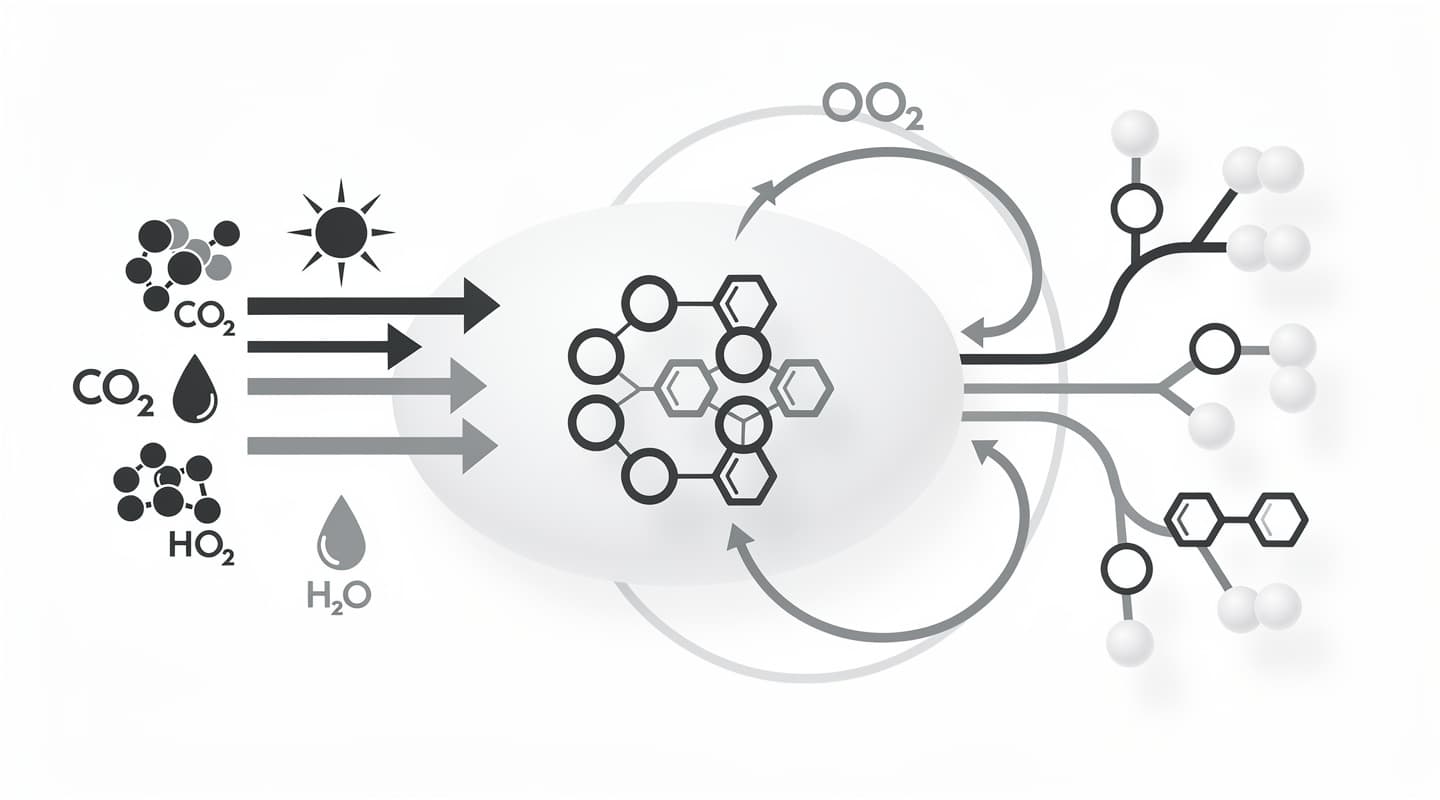
Photosynthesis is the fundamental biological process by which green plants, algae, and certain bacteria convert light energy from the sun into chemical energy stored in glucose. This process not only sustains plant life but forms the basis of nearly all life on Earth by producing oxygen and organic compounds. Occurring primarily in chloroplasts, photosynthesis involves two main stages: the light-dependent reactions and the Calvin cycle. Understanding the photosynthesis equation, step-by-step process, and its broader importance reveals its critical role in ecosystems, food production, and global climate regulation. This article explores the photosynthesis process step by step, from molecular mechanisms to ecological impacts.
What Is Photosynthesis?
Definition and Basic Principles
Photosynthesis is the anabolic process where autotrophic organisms use sunlight, carbon dioxide (CO2), and water (H2O) to produce glucose (C6H12O6) and oxygen (O2). First demonstrated by Dutch physician Jan Ingenhousz in 1779, it captures photons via pigments like chlorophyll, driving electron transport chains that generate energy carriers. The process exemplifies energy transformation, converting electromagnetic radiation into adenosine triphosphate (ATP) and reduced nicotinamide adenine dinucleotide phosphate (NADPH). These molecules fuel the synthesis of carbohydrates, releasing oxygen as a byproduct. In essence, photosynthesis reverses cellular respiration, building complex molecules from simpler ones.
Photosynthesis is defined as "the process by which plants, algae, and some bacteria use light energy to convert carbon dioxide and water into glucose and oxygen" (Campbell Biology, 12th ed., 2020).
Where Photosynthesis Occurs
Photosynthesis primarily takes place in the chloroplasts of plant cells, specialized organelles bounded by a double membrane. Within chloroplasts, the process localizes to thylakoids—stacked into grana for light reactions—and the stroma for the Calvin cycle. Leaf mesophyll cells, especially palisade layers, host the highest concentration of chloroplasts, maximizing light absorption. In aquatic organisms, chloroplasts float in cytoplasm or associate with vacuoles. This compartmentalization optimizes efficiency, separating light capture from carbon fixation.
Organisms That Perform Photosynthesis
Green plants (embryophytes) dominate terrestrial photosynthesis, but algae (e.g., Chlamydomonas) and cyanobacteria (e.g., Synechococcus) are key aquatic performers. Some bacteria, like purple sulfur bacteria, conduct anoxygenic photosynthesis without oxygen production. Eukaryotic algae in oceans contribute over 50% of Earth's oxygen, per NASA estimates (2022). Even protists like euglenoids photosynthesize under light. These organisms form the base of food webs, supporting heterotrophs.
- Plants: Vascular (angiosperms, gymnosperms) and non-vascular (mosses).
- Algae: Green, red, brown—diverse pigments adapt to light wavelengths.
- Prokaryotes: Cyanobacteria, fixing nitrogen alongside carbon.
The Photosynthesis Equation
Balanced Chemical Equation
The overall photosynthesis equation is 6CO2 + 6H2O + light energy → C6H12O6 + 6O2. This balanced formula, summarized by Cornelius van Niel in the 1930s, requires six turns of the cycle per glucose molecule. Light energy, equivalent to about 686 kcal/mol, drives endergonic reactions (ΔG°' = +686 kcal/mol). Water splits in photosystem II, donating electrons and protons.
Reactants and Products Explained
Reactants include CO2 from the atmosphere, H2O from soil, and photons (400-700 nm wavelengths). Products are glucose for energy storage and O2 for respiration. Glucose polymerizes into starch or cellulose. Oxygen levels rose dramatically during the Great Oxidation Event ~2.4 billion years ago due to cyanobacterial photosynthesis (Lyons et al., Nature, 2014).
| Reactants | Products |
|---|---|
| 6 CO2 | C6H12O6 (glucose) |
| 6 H2O | 6 O2 |
| Light energy | ATP & NADPH (intermediates) |
Word Equation vs. Chemical Equation
The word equation—"carbon dioxide + water + light → glucose + oxygen"—simplifies for beginners, while the chemical version quantifies stoichiometry. The former highlights flow, the latter enables calculations, like 18 H2O molecules involved (12 regenerated). Educators use both for layered understanding.
Photosynthesis Process Step by Step
Overview of Two Main Stages
Photosynthesis divides into light-dependent reactions (LDRs) and light-independent reactions (Calvin cycle). LDRs in thylakoid membranes generate ATP and NADPH using sunlight. The Calvin cycle in the stroma fixes CO2 into sugars. These stages link via electron carriers, with cyclic and non-cyclic photophosphorylation.
Role of Chloroplasts
Chloroplasts, endosymbiotic descendants of cyanobacteria (Margulis, 1967), contain DNA and ribosomes. Thylakoids house photosystems I and II (PSI, PSII), cytochrome b6f complex. Stroma holds enzymes like Rubisco. This structure mirrors bacterial ancestors.
Inputs and Outputs Summary
- Inputs: Light, H2O, CO2, ADP + Pi, NADP+.
- Outputs: Glucose, O2, ATP, NADPH.
Light-Dependent Reactions
Step-by-Step Breakdown
- Photon absorption by chlorophyll in PSII excites electrons.
- Water photolysis releases O2, protons, electrons.
- Electrons flow via plastoquinone to cytochrome b6f, pumping H+.
- PSI re-energizes electrons, reducing NADP+ to NADPH.
- Proton gradient drives ATP synthase (chemiosmosis, Mitchell 1961).
Role of Chlorophyll and Photons
Chlorophyll a (P680, P700) absorbs blue/red light; accessory pigments (b, carotenoids) broaden spectrum. Photons transfer energy via resonance, funneled to reaction centers. Quantum yield peaks at 1 O2/8 photons (Z-scheme).
Production of ATP and NADPH
Non-cyclic flow yields 1.5 ATP and 2 NADPH per 2 H2O oxidized. Cyclic phosphorylation boosts ATP. These reductants power the Calvin cycle, storing 112 kcal/mol glucose energy.
Calvin Cycle Explained
Three Phases of the Cycle
The Calvin cycle, elucidated by Melvin Calvin (Nobel 1961), comprises carbon fixation, reduction, and regeneration. It consumes 9 ATP and 6 NADPH per glucose. Occurs in stroma, independent of light but reliant on LDR products.
Carbon Fixation Process
Rubisco catalyzes RuBP + CO2 → 3-phosphoglycerate (3-PGA). World's most abundant protein (~20% leaf nitrogen), Rubisco fixes ~1011 tons CO2/year but photorespires inefficiently.
Regeneration of RuBP
- Reduction: 3-PGA → glyceraldehyde-3-phosphate (G3P) via ATP/NADPH.
- One G3P exits for glucose; five regenerate RuBP via 11 enzymes.
Analogy: Like a factory assembly line recycling intermediates.
Photosynthesis in Plants
Chloroplast Structure in Leaves
Leaves optimize via palisade mesophyll (high chloroplast density) and spongy layers for gas exchange. Veins supply water/minerals. Chloroplasts migrate via actin (chloroplast streaming).
Role of Stomata and Guard Cells
Stomata, regulated by guard cells, control CO2 influx and H2O loss (transpiration). ABA hormone closes them in drought. ~90% leaf surface pores.
C3, C4, and CAM Pathways
| Pathway | Plants | Adaptation | Efficiency |
|---|---|---|---|
| C3 | Wheat, rice (85% plants) | Temperate; Rubisco direct | Low photorespiration |
| C4 (Hatch-Slack, 1966) | Corn, sugarcane | Tropical; PEP carboxylase + bundle sheath | 50% less photorespiration |
| CAM | Cacti, pineapples | Arid; nocturnal CO2 fixation | Water-efficient |
Importance of Photosynthesis
Oxygen Production for Life
Photosynthesis generates 99% of Earth's O2 (~3×10¹⁵ kg/year), enabling aerobic respiration. Oceanic phytoplankton produce 50-85% (Field et al., 1998).
Foundation of Food Chains
Primary producers convert ~1-2% solar energy into biomass, supporting herbivores and beyond. Crop yields depend on photosynthetic efficiency (e.g., rice: 1.5%).
Carbon Cycle and Climate Regulation
Absorbs 120 Gt C/year, mitigating CO2 rise. Deforestation reduces sink capacity (IPCC, 2022). Biofuels harness it sustainably.
Applications in Agriculture
GM crops enhance Rubisco; vertical farming boosts light. Global food security ties to optimizing photosynthesis in plants.
Factors Affecting Photosynthesis
Light Intensity and Quality
Saturation at 1000 µmol photons/m²/s; red/blue optimal. Shade plants adapt low light via larger antennae.
CO2 Concentration and Temperature
Rubisco optima 25-30°C; elevated CO2 (FACE experiments) boosts yield 20%. Photorespiration rises >35°C.
Water Availability and Limiting Factors
Drought closes stomata (Blackman’s limiting factor law, 1905). Liebig’s minimum governs rates.
Photosynthesis FAQ
Does Photosynthesis Happen at Night?
No, LDRs require light, but CAM plants fix CO2 nocturnally. Stored malate fuels daytime Calvin cycle.
How Does Photosynthesis Differ in Algae?
Algae use similar mechanisms but phycobilins for deeper light penetration. No vascular tissue; diffuse chloroplasts.
Why Is Chlorophyll Green?
Absorbs red/blue, reflects green (chlorophyll a peak 430/662 nm). Evolutionary adaptation to sun spectrum.
Can Photosynthesis Occur Without Sunlight?
No true photosynthesis; chemosynthesis uses chemicals. Artificial LEDs mimic sunlight in labs.
Summary: Key Takeaways on Photosynthesis
Photosynthesis—6CO2 + 6H2O + light → C6H12O6 + 6O2—powers life via light-dependent reactions (ATP/NADPH) and Calvin cycle. Vital for oxygen, food, and carbon balance, it varies by C3/C4/CAM pathways. Factors like light/CO2 limit rates. Its study drives biotech advances. Further reading: "Photosynthesis" by Hall & Rao (1999); Khan Academy modules.