Governing the Balance of Chemical Systems
In the study of thermodynamics and kinetics, Le Chatelier's principle serves as a fundamental heuristic used to predict the behavior of a system in dynamic equilibrium when it is subjected to changes...
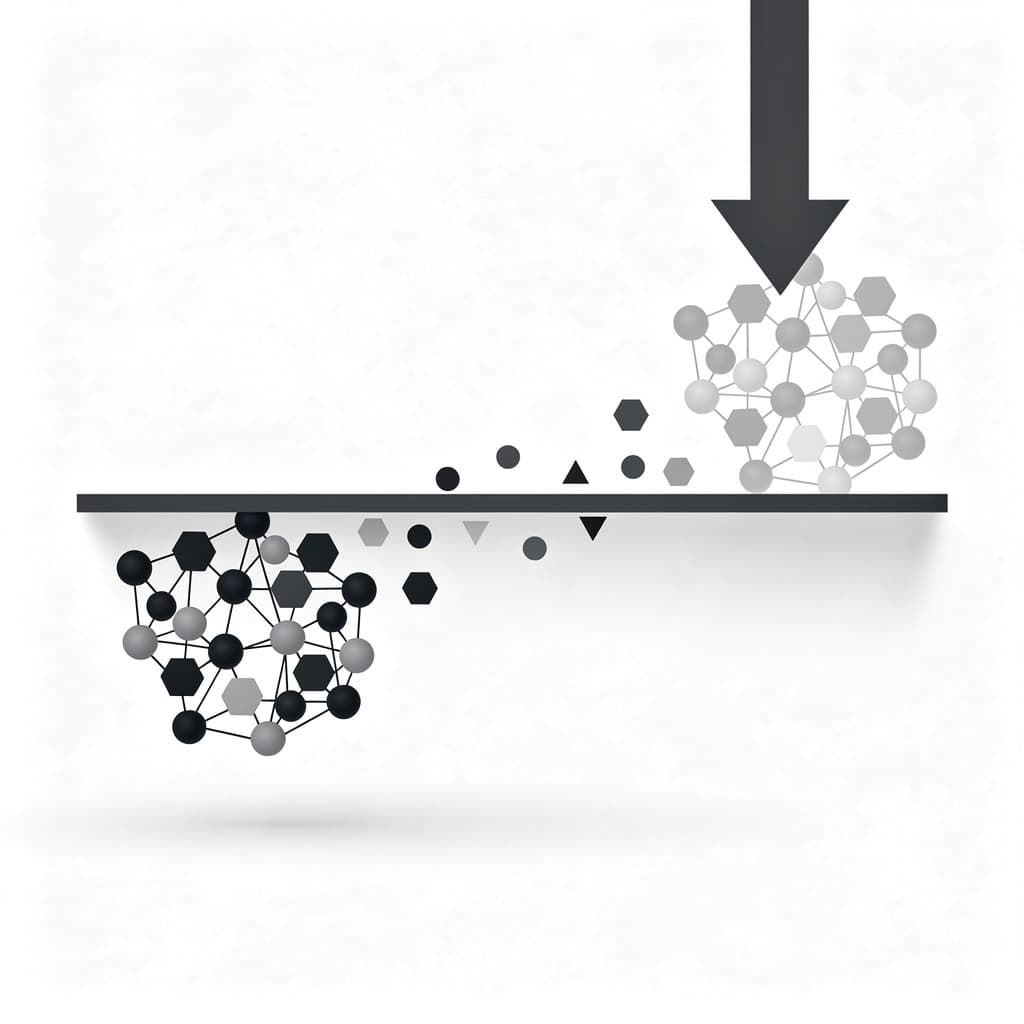
In the study of thermodynamics and kinetics, Le Chatelier's principle serves as a fundamental heuristic used to predict the behavior of a system in dynamic equilibrium when it is subjected to changes in environmental conditions. Formulated by the French chemist Henri Louis Le Chatelier in 1884, and independently by Karl Ferdinand Braun, the principle states that if a system at equilibrium is disturbed by a change in temperature, pressure, or concentration of components, the system will shift its equilibrium position to counteract the effect of the disturbance. This qualitative tool is essential for both industrial chemical synthesis and the understanding of biological homeostasis. By analyzing how systems respond to external "stress," scientists can manipulate reaction yields and maintain stable environments within complex mechanical and biological frameworks.
Foundations of Dynamic Equilibrium Chemistry
To understand how systems respond to change, one must first grasp the concept of microscopic reversibility. This principle dictates that at the molecular level, every elementary process is reversible, meaning that if a forward reaction pathway exists, a corresponding reverse pathway must also exist under the same conditions. In a closed system, molecules are constantly colliding and reacting to form products, while product molecules simultaneously collide to reform the original reactants. This perpetual motion ensures that chemical reactions are rarely "one-way streets" but are instead continuous cycles of transformation and reformation that never truly cease at the molecular scale.
It is crucial to distinguish between a steady state and a state of dynamic equilibrium, as these terms are often conflated in introductory science. A steady state occurs in an open system where the rate of input equals the rate of output, such as a bathtub where water flows in from the faucet at the same rate it leaves through the drain. In contrast, dynamic equilibrium occurs in a closed system where the internal rates of the forward and reverse reactions are equal, and no net change in concentration occurs over time. While both states exhibit constant observable properties, the underlying mechanisms differ; equilibrium represents a state of maximum entropy and minimum Gibbs free energy, whereas a steady state requires a constant input of energy or matter to maintain its stability.
The transition toward equilibrium is driven by the second law of thermodynamics, which suggests that systems naturally progress toward a state of maximum disorder or stability. In chemical terms, this means the system will continue to react until the chemical potential of the reactants equals the chemical potential of the products. At this juncture, the system reaches a "balance of power" where the macroscopic properties, such as color intensity, pressure, and temperature, remain constant to the naked eye. However, this apparent stillness is an illusion of scale, as the molecular dance continues unabated, maintaining the delicate balance through equal and opposite reaction rates.
Defining the Chemical Equilibrium State
The chemical equilibrium definition is most accurately expressed through the kinetic perspective of reaction rates. When a reaction begins, the concentration of reactants is high, leading to a high frequency of effective collisions and a rapid forward reaction rate. As reactants are consumed and products are formed, the forward rate decreases while the reverse rate increases from zero. Equilibrium is reached at the precise moment when these two rates become equal, represented mathematically as $r_{forward} = r_{reverse}$. At this point, the net rate of change for all species involved in the reaction is zero, although the individual molecules continue to cross the "boundary" between reactant and product states.
From an observational standpoint, a system at equilibrium displays a set of constant properties that can be measured without perturbing the system. For instance, in a gaseous equilibrium involving nitrogen dioxide and dinitrogen tetroxide, the intensity of the brown color (characteristic of $NO_2$) remains constant once equilibrium is established. Similarly, the total pressure of the system and the temperature remain stable as long as the external environment is not altered. These observable properties are the hallmarks of a system that has reached its lowest energy state under a specific set of conditions, providing a baseline from which any future perturbations can be measured.
reaching equilibrium does not mean the concentrations of reactants and products are equal; rather, it means their ratio remains constant. Depending on the stability of the molecules involved, equilibrium may lie "to the right," favoring products, or "to the left," favoring reactants. This position is quantified by the equilibrium constant ($K$), a temperature-dependent value that provides a snapshot of the system's preferred composition. Understanding this state allows chemists to predict how much product can be theoretically obtained from a given amount of starting material before the reverse reaction prevents further progress.
Mechanisms of Le Chatelier's Principle
Le Chatelier's principle functions as a systemic response mechanism to external perturbations, often described as a "thermodynamic self-correction." When an external stress—such as a change in concentration, temperature, or pressure—is applied to a system at equilibrium, the system is momentarily pushed into a non-equilibrium state. In this state, the equality between the forward and reverse reaction rates is broken, forcing the system to favor one direction over the other to restore balance. The principle acts as a guide for predicting which direction the reaction will shift to offset the applied change and return to a new state of equilibrium.
The conceptual framework of "counteracting stress" is best understood through the lens of systemic flux. If a reactant is added to the system, the system "feels" an excess of that species and moves to consume it by accelerating the forward reaction. Conversely, if a product is removed, the system moves to replace it. This is not because the system has "intent" or "will," but because the change in concentration alters the frequency of molecular collisions. By increasing the number of reactant molecules, you statistically increase the likelihood of collisions that lead to product formation, thereby naturally driving the system toward the product side until a new balance is struck.
Ultimately, Le Chatelier's principle is a manifestation of the system's drive to minimize its Gibbs free energy ($\Delta G$). When a disturbance occurs, the value of $\Delta G$ for the system becomes non-zero, indicating that the process is no longer at its most stable point. The shift in equilibrium is the path of least resistance the system takes to bring $\Delta G$ back to zero. By understanding these underlying energetic drivers, scientists can use the principle not just as a qualitative rule of thumb, but as a bridge to more rigorous thermodynamic calculations that describe how matter and energy interact in a changing world.
Primary Factors Affecting Chemical Equilibrium
One of the most common factors affecting chemical equilibrium is the fluctuation of concentration among the reactants or products. According to the principle, adding a substance to a system at equilibrium will drive the reaction in the direction that consumes that substance. For example, in the reversible reaction of iron(III) ions with thiocyanate ions to form iron-thiocyanate complexes, adding more iron(III) will cause the solution to turn a deeper red as the system shifts forward to produce more complex ions. This reactant flux is a powerful tool in chemical manufacturing, where continuously adding reactants or siphoning off products can keep a reaction moving in the desired direction indefinitely.
Temperature serves as a unique perturbing factor because it is the only variable that actually changes the value of the equilibrium constant ($K$). To predict the effect of thermal changes, one must categorize the reaction as either exothermic (releasing heat) or endothermic (absorbing heat). In an exothermic reaction, heat can be treated as a product; therefore, increasing the temperature is akin to adding a product, which shifts the equilibrium to the left toward the reactants. Conversely, in an endothermic reaction, heat acts as a reactant, so increasing the temperature drives the reaction forward to the right, favoring product formation. This thermal impact is described quantitatively by the Van 't Hoff equation, which relates the change in the equilibrium constant to the change in temperature.
The sensitivity of a system to temperature shifts is fundamentally tied to the enthalpy ($\Delta H$) of the reaction. For instance, the synthesis of methanol from carbon monoxide and hydrogen is exothermic ($\Delta H < 0$). If an industrial reactor producing methanol becomes too hot, the equilibrium yield of methanol will drop significantly as the system favors the reverse reaction to absorb the excess thermal energy. Consequently, industrial processes often require a delicate balance between high temperatures (to ensure a fast reaction rate) and low temperatures (to ensure a favorable equilibrium position), leading to the use of catalysts to bridge the gap between kinetics and thermodynamics.
Pressure Dynamics in Gaseous Environments
In systems involving gases, changes in pressure and volume play a significant role in determining the equilibrium position. When the volume of a reaction vessel is decreased, the molecular density increases, leading to a higher total pressure within the system. According to Le Chatelier's principle, the system will respond by shifting toward the side with the fewer number of moles of gas to alleviate this pressure. For example, in the reaction $N_2(g) + 3H_2(g) \rightleftharpoons 2NH_3(g)$, there are four moles of gas on the reactant side and only two moles on the product side. Increasing the pressure forces the system toward the product side (ammonia), effectively "shrinking" the number of molecules to fit the smaller volume.
The relationship between volume contraction and pressure shifts is a direct application of Boyle's Law within the context of chemical reactions. If a system has an equal number of moles of gas on both sides of the equation, such as $H_2(g) + I_2(g) \rightleftharpoons 2HI(g)$, then a change in pressure or volume will have no effect on the equilibrium position. While the concentrations of all species will increase if the volume is halved, they will increase proportionally such that their ratio remains the same. This highlights that pressure only acts as a stressor when there is a net change in the stoichiometry of the gaseous components.
Another nuanced aspect of pressure dynamics involves the addition of inert gas components, such as helium or argon, to a system at equilibrium. If an inert gas is added at a constant volume, the total pressure increases, but the partial pressures of the reacting gases remain unchanged. Because the reaction's equilibrium depends only on the partial pressures of the participants, the addition of an inert gas under these conditions does not cause a shift. However, if the inert gas is added at a constant total pressure, the volume of the container must increase to accommodate the new gas, which decreases the partial pressures of the reactants and products and may trigger a shift toward the side with more moles of gas.
Equilibrium Constant vs Reaction Quotient
While Le Chatelier's principle provides a qualitative prediction of equilibrium shifts, the reaction quotient ($Q$) offers a rigorous mathematical method for determining the direction of change. For a general reaction $aA + bB \rightleftharpoons cC + dD$, the reaction quotient is calculated using the same formula as the equilibrium constant: $$Q = \frac{[C]^c [D]^d}{[A]^a [B]^b}$$ The critical difference is that $Q$ can be calculated at any point in time using current concentrations, whereas $K$ is only calculated when the system is at equilibrium. By comparing the Q-value to $K$, scientists can determine exactly how far a system is from equilibrium and which way it must move to get there.
The relationship between $Q$ and $K$ provides three possible scenarios for a system's behavior. If $Q < K$, the ratio of products to reactants is lower than the equilibrium ratio, meaning the net reaction will proceed in the forward direction (to the right). If $Q > K$, the product concentration is too high, and the net reaction will proceed in the reverse direction (to the left). Finally, if $Q = K$, the system is already at equilibrium, and no net change will occur. This mathematical invariance of the equilibrium constant (at a fixed temperature) ensures that regardless of the initial concentrations, the system will always strive to reach the same ratio defined by $K$.
This comparison is especially useful when multiple stressors are applied simultaneously, as qualitative logic can sometimes become muddled. For example, if both the temperature and the concentration of a reactant are increased, the $K$ value changes due to temperature, and the $Q$ value changes due to concentration. A quick calculation of the new $Q$ and the new $K$ provides an unambiguous answer to the direction of the shift. This intersection of Le Chatelier’s logic and mathematical equilibrium allows for precise control in laboratory settings, ensuring that experimental outcomes are predictable and reproducible.
Essential Le Chatelier's Principle Examples
One of the most famous industrial applications of these concepts is the Haber-Bosch process for the synthesis of ammonia. Developed in the early 20th century, this process utilizes high pressure (typically 200 atmospheres) and moderate temperatures (around 450 degrees Celsius) to maximize the yield of $NH_3$ from $N_2$ and $H_2$. Because the reaction is exothermic, low temperatures would favor the product side; however, the reaction rate would be too slow to be commercially viable. To overcome this, the process uses a catalyst and constantly removes the ammonia product as it forms, forcing the equilibrium to shift forward continuously according to Le Chatelier's principle.
In the realm of biology, hemoglobin oxygen transport provides a stunning example of equilibrium shifts in action. Hemoglobin ($Hb$) binds with oxygen ($O_2$) in the lungs, where the partial pressure of oxygen is high, shifting the equilibrium toward the formation of oxyhemoglobin ($Hb(O_2)_4$). As the blood travels to tissues where the oxygen concentration is low, the equilibrium shifts in the reverse direction, releasing the bound oxygen to be used by cells for respiration. This process is further influenced by the Bohr effect, where increased $CO_2$ levels and acidity in the blood (common in active tissues) further encourage the release of oxygen by shifting the equilibrium again.
Another biological application is found in the maintenance of blood pH through the bicarbonate buffer system. The equilibrium between carbon dioxide, water, carbonic acid, and bicarbonate ions ($CO_2 + H_2O \rightleftharpoons H_2CO_3 \rightleftharpoons H^+ + HCO_3^-$) allows the body to respond to changes in acidity. If the concentration of $H^+$ ions increases (acidosis), the equilibrium shifts to the left, producing more $CO_2$ which is then exhaled by the lungs. This dynamic balance demonstrates how Le Chatelier's principle is not merely a laboratory curiosity but a fundamental law governing the survival of complex organisms by maintaining stable internal conditions against a changing external environment.
References
- Atkins, P., & de Paula, J., "Atkins' Physical Chemistry", Oxford University Press, 2018.
- Le Chatelier, H. L., "Sur l'équilibre des systèmes chimiques", Comptes Rendus de l'Académie des Sciences, 1884.
- Zumdahl, S. S., & Zumdahl, S. A., "Chemistry", Cengage Learning, 2014.
- Van 't Hoff, J. H., "Études de Dynamique Chimique", Frederik Muller & Co., 1884.
Recommended Readings
- The Principles of Chemical Equilibrium by K.G. Denbigh — A rigorous, mathematically inclined exploration of thermodynamics that bridges the gap between basic chemistry and advanced engineering.
- Enriching the Haber-Bosch Process by Vaclav Smil — An interdisciplinary look at how the application of Le Chatelier’s principle changed the course of human history by enabling the global population explosion.
- General Chemistry: Principles and Modern Applications by Petrucci, Herring, Madura, and Bissonnette — A widely respected textbook that provides excellent worked examples and intuitive explanations of equilibrium shifts.