Decoding the Mechanics of Stress and Strain
The study of how solid materials respond to external loads is a cornerstone of modern civil, mechanical, and aerospace engineering. At its heart lies a fundamental conceptual framework that...
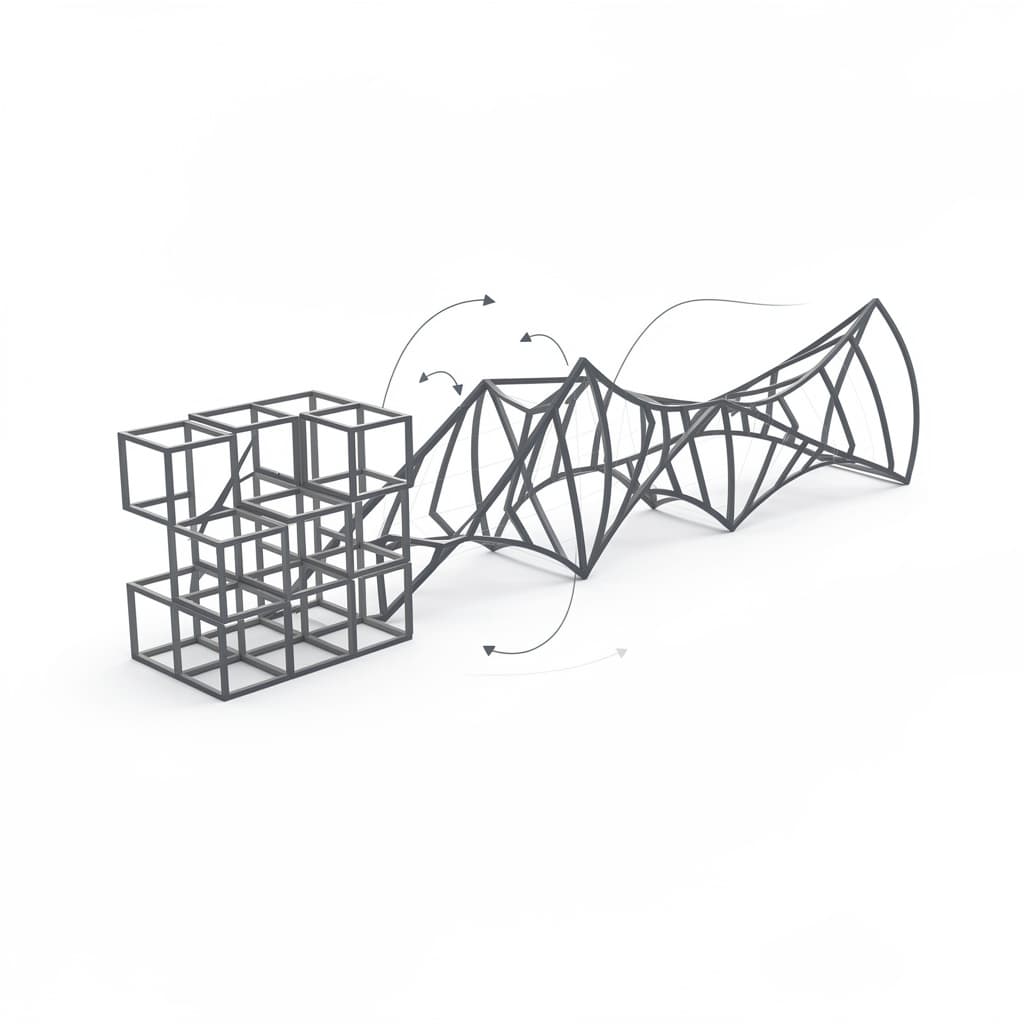
The study of how solid materials respond to external loads is a cornerstone of modern civil, mechanical, and aerospace engineering. At its heart lies a fundamental conceptual framework that translates physical forces into normalized values, allowing for the comparison of materials regardless of their size or shape. This framework is governed by the relationship between stress and strain, two quantities that describe the intensity of internal resistance and the extent of geometric deformation, respectively. By mapping these two variables against one another, engineers generate a stress strain curve, a graphical signature that reveals a material’s strength, stiffness, ductility, and energy-absorbing capacity. Understanding this mechanical logic is essential for predicting whether a bridge will withstand a gale, a fuselage will endure pressurization, or a surgical implant will survive the rigors of the human body.
Fundamentals of Material Response
When an external force is applied to a solid body, the atoms within that body must rearrange or resist to maintain equilibrium. This internal resistance is quantified as stress, which is defined as the force applied per unit area. Unlike a simple force vector, stress is a measure of "intensity" within the material’s microstructure, ensuring that a thin wire and a thick pillar made of the same steel can be compared directly. Mathematically, engineering stress ($\sigma$) is expressed as the ratio of the applied load ($P$) to the original cross-sectional area ($A_0$), usually measured in Pascals ($N/m^2$) or pounds per square inch (psi). This normalization allows engineers to strip away the influence of geometry and focus purely on the inherent capacity of the material itself to bear loads.
Deformation is the physical consequence of stress, and it is quantified as strain. While stress describes the cause, strain ($\epsilon$) describes the effect—the normalized measure of how much a material stretches or compresses. Engineering strain is calculated by dividing the change in length ($\Delta L$) by the original length ($L_0$). Because it is a ratio of two lengths, strain is a dimensionless quantity, often expressed as a percentage or in "microstrain" units. It is important to recognize that strain is not just a change in size but a reflection of the displacement of atoms from their equilibrium positions. Whether a material returns to its original shape or remains permanently distorted depends entirely on the magnitude of this atomic displacement.
The primary experimental method for uncovering these properties is the tensile test. In this procedure, a standardized specimen is placed in a universal testing machine and subjected to a controlled, increasing axial load until it fails. Throughout the test, sensors record the applied force and the resulting elongation, which are then converted into the stress strain curve. This curve serves as a roadmap of the material’s life cycle under load, from the first hint of stretching to the final, catastrophic rupture. By analyzing the slopes, peaks, and plateaus of this graph, engineers can determine critical design parameters such as the elastic limit, the point of onset for permanent damage, and the maximum load the material can sustain before failing.
Linear Elasticity and Hooke's Law
In the initial stages of loading, most engineering materials exhibit a behavior known as linear elasticity. During this phase, the relationship between stress and strain is directly proportional; if you double the force, you double the deformation. This phenomenon is rooted in the physics of atomic bonding, where atoms act as if they are connected by tiny, invisible springs. As long as the applied stress is low, the atoms are merely pulled slightly away from their stable energy wells. When the load is removed, these interatomic forces pull the atoms back to their original positions, resulting in full geometric recovery. This "spring-like" behavior is the foundation of structural design for components that must maintain their shape over thousands of cycles.
The mathematical expression for this proportionality is known as Hooke's Law, named after the 17th-century polymath Robert Hooke. The law is stated as: $$\sigma = E \cdot \epsilon$$ In this equation, $E$ represents Young's modulus, also known as the modulus of elasticity. Young's modulus is a measure of a material’s stiffness—its resistance to being stretched or compressed. A high $E$ value, such as that of diamond or tungsten, indicates a very stiff material that undergoes little deformation under high stress. Conversely, a low $E$ value, characteristic of polymers or biological tissues, suggests a compliant material. It is critical to note that Young’s modulus is a fundamental material property determined by the strength of atomic bonds and is generally independent of the material’s "strength" or "hardness."
The linear elastic region terminates at a point called the proportional limit, beyond which the straight-line relationship dissolves. Slightly beyond this is the elastic limit, the maximum stress the material can endure while still being able to return to its original dimensions upon unloading. In many practical engineering applications, the difference between the proportional limit and the elastic limit is so small that they are treated as the same point. Designers typically operate within this region to ensure that machines and structures do not suffer permanent "set" or functional impairment during operation. Once the stress exceeds this threshold, the material enters the realm of plasticity, where the logic of atomic "springs" gives way to the logic of atomic "slips."
The Mechanics of Permanent Change
When a material is stressed beyond its elastic limit, it undergoes plastic deformation, an irreversible change in shape. The boundary that marks this transition is known as the yield strength ($\sigma_y$). For many materials, especially ductile metals like structural steel, the transition from elastic to plastic behavior is abrupt, often characterized by a "yield point phenomenon" where the material continues to stretch with little to no increase in stress. For materials that exhibit a more gradual transition, engineers use the 0.2% offset method. This involves drawing a line parallel to the linear elastic portion of the curve, starting at a strain of 0.002, and identifying where it intersects the stress strain curve to define an offset yield strength.
At the microscopic level, yielding is the result of dislocation theory. Crystalline solids are not perfect; they contain defects called dislocations, which are extra half-planes of atoms wedged into the lattice. Under sufficient shear stress, these dislocations begin to move through the crystal structure, much like a wrinkle moving across a carpet. As dislocations migrate and multiply, they allow entire planes of atoms to slide past one another. This "slip" mechanism is what permits a metal to be bent, forged, or drawn into wire without shattering. The macroscopic result of billions of these microscopic slips is the permanent elongation or reshaping of the bulk material, which remains even after the external load is removed.
The transition beyond the elastic limit signifies a fundamental change in the material's energetic state. While elastic energy is stored as potential energy between atoms (like a compressed spring), plastic deformation dissipates energy as heat. This is why a paperclip feels warm to the touch if you bend it back and forth rapidly; the mechanical work of moving dislocations is being converted into thermal energy. In engineering design, reaching the yield strength is often considered a failure mode, even if the part hasn't actually broken. A car axle that has yielded is permanently bent, rendering it useless for its intended function, even if it remains in one piece. Thus, yield strength is perhaps the most critical value for determining the safe operating envelope of a component.
Geometry of the Stress Strain Curve
Beyond the yield point, most ductile materials undergo a process known as strain hardening or work hardening. In this region of the stress strain curve, the material actually becomes stronger as it is deformed. This happens because the increasing density of dislocations leads to "traffic jams" within the crystal lattice; the dislocations begin to interfere with one another’s movement, requiring higher levels of stress to continue the deformation. This is why cold-working a metal—such as hammering or rolling it at room temperature—increases its hardness and strength. The curve rises during this phase, reaching a peak value known as the Ultimate Tensile Strength (UTS).
The UTS represents the maximum engineering stress the material can support. Until this point, the deformation is uniform throughout the gauge length of the specimen. However, once the UTS is reached, a phenomenon called "necking" begins in ductile materials. Necking is a localized reduction in the cross-sectional area of the specimen, usually occurring at the weakest or thinnest point. Because the area at this "neck" decreases rapidly, the force required to continue stretching the material actually drops, even though the actual stress within the neck is increasing. On an engineering stress strain curve, this appears as a downward slope after the UTS peak, creating the illusion that the material is becoming weaker.
The final point on the curve is the fracture point, where the material physically separates into two or more pieces. The total strain at the point of fracture is a measure of the material's ductility. Ductility is a vital property because it provides a "safety buffer" in structures; a ductile material will stretch and deform significantly before it breaks, providing visible warning of impending failure. In contrast, brittle materials, such as cast iron or ceramics, exhibit very little plastic deformation. Their stress strain curve is nearly a straight line that ends abruptly with fracture, often occurring with no warning and minimal energy absorption. Understanding the shape of this curve allows engineers to select materials that match the required "failure style" for a specific application.
Engineering Stress vs True Stress
It is crucial to distinguish between engineering stress and true stress. Engineering stress is calculated using the original cross-sectional area ($A_0$), which remains constant throughout the calculation for simplicity. However, in reality, as a specimen is stretched, its cross-sectional area must decrease to maintain a nearly constant volume. True stress ($\sigma_t$) accounts for this "instantaneous area" ($A_i$) at any given moment. The relationship between the two is given by the formula: $$\sigma_t = \sigma_{eng}(1 + \epsilon_{eng})$$ This formula is valid up until the onset of necking. Once necking begins, the stress state becomes complex and triaxial, and the simple one-dimensional calculation no longer suffices to describe the internal state of the material accurately.
Similarly, true strain ($\epsilon_t$) offers a more physically accurate description of deformation during large plastic changes. While engineering strain compares the total change in length to the original length, true strain is the integral of the instantaneous changes in length. This is also referred to as logarithmic strain: $$\epsilon_t = \ln(1 + \epsilon_{eng})$$ The use of true stress and true strain is essential in manufacturing processes like deep drawing, extrusion, and rolling, where the material undergoes massive shape changes. In these scenarios, the engineering values would significantly underestimate the actual stress the material is experiencing, potentially leading to errors in calculating the power required for machinery or the limits of formability.
When plotted together, the engineering stress strain curve and the true stress strain curve diverge significantly after the yield point. The true stress curve continues to rise until fracture, never showing the "dip" seen in the engineering curve after the UTS. This reflects the physical reality that the material is continuously strain-hardening until the very moment of rupture. The apparent drop in the engineering curve is merely a mathematical artifact of using the original area $A_0$ while the actual area is shrinking. For most structural engineering designs that stay within the elastic or early plastic range, engineering stress is a sufficient and convenient approximation, but for the physics of failure and metalworking, true stress is the gold standard.
Energetics of Deformation
The stress strain curve is not just a map of force and displacement; it is a map of energy. The area under the curve represents the work done on the material per unit volume, known as the strain energy density. In the elastic region, this area is referred to as the modulus of resilience ($U_r$). It represents the maximum energy the material can absorb and then release upon unloading. Materials with high resilience, such as spring steels or high-performance elastomers, are chosen for applications where energy storage and recovery are paramount. The formula for resilience in the linear range is: $$U_r = \frac{\sigma_y^2}{2E}$$ This shows that resilience is maximized by high yield strength and a low Young's modulus, explaining why high-strength rubber is more resilient than high-strength steel.
A more comprehensive measure of energy absorption is toughness, which corresponds to the total area under the entire stress strain curve from zero to the point of fracture. Toughness represents the ability of a material to absorb energy and deform plastically without breaking. A "tough" material must possess both strength (high stress) and ductility (high strain). For example, a ceramic may be very strong but is not tough because it cannot deform; conversely, a piece of chewing gum is very ductile but not tough because it lacks strength. Structural materials like mild steel are prized for their high toughness, as they can absorb the energy of an impact—such as a vehicle collision or an earthquake—through plastic deformation, thereby preventing catastrophic collapse.
The distinction between resilience and toughness is critical in failure analysis. A component designed for resilience might fail if subjected to an impact that exceeds its elastic capacity, whereas a tough material might deform but stay intact. Furthermore, the way energy is stored and dissipated affects the fatigue life of a material. In cyclic loading, the area between the loading and unloading curves (hysteresis) represents energy lost as heat. Over millions of cycles, this energy dissipation can lead to micro-structural damage and eventual fatigue failure. By analyzing the energetics of the stress strain curve, engineers can predict not just if a material will break, but how it will manage the energy of its environment over its lifetime.
Mechanics of the Tensile Test
To ensure that stress strain curve data is reliable and comparable across the globe, the tensile test is strictly standardized. Organizations like ASTM International (notably ASTM E8) and ISO provide rigorous guidelines for specimen geometry, often using the "dog-bone" shape. This shape ensures that the cross-sectional area is smaller in the center than at the gripped ends, forcing the deformation and eventual fracture to occur within a controlled "gauge length." This standardization prevents the complex stresses near the machine grips from influencing the data, ensuring that the results reflect the intrinsic properties of the material rather than the vagaries of the test setup.
Precision in measurement is achieved through the use of extensometers. While the testing machine itself measures the movement of its crosshead, this data includes the "slack" in the machine and the deformation of the grips. An extensometer is a sensitive device clipped directly onto the specimen's gauge length, measuring the actual elongation of the material with microscopic precision. In modern laboratories, non-contact optical extensometers use high-resolution cameras and digital image correlation (DIC) to track displacement. These tools allow for the construction of highly accurate curves that can capture the subtle transitions from elastic to plastic behavior that older, purely mechanical methods might miss.
Environmental conditions also play a pivotal role in the outcome of a tensile test. Temperature, in particular, has a profound effect on the stress strain curve. Generally, increasing the temperature decreases a material's Young's modulus and yield strength while increasing its ductility. Conversely, at very low temperatures, some materials undergo a "ductile-to-brittle transition," where a normally tough metal becomes as fragile as glass. This phenomenon was famously responsible for the failure of Liberty Ships during World War II, which fractured in the cold waters of the Atlantic. Modern testing, therefore, often involves environmental chambers to simulate the actual operating temperatures of the material’s intended application.
The Path to Material Rupture
The final act of the stress strain curve is fracture, and the mode of this failure provides deep insight into the material's internal logic. Ductile fracture is characterized by extensive plastic deformation and a distinctive "cup-and-cone" surface. This process begins with the formation of microscopic voids at sites of impurities or inclusions within the metal. Under increasing tension, these voids grow and coalesce (merge) into a central internal crack. As the crack reaches the surface, it shears at a 45-degree angle—the direction of maximum shear stress—resulting in the classic cone-like appearance. This is a "graceful" failure, as it requires significant energy and happens slowly relative to brittle fracture.
Brittle fracture, by contrast, involves little to no plastic deformation and occurs with rapid crack propagation. The fracture surface is typically flat and perpendicular to the direction of the applied tensile load. At the microscopic level, brittle failure often occurs through "cleavage," where the atomic bonds are simply snapped along specific crystallographic planes. Because there is no dislocation motion to absorb energy, the crack travels at speeds approaching the speed of sound in the material. This type of failure is the nightmare of engineers, as it is sudden, catastrophic, and often occurs at stress levels well below the theoretical strength of the material due to the presence of small surface flaws or "stress concentrators."
Ultimately, the stress strain curve is more than just a graph; it is a comprehensive biography of a material’s mechanical character. From the initial linear climb governed by Hooke's Law to the complex dance of dislocations during yielding and the final, decisive moment of rupture, the curve encapsulates how matter resists and eventually succumbs to force. By mastering the mechanics of stress and strain, engineers transition from trial-and-error construction to a sophisticated, predictive science. Whether designing a skyscraper, a prosthetic limb, or a spacecraft, the logic of the stress strain curve remains the primary tool for ensuring safety, efficiency, and performance in a world governed by physical laws.
References
- Hibbeler, R. C., "Mechanics of Materials", Pearson, 2019.
- Callister, W. D., & Rethwisch, D. G., "Materials Science and Engineering: An Introduction", Wiley, 2018.
- Dowling, N. E., "Mechanical Behavior of Materials", Pearson, 2012.
- Dieter, G. E., "Mechanical Metallurgy", McGraw-Hill Education, 1986.
- ASTM International, "Standard Test Methods for Tension Testing of Metallic Materials", ASTM E8/E8M, 2021.
Recommended Readings
- The New Science of Strong Materials by J.E. Gordon — A classic and highly readable explanation of why materials break and how they hold together, perfect for building intuition.
- Structures: Or Why Things Don't Fall Down by J.E. Gordon — An engaging look at the application of stress and strain in the world around us, from biology to bridges.
- Deformation and Fracture Mechanics of Engineering Materials by Richard W. Hertzberg — A more advanced text that delves deeply into the microscopic mechanisms of failure and fatigue.
- Introduction to Dislocations by D. Hull and D. J. Bacon — The definitive guide to understanding the atomic defects that drive plastic deformation and yielding.